When you purchase through links on our site, we may earn an affiliate commission. Here’s how it works.
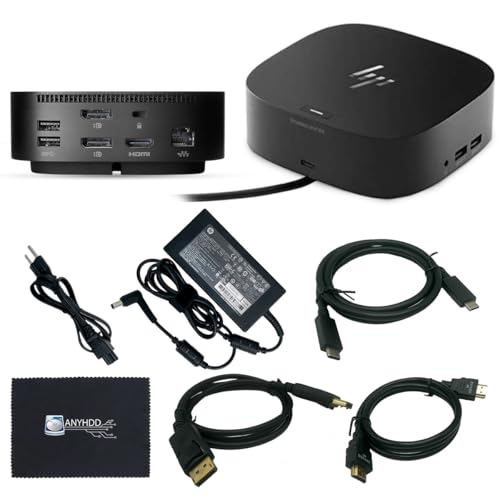
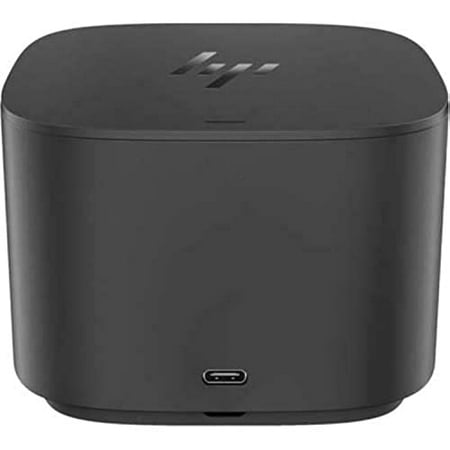
Is your HP Thunderbolt Dock G2 not working? You’re in the right place. This dock connects your HP laptop to monitors, USB devices, Ethernet, and audio through a single Thunderbolt 3 (USB-C) cable. HP made two versions: the 120W model (2UK37AA) and the 230W model (3TR87AA), which differ mainly in charging power.
The problem usually falls into one of four categories: Thunderbolt security settings blocking the dock, outdated firmware or drivers, a bad or wrong cable, or a power delivery mismatch. Most of these fixes take under 10 minutes.
This guide walks through each problem with specific steps to resolve it. If you just want the quick answer, scroll down to the troubleshooting checklist table near the end.
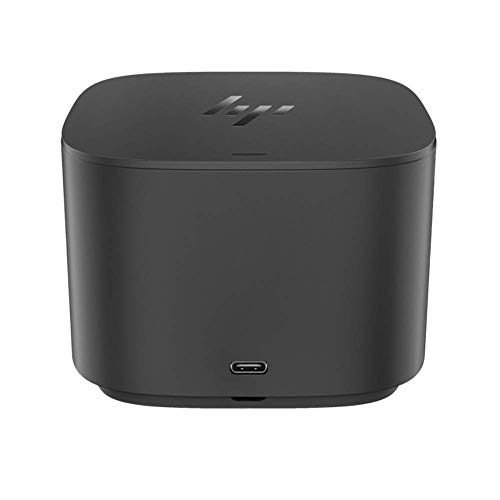
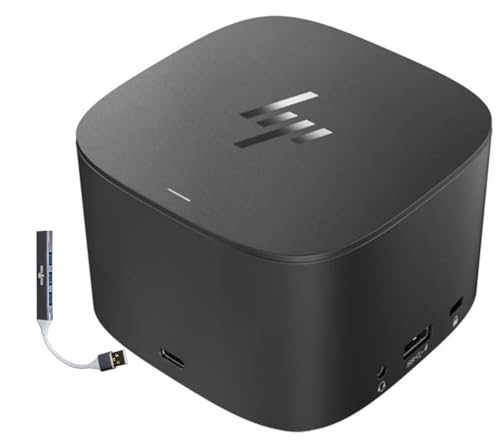
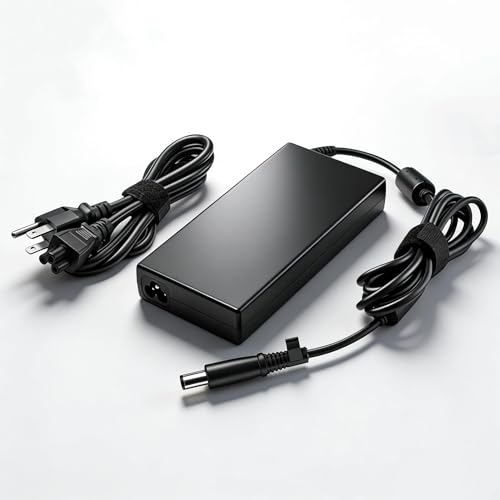
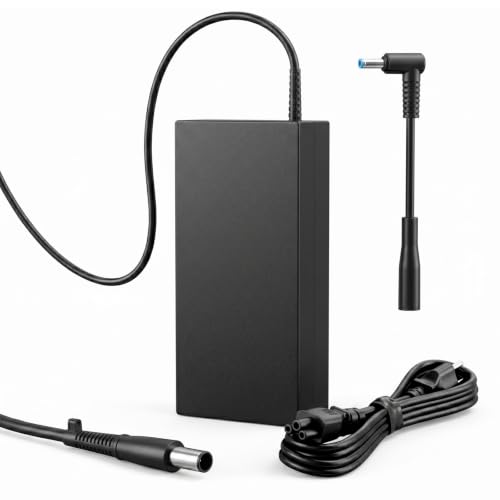
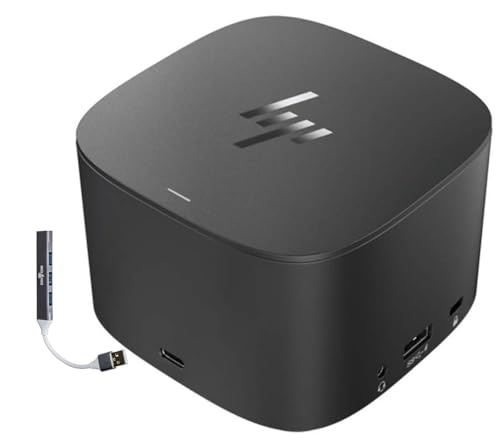
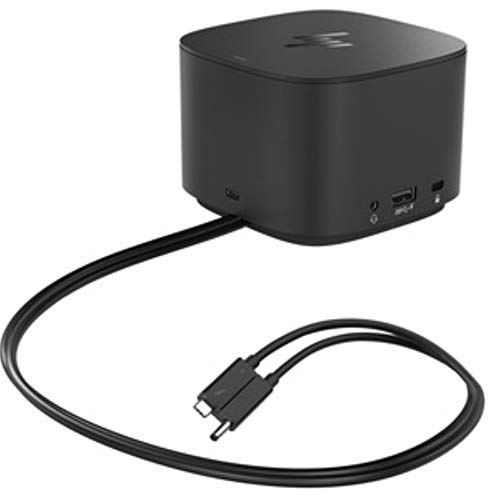
Why Is My HP Thunderbolt Dock G2 Not Detected
Thunderbolt security is the single most common reason the dock seems completely dead. Both Windows and your laptop’s BIOS have security settings that block unauthorized Thunderbolt devices. Because Thunderbolt has direct memory access to your system, Windows treats unknown Thunderbolt devices as potential threats until you approve them.
When you plug in the dock for the first time (or after a BIOS update resets your approval list), your laptop may silently block the connection. No error message. No popup on some systems. The dock gets power from its own AC adapter, so the LED turns on, but the laptop just ignores it.
Check the Thunderbolt icon in the system tray near the clock. It looks like a small lightning bolt. If you see a notification asking to approve the device, click it and select “Always Connect.” If you missed the popup, right-click the Thunderbolt icon and look for “Approve Attached Devices” or “Manage Approved Devices.”
If there’s no Thunderbolt icon in the system tray at all, the Intel Thunderbolt driver probably isn’t installed. This happens after clean Windows installs or major Windows updates that remove third-party drivers. Download the Thunderbolt driver from HP’s support page for your specific laptop model, not from Intel directly. HP’s version is tested against your hardware.
The cable matters more than most people realize, too. The HP Thunderbolt Dock G2 needs a Thunderbolt 3 cable. A regular USB-C cable from a phone charger won’t work. The dock will appear completely dead because standard USB-C cables don’t have the Thunderbolt data channels. Use the cable that shipped with the dock. If you lost it, make sure any replacement cable explicitly says “Thunderbolt 3” or “Thunderbolt 4” on the packaging.
How to Change Thunderbolt Security Settings in BIOS
If approving the dock through the system tray didn’t help, or if the Thunderbolt icon never appeared, you may need to change the security level in BIOS. This is especially common on enterprise HP laptops where IT departments lock Thunderbolt security to the highest level.
Restart your laptop and press F10 during boot to enter BIOS Setup. On some HP models, press Escape first to reach the startup menu, then select BIOS Setup. Navigate to Advanced, then look for Port Options or a Thunderbolt submenu. The exact path varies by model, but it’s always under Advanced.
Find the setting labeled “Thunderbolt Security Level.” You’ll see several options:
| Security Level | What It Does | When to Use It |
|---|---|---|
| No Security | Any Thunderbolt device connects automatically without approval | Testing and troubleshooting. Use temporarily to confirm the dock works, then switch to User Authorization. |
| User Authorization | Windows asks you to approve each new Thunderbolt device once. Approved devices reconnect automatically. | Best setting for most users. Balances security with convenience. |
| Secure Connect | Uses cryptographic verification to authenticate Thunderbolt devices. Requires IT-managed certificates. | Enterprise environments with strict security policies. Rarely needed for personal use. |
| DisplayPort and USB | Disables the Thunderbolt protocol entirely. The port works as basic USB-C only. | Organizations that want to block Thunderbolt DMA access completely. The dock will NOT work in this mode. |
If your dock isn’t being detected, try setting the level to “No Security” temporarily. This removes all Thunderbolt authentication requirements and tells you right away whether security was the issue. Once the dock works, switch back to “User Authorization” for daily use.
We also cover HP ultraslim docking station compatibility list in a separate article worth checking out.
Press F10 to save and exit BIOS. Your laptop will restart. Plug the dock back in after Windows loads and check whether it’s detected now.
How to Update HP Thunderbolt Dock G2 Firmware
The dock runs its own firmware, separate from your Windows drivers. HP releases firmware updates that fix random disconnections, display flickering, USB devices dropping out, and compatibility problems with newer laptops. If your dock worked fine for months and then started acting up, outdated firmware is a strong suspect.
There are two things to update: the dock’s internal firmware and the Intel Thunderbolt driver on your laptop. Both matter.
For the dock firmware, go to HP’s support site and search for your dock model number (2UK37AA for the 120W or 3TR87AA for the 230W). Download the file labeled “HP Thunderbolt Dock G2 Firmware Update.” Run the updater with the dock connected to your laptop and the dock’s AC power adapter plugged in. Don’t disconnect the dock during the update. The dock’s LED will blink while the firmware is being written.
For the Thunderbolt driver, go to HP’s support page for your specific laptop model (not the dock page). Download the latest Intel Thunderbolt driver listed there. HP packages the Thunderbolt driver for each laptop model separately, so their version may differ from what Intel posts. Sticking with HP’s version avoids compatibility surprises.
After updating both, restart your laptop and reconnect the dock. A full restart is required. Sleep and wake won’t cut it for firmware changes to take full effect.
If your laptop has HP Support Assistant installed, there’s an easier path. HP Support Assistant includes a “Dock Accessory Firmware Update Utility” that detects connected HP docks and updates their firmware automatically. Open it, run a check for updates, and it should find the dock firmware if one is available.
HP Thunderbolt Dock G2 Not Displaying on Monitor
When the dock is detected by Windows but your monitors stay black, the problem is usually the display connection between the dock and the monitor, not the Thunderbolt link between the dock and the laptop.
Start by checking which display output you’re using. The HP Thunderbolt Dock G2 has two DisplayPort 1.2 outputs, one VGA output, and a USB-C downstream port that can carry video. The DisplayPort outputs are the most reliable option. VGA works but is limited to lower resolutions. The USB-C downstream port supports video only with monitors that accept USB-C input directly.
| Feature | 120W Model (2UK37AA) | 230W Model (3TR87AA) |
|---|---|---|
| DisplayPort 1.2 outputs | 2 | 2 |
| VGA output | 1 | 1 |
| USB-C downstream (video-capable) | 1 | 1 |
| Max external displays | 2 | 2 |
| Max single display resolution | 4K @ 60Hz (via DP) | 4K @ 60Hz (via DP) |
| Dual display resolution | 2x QHD or 2x 1080p | 2x QHD or 2x 1080p |
| Power delivery to laptop | Up to 100W | Up to 200W |
| Designed for | EliteBook, ProBook | ZBook workstations |
Try a different display cable before digging into anything else. DisplayPort cables work more reliably with this dock than adapters. If you’re using a DisplayPort-to-HDMI adapter, the adapter itself could be the culprit. Cheap adapters cause more compatibility headaches than just about any other single component in a docking setup.
In Windows, right-click the desktop and select Display Settings. Click the “Detect” button to force Windows to scan for connected monitors. Windows doesn’t always auto-detect a monitor connected through a dock, especially after the laptop wakes from sleep.
If you’re running dual monitors, both need to be connected to the dock’s display outputs. You can’t connect one monitor to the dock and another directly to the laptop’s own HDMI or USB-C port and expect them to work together reliably. The Thunderbolt connection manages all video routing through the dock.
HP Thunderbolt Dock G2 USB Ports Not Working
The dock has USB 3.0 Type-A ports and a USB-C downstream port. When USB devices connected to the dock stop responding (keyboard, mouse, external drives, webcams), the fix is usually simpler than you’d expect.
Start with the most basic reset: unplug the Thunderbolt cable from the laptop, wait 10 seconds, then plug it back in. This forces the dock’s internal USB controller to reinitialize. It sounds too simple, but this clears the majority of USB-related dock problems. The USB controller inside the dock sometimes gets stuck in a bad state after sleep/wake cycles.
If you are still exploring options, our HDMI splitter for dual monitors guide is a solid next read.
If that doesn’t help, open Device Manager. Press Windows + X and select Device Manager. Expand “Universal Serial Bus controllers” and look for any entries with yellow triangle warning icons. Right-click any flagged device and select “Update driver,” then choose “Search automatically.” If that doesn’t fix it, right-click the flagged device, select “Uninstall device,” then unplug and replug the dock. Windows will reinstall the driver from scratch.
Try different USB ports on the dock. If only one port is dead while others work, that port may have a hardware fault. This tells you whether the problem is the dock’s USB controller (all ports dead) or a single port (physical damage or debris in the connector).
Make sure the dock’s AC power adapter is connected. This is easy to overlook. Without its own power supply, the dock draws power from the laptop’s Thunderbolt port, which isn’t enough to run high-draw USB devices like external hard drives, USB hubs, or bus-powered monitors. The USB ports may work for a mouse but fail for anything that draws more current.
Some older USB 2.0 devices don’t play well with USB 3.0 ports. If you have a legacy device (older scanners, specialized equipment, vintage peripherals), try connecting it through a USB 2.0 hub plugged into the dock rather than directly. The hub handles speed negotiation and often resolves compatibility issues that show up as the device not being recognized at all.
How to Reset the HP Thunderbolt Dock G2
When individual fixes haven’t solved the problem, a full reset clears the dock’s internal state and forces everything to reinitialize from scratch. There are two levels of reset: a quick power cycle and a full drain reset.
For a quick power cycle: unplug the AC adapter from the dock first, then unplug the Thunderbolt cable from the laptop. Wait 30 seconds. Plug the AC adapter back in first, then connect the Thunderbolt cable to the laptop. The order matters. The dock needs to boot fully from its own power before the laptop tries to communicate with it.
If the quick power cycle doesn’t help, do a full drain reset. Shut down the laptop completely, not sleep, not hibernate, a full shutdown. Unplug everything from the dock: all USB devices, all display cables, the Thunderbolt cable, and the AC adapter. Hold the laptop’s power button for 15 seconds to drain residual charge from the system.
Then reconnect in this order: dock AC adapter first, wait for the dock LED to stabilize, then the Thunderbolt cable to the laptop, then start the laptop. Only reconnect monitors and peripherals after Windows has fully loaded and recognized the dock.
You can also reset the Thunderbolt driver in Windows without disconnecting anything. Open Device Manager, find the Thunderbolt controller (usually listed under “System devices” as “Intel Thunderbolt Controller”), right-click it, and select “Uninstall device.” Check the box to delete the driver software if prompted. Restart the laptop. Windows will detect the Thunderbolt controller on boot and reinstall the driver automatically, giving you a clean start.
| Symptom | Likely Cause | Fix |
|---|---|---|
| Dock LED on, laptop does not detect it | Thunderbolt security blocking the device | Approve the dock in the system tray or set BIOS Thunderbolt security to No Security |
| Dock worked before, now randomly disconnects | Outdated dock firmware or Thunderbolt driver | Update both dock firmware and Intel Thunderbolt driver from HP’s support page |
| Monitors connected to dock stay black | Bad display cable or adapter | Try a direct DisplayPort cable. Click Detect in Windows Display Settings. |
| USB devices on dock not recognized | Dock USB controller stuck or insufficient power | Unplug Thunderbolt cable for 10 seconds. Make sure dock AC adapter is connected. |
| Dock charges laptop slowly or laptop drains while docked | Power mismatch: 120W dock on a high-wattage laptop | Check laptop AC adapter wattage. If over 100W, you need the 230W dock model. |
| Dock not detected after BIOS update | BIOS update reset Thunderbolt approval list | Re-approve the dock via Thunderbolt system tray icon or BIOS security settings |
| Single USB port dead, others work | Physical port damage or debris | Clean the port. If still dead, likely hardware failure on that port. |
| Dock LED blinking continuously | Firmware update in progress or firmware corruption | Wait 5 minutes. If still blinking, run the HP firmware updater again. |
HP Thunderbolt Dock G2 120W vs 230W: Does It Matter for Troubleshooting
The 120W model (2UK37AA) delivers up to 100W of charging power to your laptop through the Thunderbolt cable. The 230W model (3TR87AA) delivers significantly more and was designed for HP ZBook workstations and other high-performance laptops that need 150W or 200W adapters.
If your laptop’s original AC adapter is rated above 100W, the 120W dock can’t fully charge it. The laptop will run on a mix of dock power and battery, slowly draining while you work. This isn’t a malfunction. It’s a straightforward power math problem: the dock can’t supply as many watts as your laptop consumes under load.
Check the label on your laptop’s AC adapter. If it says 150W, 200W, or anything above 100W, you need the 230W dock for proper charging. Most EliteBook and ProBook models use 45W to 65W adapters and work perfectly with the 120W dock. ZBook models typically need 150W or more.
Both dock models use the same firmware updater, the same Thunderbolt drivers, and the same troubleshooting steps. The ports, display outputs, and USB connections are identical. The only difference is the power supply and the maximum wattage delivered through the Thunderbolt cable. Every fix in this guide applies to both models equally.
Frequently Asked Questions
Why is my HP Thunderbolt Dock G2 blinking but not connecting?
A blinking LED usually means one of two things. If the blinking started during a firmware update, the update may still be running. Wait at least five minutes before doing anything. If the dock blinks right when you plug in the Thunderbolt cable but the laptop doesn’t detect it, the Thunderbolt security setting is likely blocking the connection. Check the system tray for the Thunderbolt icon and approve the device.
If the LED blinks in a repeating pattern with no cable connected, the dock’s firmware may be corrupted. Run the HP firmware updater to reflash it.
Can I use a non-HP USB-C cable with the Thunderbolt Dock G2?
Yes, but only if the cable is rated for Thunderbolt 3 or Thunderbolt 4. A standard USB-C cable (the kind that comes with phones, tablets, or basic chargers) won’t work. Thunderbolt cables carry data at 40 Gbps and have additional wiring that regular USB-C cables don’t have. Look for cables that explicitly say “Thunderbolt 3” or are USB4 certified. If you lost the original HP cable, brands like Cable Matters, Plugable, and CalDigit make reliable alternatives. Keep the cable under 0.7 meters for the most stable connection.
Does the HP Thunderbolt Dock G2 work with non-HP laptops?
It works with any laptop that has a Thunderbolt 3 or Thunderbolt 4 port, regardless of brand. Dell, Lenovo, ASUS, and other manufacturers’ laptops with Thunderbolt ports can use the dock for displays, USB, Ethernet, and audio. The only feature that may not work on non-HP laptops is power delivery, since some laptops restrict charging to their own brand’s chargers or docks. Display and data connectivity should work fine on any Thunderbolt-equipped laptop.
How do I know if my HP Thunderbolt Dock G2 firmware is up to date?
HP doesn’t include a simple version-check tool for the dock firmware. The easiest approach is to download the latest firmware updater from HP’s support page (search for model 2UK37AA or 3TR87AA). Run the updater with the dock connected. If your dock already has the latest firmware, the updater will tell you no update is needed. If HP Support Assistant is installed on your laptop, it can also check the dock firmware version when you run a system update scan.
Why does my HP Thunderbolt Dock G2 disconnect randomly?
Random disconnections usually come from three sources. First, outdated dock firmware. This is the most common cause and is fixed by running the HP firmware updater. Second, Windows power management settings that put the Thunderbolt controller to sleep. Open Device Manager, find the Thunderbolt controller under System Devices, right-click it, select Properties, go to the Power Management tab, and uncheck “Allow the computer to turn off this device to save power.” Third, a loose or damaged Thunderbolt cable. Even slight movement in a worn cable can break the connection. Try a different Thunderbolt 3 cable.
Is the HP Thunderbolt Dock G2 compatible with Thunderbolt 4 laptops?
Yes. Thunderbolt 4 is fully backward compatible with Thunderbolt 3 devices. The dock will connect and operate at Thunderbolt 3 speeds (40 Gbps) on a Thunderbolt 4 laptop. All features, including displays, USB, Ethernet, audio, and power delivery, work normally. You don’t need a Thunderbolt 4 dock to use a Thunderbolt 4 laptop. The only thing you miss is certain Thunderbolt 4 specific features like mandatory support for two 4K displays, but the G2 dock already supports dual displays on its own.