The Best Spot: Central and Elevated
Place your router in the center of your home, not in a corner or at one end. WiFi broadcasts in all directions from the router, so a central spot distributes the signal evenly. Putting the router in a far corner wastes half the signal outside the house.
Set it at waist to head height – on a shelf, table, or wall-mounted. WiFi signals travel outward and slightly downward. A router on the floor loses much of its signal to the ground and furniture legs. Elevating it gives a clear path to more rooms.
What Blocks WiFi Signals
| Material | Signal Impact | Examples |
|---|---|---|
| Drywall | Minor | Standard interior walls |
| Wood | Minor to moderate | Doors, floors, furniture |
| Glass | Minor | Windows (without metallic tint) |
| Brick | Moderate to high | Exterior walls, fireplaces |
| Concrete | High | Basement walls, floors between stories |
| Metal | Very high | Appliances, filing cabinets, mirrors, ductwork |
| Water | High | Fish tanks, water heaters |
| Tinted glass | Moderate to high | Energy-efficient windows with metallic coating |
Every wall the signal passes through weakens it. Two drywall walls reduce the signal noticeably. One concrete wall or floor can cut the signal in half. Plan router placement to minimize the number of walls between the router and the rooms where you use WiFi most.
Places to Avoid
Inside closets or cabinets. Enclosing the router blocks the signal in every direction. The router also generates heat, and poor ventilation inside a closed space can cause overheating and performance issues.
Behind the TV or entertainment center. TVs, receivers, and game consoles contain metal components that block WiFi. Hiding the router behind a stack of electronics is one of the most common placement mistakes.
On the floor. The floor absorbs signal, furniture blocks line of sight, and you’re putting the router at the worst possible height for reaching devices at desk or couch level.
Near the microwave. Microwaves operate at 2.4GHz – the same frequency as one of your WiFi bands. When the microwave runs, it can temporarily knock out or slow down nearby 2.4GHz WiFi connections.
Near cordless phones and baby monitors. Older cordless phones and baby monitors also use 2.4GHz and cause interference. Bluetooth devices (2.4GHz) are less problematic but can contribute in dense setups.
In the basement or attic. These locations put the router at the extreme edge of the house vertically. Signal has to pass through floor or ceiling materials to reach the living spaces. If your internet connection enters through the basement, run an Ethernet cable up to a central location and put the router there.
Room-by-Room Placement Guide
Single-story home: Place the router in the most central room, ideally in a hallway or living room that’s roughly equidistant from all other rooms. If your home is longer than it is wide, put it in the middle of the long axis.
If you want to go deeper, we have a separate guide on WiFi router for gaming.
Two-story home: The ideal spot is on the upper portion of the first floor or the lower portion of the second floor. Mounting the router on the ceiling of the first floor or on a high shelf gives good coverage to both stories. If that’s not practical, put it on the first floor near the center and add a mesh satellite or extender on the second floor.
Apartment: Placement is simpler since the space is smaller. Put the router near the center of the apartment, away from exterior walls (which waste signal into the hallway or outside). Keep it away from the neighbor’s wall to reduce interference from their network.
Router Antenna Position
If your router has external antennas, their position affects signal direction:
Vertical antennas (pointing straight up) broadcast signal horizontally – outward to the sides. This is best for single-story coverage.
Horizontal antennas (pointing to the side) broadcast signal vertically – upward and downward. This helps reach other floors.
For multi-story coverage: Point one antenna vertically and one horizontally (at a 45 to 90 degree angle). This gives a mix of horizontal and vertical coverage. If you have three antennas, set the outer two at 45-degree angles and the middle one straight up.
Routers with internal antennas (like most mesh units and newer designs) handle this automatically through beamforming technology.
Test and Adjust
After placing the router, walk through your home with a phone and check the WiFi signal strength in each room.
- On iPhone: the WiFi icon in the status bar shows signal strength (more bars = stronger). You can also use an app like WiFi Analyzer.
- On Android: go to Settings, then WiFi, and check the signal indicator. Apps like “WiFi Analyzer” show exact signal strength in dBm.
- Anything above -50 dBm is excellent. Between -50 and -70 dBm is good. Below -70 dBm starts getting unreliable. Below -80 dBm is a dead zone.
If certain rooms have weak signal, try moving the router a few feet in that direction. Small changes in position can make a big difference, especially if you’re moving the router past an obstacle like a wall or large appliance.
For related tips, check out our full guide on WiFi router for large home.
Fix Dead Zones Without Moving the Router
Sometimes the router can’t go in the ideal spot because that’s where the internet connection enters the house. In that case:
Mesh WiFi system: Add mesh satellites (Google Nest WiFi, Netgear Orbi, TP-Link Deco) in rooms with weak signal. They create a seamless network with one WiFi name. This is the best solution for large homes or homes with difficult layouts.
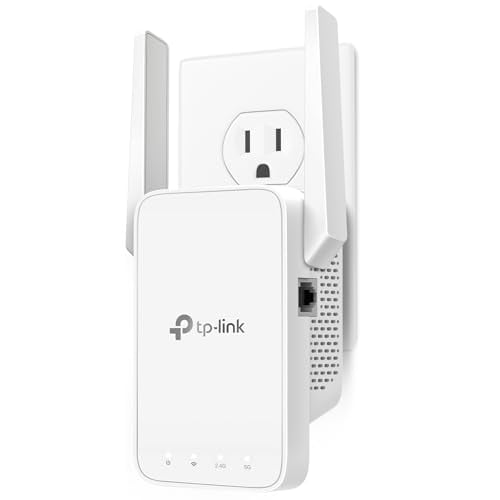
WiFi extender: A cheaper option that repeats the router’s signal. Place it halfway between the router and the dead zone. Extenders are less seamless than mesh (they often create a separate network name) and cut speeds in half, but they cost $20 to $50 compared to $200+ for mesh.
Ethernet backhaul: If you can run an Ethernet cable from the router to a distant room, plug in a second access point there. This gives the remote area a full-speed connection without the speed loss of wireless extenders. Powerline adapters can achieve a similar result using your home’s electrical wiring.
Troubleshooting
Strong signal but slow speeds. Signal strength and speed aren’t the same thing. You can have full bars but slow speeds if there’s interference from neighboring WiFi networks. Switch to the 5GHz band (less congested) or change the WiFi channel in your router settings. In apartments, interference from dozens of nearby networks is common on 2.4GHz.
Good coverage upstairs but not downstairs (or vice versa). Put the router on the floor that needs the most coverage, or position it between floors (ceiling of lower floor, floor of upper floor). If running cable isn’t an option, a mesh satellite on the weaker floor solves it.
One room has terrible signal despite being close. Look for what’s between the router and that room. A refrigerator, metal filing cabinet, large mirror, or aquarium between the router and the room creates a dead zone. Moving the router a few feet to change the line of sight often fixes it.
Does the router need to be near a window?
No. Putting the router near a window sends a large portion of the signal outside, wasting coverage. Unless you specifically need WiFi in your yard or patio, keep the router away from exterior walls and windows. Interior placement gives better indoor coverage.
Can I wall-mount the router?
Yes, and it’s often a good idea. Many routers have mounting holes on the bottom. Wall-mounting gets the router up high, out of the way, and away from obstructions. Mount it on an interior wall in a central location for the best results. Avoid mounting it on an exterior wall, which wastes signal outside.
Does the router brand matter for coverage?
Yes. Higher-end routers have stronger transmitters, better antennas, and technologies like beamforming that focus the signal toward your devices. A $200 router covers significantly more area than a $30 one. For homes over 2,000 square feet, a mesh system provides more reliable coverage than any single router, regardless of brand.
Sources
FCC – Household Broadband Guide | Wi-Fi Alliance – Discover WiFi