When you purchase through links on our site, we may earn an affiliate commission. Here’s how it works.
Getting to Know the Sony DSC-H300
The Sony DSC-H300 is a bridge camera that sits between a basic point-and-shoot and a DSLR. It has a 20.1-megapixel sensor, a 35x optical zoom lens (25mm to 875mm equivalent), and it runs on AA batteries instead of a rechargeable lithium pack. There’s no Wi-Fi, no touchscreen, and no Bluetooth. What you get is a straightforward camera with a big zoom range and manual controls, all at a budget-friendly price.
If you’ve just picked one up or you’re trying to figure out what all those dials and menus do, this guide covers everything from the initial setup to getting the most out of each shooting mode.
First-Time Setup
When you turn on the H300 for the first time, it asks you to set the date, time, and region. Use the directional buttons to scroll through the options and press the center button to confirm.
Batteries
The H300 takes two AA batteries. It ships with two alkaline AAs in the box, but these drain quickly, especially at full zoom. Pick up a set of NiMH rechargeable batteries (like Eneloop or Amazon Basics 2000mAh). They last significantly longer and save you money in the long run. Alkaline batteries might give you around 100 to 150 shots. NiMH rechargeables can push that to 300 or more depending on zoom usage and flash activity.
Memory Card
Insert a Memory Stick Duo or an SD/SDHC card (up to 32GB). The camera has about 55MB of internal memory, which is enough for maybe 10 to 15 photos at full resolution. For any real use, you need a card. A 16GB card holds roughly 2,500 JPEG photos at the highest quality setting.
Shooting Modes Explained
The mode dial on top of the camera gives you access to several shooting modes. Here’s what each one does and when to use it.
Intelligent Auto
This is the default mode. The camera analyzes the scene and picks the best combination of shutter speed, aperture, ISO, and white balance. Point and shoot. It works well in daylight and evenly lit scenes. For most casual shooting, this mode delivers solid results with zero effort.
Program Auto (P)
Program mode gives you more control than Intelligent Auto. The camera still sets the shutter speed and aperture, but you can manually adjust ISO, white balance, exposure compensation, and other settings. This is a good middle ground when you want some creative input without going fully manual.
Panorama
Press the shutter and sweep the camera in one direction (left, right, up, or down). The H300 stitches multiple frames together into a wide panoramic image. Move slowly and steadily for the best results. If you go too fast, the camera will show a warning. Panorama mode works best with landscapes and wide interior shots.
Scene Modes
The Scene menu includes presets for specific situations:
– Portrait: Softens the background slightly and optimizes skin tones.
– Landscape: Sharpens details and boosts greens and blues.
– Night Scene: Uses a slower shutter speed and higher ISO for low-light shots. A tripod helps here.
– Beach: Compensates for bright sand and water reflections.
– Snow: Prevents the camera from underexposing white scenes.
– Fireworks: Uses a long exposure to capture light trails.
– High Sensitivity: Pushes ISO higher for indoor and low-light shooting without flash.
Using the 35x Optical Zoom
The H300’s biggest selling point is its zoom range. At 35x, you can pull in subjects that are very far away, like birds in a tree, players on a sports field, or details on a building across the street.
Zoom Tips
– Use the zoom lever slowly: The zoom motor moves at the speed you push the lever. Gentle pressure gives you precise framing.
– Keep steady at full zoom: Camera shake is massively amplified at 35x. Brace your arms against your body, lean against a wall, or rest the camera on a solid surface. A tripod is ideal.
– Enable SteadyShot: The H300 has optical image stabilization built into the lens. Make sure SteadyShot is turned on in the settings. It compensates for small hand movements and makes a real difference at long zoom.
– Avoid digital zoom: The camera offers up to 70x digital zoom, but this just crops and enlarges the image, which reduces quality. Stick with the 35x optical range for sharp results.
ISO and Exposure Settings
In Program mode, you can adjust ISO manually. The H300’s ISO range goes from 80 to 3200.
– ISO 80 to 200: Best for bright daylight. Low noise, sharp images.
– ISO 400 to 800: Good for cloudy days, shade, and indoor shots with some window light.
– ISO 1600 to 3200: Use these only when you have no other option. The H300’s small sensor produces visible noise at high ISO values. Images at ISO 3200 look grainy and lose fine detail.
For exposure compensation, press the up button on the directional pad (marked with +/-). Slide the scale toward + to brighten the image or toward – to darken it. This is useful when the camera’s metering gets fooled by very bright or very dark scenes.
Macro Mode for Close-Up Shots
Press the left arrow on the directional pad to access focus mode, then select the flower icon for Macro. In macro mode, the H300 can focus on subjects as close as 1cm from the lens at the wide-angle setting. This is great for flowers, insects, coins, food, and product photos.
For the sharpest macro shots, use the wide end of the zoom (don’t zoom in). Make sure there’s plenty of light on the subject, since being close to a small object often blocks ambient light. The built-in flash can help, but at very close range it might overexpose the subject. Try shooting near a window or using a desk lamp.
Video Recording
The H300 records video at 720p (1280×720) in MP4 format. It’s not Full HD, but it’s decent for casual video. Press the dedicated movie button on the back of the camera to start and stop recording.
You can use optical zoom during video recording, but the zoom motor is audible on the audio track. If clean audio matters, zoom before you start recording rather than during. There’s no external mic input, so you’re limited to the built-in microphone.
Video files are saved to your memory card alongside your photos. Transfer them via USB or pop the card into a reader.
Transferring Photos to a Computer
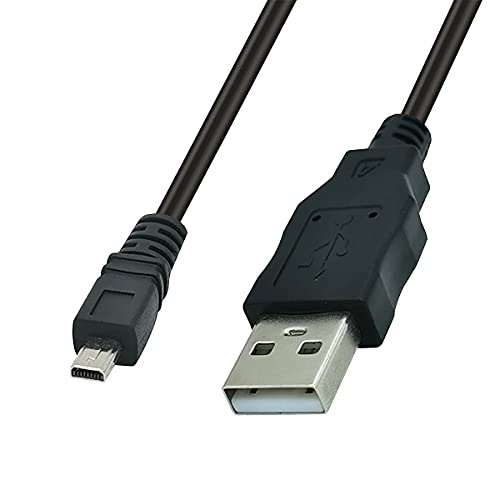
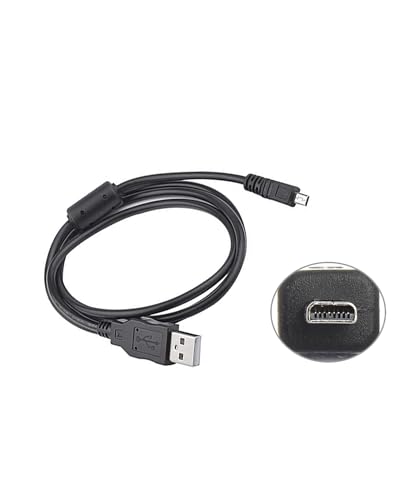
The H300 connects to a computer using the Micro-USB port on the side of the camera. Plug in the cable, turn the camera on, and it should appear as a removable drive on your computer. Navigate to the DCIM folder to find your images.
Alternatively, remove the SD card and use a card reader. This is faster, especially for large batches of photos. Any standard USB card reader will work.
Sony’s PlayMemories Home software (free download from Sony’s website) can organize, browse, and do basic edits on your photos. It’s optional, though. The camera works perfectly fine as a simple drag-and-drop device without any extra software.
Battery Life Tips
AA-powered cameras drain batteries faster than lithium-ion models, especially at full zoom. Here are some ways to stretch your battery life:
– Use NiMH rechargeables: Already mentioned, but it’s the single biggest improvement you can make.
– Turn off the LCD when not shooting: The rear screen is the biggest power consumer on this camera.
– Limit flash usage: The flash pulls a lot of current. Use natural light when possible.
– Reduce zoom hunting: Constantly zooming in and out burns through battery. Frame your shot, take it, and move on.
– Carry spare batteries: A second set of charged NiMH AAs weighs almost nothing and gives you peace of mind on long outings.
Getting the Most Out of the H300
The Sony DSC-H300 isn’t trying to be a professional camera. It’s built for people who want more zoom and more control than a phone camera, without the complexity and cost of a DSLR. Stick with the optical zoom range, shoot in good light when you can, keep your ISO low, and use rechargeables. With those basics covered, the H300 turns out surprisingly sharp and detailed photos for its price range.