How to Use Nikon D7200
The Nikon D7200 was Nikon’s top enthusiast DX body for a good stretch, and in 2026 it’s still a seriously capable camera. The 24.2-megapixel sensor delivers sharp, detailed images with strong dynamic range. The 51-point autofocus system (borrowed from Nikon’s pro bodies) tracks moving subjects reliably. And the weather-sealed magnesium alloy body can handle rain, dust, and cold without complaint.
Add in dual SD card slots, 6 fps burst shooting (7 fps in 1.3x crop mode), built-in Wi-Fi and NFC, and a battery that lasts 1,110 shots per charge, and you’ve got a camera that doesn’t cut corners.
This guide covers the settings that make the biggest difference in your day-to-day shooting.
Getting Started
Battery and Cards
The D7200 uses the EN-EL15 battery, the same one found in Nikon’s higher-end bodies. A full charge delivers about 1,110 shots, which is one of the best numbers in this class. Charge it fully before your first session.
The dual SD card slots are a standout feature. You can set them up in several ways through the Shooting menu: overflow (fill card 1, then card 2), backup (write the same files to both cards), or RAW+JPEG separation (RAW to one card, JPEG to the other). For most shooters, overflow is the simplest. If you’re doing client work or events, backup mode gives you peace of mind.
Date, Language, and Initial Setup
The first power-on walks you through the basics. Set your time zone, date, and language so every photo gets accurate metadata. If you travel, update the clock when you arrive at your destination.
Autofocus: 51 Points That Actually Work
The D7200’s autofocus system is one of its biggest advantages. The Multi-CAM 3500DX II module provides 51 focus points, with 15 cross-type sensors in the center cluster. It works in light levels as low as -3 EV, which means it can grab focus in very dim conditions.
AF Modes
AF-S (Single Servo): Focus locks when you half-press the shutter. Best for still subjects like landscapes, architecture, and posed portraits.
AF-C (Continuous Servo): Focus adjusts continuously while you hold the shutter button. This is the mode for anything that moves. The D7200’s tracking in AF-C is very reliable, especially with the 3D tracking option enabled. The camera uses scene recognition data (including subject color) to follow your subject across the frame.
AF-A (Auto): The camera switches between AF-S and AF-C automatically. It works in casual situations but can be unpredictable. Picking the mode yourself gives more consistent results.
Focus Area Modes
Single-point: You choose exactly which of the 51 points is active. Best for precision work like portraits (aim for the nearest eye).
Dynamic-area (9, 21, or 51 points): You select a primary point, but surrounding points assist if the subject moves. Use 9-point for subjects with predictable movement, 21-point for less predictable action, and 51-point when the subject is moving erratically.
Group-area: Five points work together as a cluster. This is excellent for birds in flight, small subjects, and fast-moving targets that are hard to track with a single point.
Auto-area: The camera picks the focus point. Works well for quick snapshots but gives you less control.
3D Tracking: Select your subject and the camera follows it across all 51 points using color recognition. This is one of the D7200’s killer features for action photography.
Exposure Modes
P (Program): Camera sets aperture and shutter speed. Shift the combination with the command dial.
A (Aperture Priority): You set the f-stop, camera picks shutter speed. The go-to mode for general photography. Wide aperture (f/2.8-f/4) for portraits, narrow (f/8-f/11) for landscapes.
S (Shutter Priority): You set shutter speed, camera handles aperture. Use 1/500+ for freezing action. Use 1/15 or slower for creative motion blur.
M (Manual): Full control. The exposure meter in the viewfinder guides you. Many experienced shooters pair Manual mode with Auto ISO, which gives them control over aperture and shutter speed while letting the camera adjust brightness through ISO.
ISO Performance
The D7200’s native ISO range is 100 to 25600, expandable to 51200 in black-and-white mode and 102400 (Hi 2). In practical terms, images are clean and detailed up to ISO 1600. ISO 3200 is very usable. ISO 6400 shows some noise but is still acceptable for many situations. Beyond that, expect visible grain and lost shadow detail.
Auto ISO
Set this up in the Photo Shooting menu. Choose a maximum ISO (3200 is a safe default), a minimum shutter speed that matches your lens (1/focal length is a good rule), and let the camera manage ISO from there. This is one of the most practical settings on the camera and works well in A and S modes.
Metering and Exposure Compensation
The D7200 offers three metering modes. Matrix metering reads 2,016 segments across the frame and does a good job in most situations. Center-weighted gives extra emphasis to the middle of the frame. Spot metering reads about 2.5% of the frame centered on the active focus point, which is useful for backlit subjects or stage performers.
Switch between metering modes by holding the metering button (next to the lens release) and turning the command dial.
Exposure compensation lets you override the meter by up to 5 stops. Hold the +/- button and turn the command dial. Bright scenes (snow, white walls) typically need +0.7 to +1.3 to look right. Dark scenes may need -0.3 to -1.0.
Video Recording
The D7200 shoots 1080p at 60, 50, 30, 25, and 24 fps. The 60p mode produces smooth, detailed footage that looks good for YouTube, social media, and client work. There’s no 4K, but the Full HD output is clean.
In the Movie Shooting menu, set the frame size and rate, adjust microphone sensitivity, and enable wind noise reduction if you’re shooting outdoors. An external mic plugged into the 3.5mm jack is strongly recommended. The D7200 also has a headphone jack for monitoring audio during recording, which is a feature many cameras in this class lack.
Autofocus during video uses contrast detection, which is slower than the phase-detection AF available through the viewfinder. For the smoothest results, consider manual focus with the focus ring during video.
Weather Sealing
The D7200’s body is sealed at the joints, dials, and buttons to resist dust and moisture. This doesn’t make it waterproof, but it means you can keep shooting in light rain, dusty environments, or cold weather without worrying about the camera giving up. Pair it with a weather-sealed lens (Nikon’s WR lenses) for full protection.
Burst Shooting and Buffer
At 6 fps in full-frame mode (or 7 fps in 1.3x crop mode), the D7200 handles action well. The buffer holds about 18 RAW files (14-bit lossless) or 100+ JPEGs before it slows down. A fast UHS-I SD card in slot 1 helps clear the buffer quickly between bursts.
The 1.3x crop mode is worth trying for wildlife and sports. It narrows the field of view (giving you more reach from your existing lenses), bumps burst speed to 7 fps, and the 51 AF points cover a larger portion of the frame relative to the smaller crop.
Custom Settings Worth Changing
The D7200’s Custom Settings menu (the pencil icon) has a lot of options. Here are a few that make a real difference:
a1 – AF-C priority selection: Set to Release to keep the camera shooting even if focus isn’t confirmed, or Focus to only fire when focus is locked.
a3 – Focus tracking with lock-on: Controls how quickly the camera re-focuses when something passes between you and the subject. Set to a longer delay (3 or 4) for subjects that are briefly obscured.
f1 – Custom control assignment: Remap the Fn button and Pv button to functions you use often. ISO, exposure bracketing, and active D-Lighting are popular picks.
Tips for Better Results
Portraits: A mode at f/2.8 to f/4, AF-S with single-point AF on the nearest eye. Let Auto ISO handle brightness. The D7200’s skin tones are natural and pleasing with the Standard Picture Control.
Landscapes: A mode at f/8 to f/11, ISO 100, tripod, and 2-second timer. Use matrix metering. The D7200’s dynamic range at base ISO is excellent for recovering shadows in post.
Wildlife and Sports: S mode at 1/1000 or faster, AF-C with 3D tracking or Group-area AF, continuous high burst mode. Use the 1.3x crop for extra reach.
Events and Low Light: A mode with Auto ISO (max 3200-6400), AF-C with dynamic-area 21 points. The D7200’s high ISO performance is strong enough for indoor events without flash.
Final Thoughts
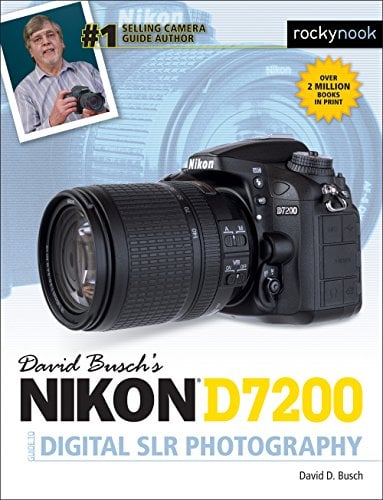
The Nikon D7200 is a camera that rewards photographers who dig into its settings. The 51-point AF system, weather sealing, dual card slots, and strong battery life make it a reliable tool for everything from weekend shooting to paid gigs. Spend time with the autofocus modes and custom settings, and this camera will keep delivering for years.
See Also