Canon 5D Mark IV: A Practical Getting Started Guide
The Canon 5D Mark IV has been a workhorse for professional photographers since its release, and in 2026 it’s still a solid pick for anyone who wants a reliable full-frame DSLR. The 30.4-megapixel sensor delivers excellent detail, the 61-point autofocus system locks on fast, and the dual-pixel CMOS AF in Live View makes it surprisingly good for video work too.
This camera doesn’t hold your hand, though. There are no fully automatic scene modes. Canon designed it for photographers who know their way around aperture, shutter speed, and ISO, or who are willing to learn. Here’s what you need to know to get the most out of it.
Getting Started
Battery and Cards
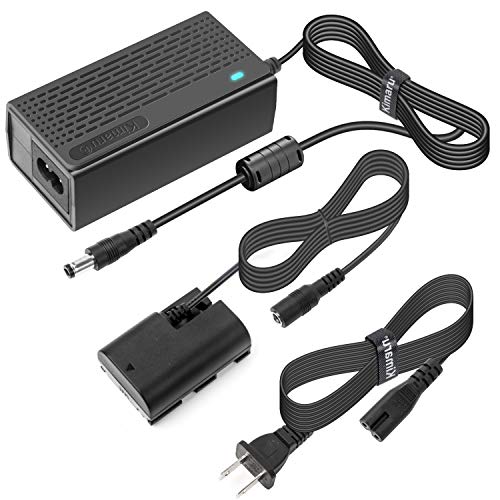
The 5D Mark IV uses the LP-E6N battery, which lasts about 900 shots per charge using the viewfinder. Charge it fully before your first outing.
The camera has dual card slots: one CompactFlash (CF) slot and one SD/SDHC/SDXC slot. You can configure them to record simultaneously (same files on both cards for backup), separately (RAW to one card, JPEG to the other), or with overflow (fill one card first, then the other). For the fastest write speeds, use a high-speed CF card in Slot 1 and keep the SD card for backup.
Set the recording function through Menu > Shooting Settings > Record func+card/folder sel.
Date, Time, and Language
The first power-on prompts you to set these. Do it right away so your file metadata is accurate. If you travel between time zones, update the clock when you arrive. Go to the wrench (Setup) menu to find Date/Time/Zone.
Understanding the Autofocus System
The 5D Mark IV uses a 61-point AF system with 41 cross-type sensors. Cross-type sensors detect contrast in two directions, making them faster and more accurate, especially in low light or with low-contrast subjects.
AF Modes
One-Shot AF: Focus locks when you half-press the shutter. This is the equivalent of AF-S on Nikon and Sony cameras. Use it for still subjects: landscapes, portraits, architecture.
AI Servo AF: Continuous focus tracking. The camera adjusts focus continuously while you hold the shutter halfway. Use this for moving subjects. The 5D Mark IV’s tracking is reliable for sports, wildlife, and event photography.
AI Focus AF: The camera starts in One-Shot and switches to AI Servo if it detects subject movement. It’s a hybrid mode that works OK in mixed situations but can be unpredictable.
AF Area Selection Modes
The 5D Mark IV gives you several area modes to choose from. Single-point uses one point for precise focus placement. Spot AF is even tighter than single-point, useful for focusing through obstacles like fences. Zone AF groups the 61 points into zones, and you pick the zone. Large Zone covers a broader area. And 61-point automatic lets the camera choose from all available points.
For portraits, single-point aimed at the nearest eye gives the best results. For action, Zone AF or Large Zone combined with AI Servo lets the camera track subjects across the frame.
Dual Pixel CMOS AF
Switch to Live View, and the 5D Mark IV activates its Dual Pixel CMOS AF system. This covers about 80% of the frame and delivers smooth, accurate autofocus that’s much better than what you get from the viewfinder for certain tasks. Video shooters rely on this heavily. It also works well for tripod-based shooting where precision matters more than speed.
Exposure Controls
ISO Settings
The native ISO range runs from 100 to 32000, expandable down to 50 (L) and up to 102400 (H2). In practice, images stay clean up to ISO 6400, and ISO 12800 is usable with mild noise reduction. The Canon 5D Mark IV handles high ISO situations well for a DSLR, though dedicated mirrorless cameras have narrowed the gap in recent years.
Auto ISO is available and works the same way as on other Canon bodies. Set a maximum ISO ceiling and a minimum shutter speed in the Shooting menu, and the camera adjusts ISO automatically.
Shooting Modes
P (Program AE): Camera sets both aperture and shutter speed. You can shift the combination with the main dial.
Av (Aperture Priority): You pick the aperture, the camera handles shutter speed. The most commonly used mode for general photography.
Tv (Shutter Priority): You set the shutter speed, the camera picks the aperture. Use it when you need to freeze motion or create intentional blur.
M (Manual): Full control. The exposure level indicator in the viewfinder shows whether you’re over or underexposed. Many professionals stay in Manual mode with Auto ISO, which gives them control over aperture and shutter speed while letting the camera adjust brightness through ISO.
Metering Modes
The 5D Mark IV uses a 150,000-pixel RGB+IR metering sensor that evaluates the scene and sets exposure. Evaluative metering reads the whole scene and is accurate in most situations. Partial metering reads about 6.1% of the frame, centered on the selected AF point. Spot metering reads about 1.3% for very precise exposure reading. Center-weighted average reads the full frame but emphasizes the center.
Switch between metering modes by pressing the metering button on top of the camera and turning the main dial.
Video Recording
The 5D Mark IV shoots 4K DCI (4096×2160) at up to 30 fps using Motion JPEG. The 4K mode uses a 1.74x crop of the sensor, which narrows your field of view noticeably. If that crop is a problem, Full HD at 60 or 30 fps uses the full sensor width.
For 4K recording, use a CF card with at least 100MB/s write speed. The files are large because of the Motion JPEG codec, so card space fills up fast. Many video shooters output via HDMI to an external recorder, which also gives access to better codecs.
The 3.5mm mic input and headphone jack let you use external audio gear. The camera’s built-in mic is fine for ambient sound but not suitable for interviews or dialogue.
Canon Log
Canon released a free firmware update that adds Canon Log to the 5D Mark IV. This flat color profile preserves more dynamic range in video footage, giving you room to color grade in post-production. To enable it, install the firmware update, then select Canon Log in the Picture Style menu during Movie mode.
GPS and Wi-Fi
The 5D Mark IV has built-in GPS that embeds location data into every photo’s metadata. This is useful for travel photographers who want to tag their images by location without using a phone app. Turn it on through the Setup menu > GPS device settings.
Built-in Wi-Fi and NFC let you transfer images to your phone or control the camera remotely through Canon’s Camera Connect app. The remote shooting feature is handy for self-portraits, group shots, and wildlife photography where you don’t want to be near the camera.
Custom Functions and Picture Styles
Custom Functions
The 5D Mark IV’s Custom Functions menu (the orange tab in the menu system) lets you remap buttons, change autofocus behavior, and adjust exposure settings. Some useful tweaks: assign the SET button to a frequently used function, change the rear dial direction if it feels backward, and customize the AF-ON button behavior for back-button focus.
Picture Styles
Picture Styles control how the camera processes JPEG images. Standard, Portrait, Landscape, and Faithful are the built-in options. Each one adjusts sharpness, contrast, saturation, and color tone. You can modify any of these to taste or create entirely custom profiles. If you shoot RAW, Picture Styles don’t affect the raw data, but they determine how the preview looks on the back of the camera.
Tips for Better Results
Use back-button focus. Go to Custom Functions > Controls > Customize buttons and assign AF start to the AF-ON button while removing it from the shutter button. This is one of the most impactful changes you can make to how the camera handles.
Calibrate your lenses. The AF Microadjustment feature in the AF menu lets you fine-tune focus accuracy for each lens. At 30.4MP, even slight focus errors show up when you zoom in.
Learn the Quick Control screen. Press the Q button on the back and you get a full-screen overlay with access to ISO, drive mode, AF mode, white balance, Picture Style, and more. This is faster than the main menu for changing settings between shots.
Keep the sensor clean. Enable automatic sensor cleaning (it runs on startup and shutdown) and carry a rocket blower for stubborn dust spots. At 30.4 megapixels, sensor dust is visible in images shot at narrow apertures.
Final Thoughts
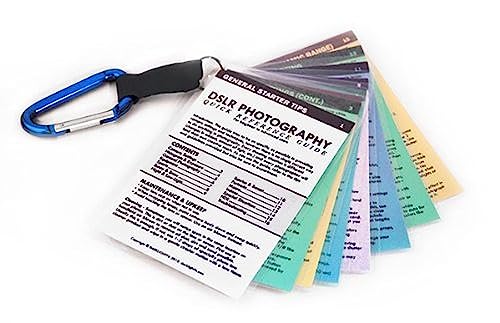
The Canon 5D Mark IV is a camera that does its best work when you understand what it can do. Spend time with the autofocus modes, set up back-button focus, and learn the Quick Control screen. Once you’ve got those basics down, this camera delivers images that hold up to any standard.
See Also