Why Your Phone Is a Useful Spy Camera Detector
You don’t need expensive equipment to find hidden spy cameras in your Airbnb or hotel room. Your smartphone already has a camera sensor that can pick up infrared light, a Wi-Fi radio that can scan for nearby devices, and a flashlight bright enough to catch reflective camera lenses. None of these methods are foolproof on their own, but combining two or three of them gives you solid coverage. Here’s how each technique works and when to use it.
The Infrared Detection Trick
Most hidden cameras that record in the dark use infrared (IR) LEDs for night vision. Your eyes can’t see IR light, but your phone’s camera sensor can. Here’s the key detail: on most phones, the front-facing camera doesn’t have an IR filter, while the rear camera does. That means you should use the selfie camera for this check.
How to Do It
1. Turn off all the lights in the room.
2. Open your phone’s camera app and switch to the front camera.
3. Slowly scan the room, paying attention to the screen.
4. IR LEDs will show up as a faint purple or white glow on your phone’s display.
You can test this method first by pointing your phone at a TV remote and pressing a button. You’ll see the IR LED light up on your screen. That’s the same glow you’re looking for in a room sweep.
Keep in mind that some newer phones (particularly recent iPhones) have added IR filters to both cameras, which makes this method less reliable. If you’re not sure whether your front camera can detect IR, the remote control test will tell you immediately.
Wi-Fi Network Scanning
Many modern spy cameras connect to Wi-Fi to stream or store footage remotely. That means they show up as devices on the local network. Apps like Fing (available on iOS and Android) and Network Scanner let you scan the Wi-Fi network you’re connected to and list every device.
What to Look For
After scanning, look through the device list for anything suspicious. Cameras often show up with manufacturer names like “Shenzhen,” “HiSilicon,” “Tuya,” or generic names like “IPCam” or “ESP32.” If you see a device you can’t account for (it’s not your phone, laptop, or the TV), it could be a hidden camera.
One limitation: this only works if the camera is on the same Wi-Fi network as your phone. Some spy cameras use their own cellular connection or record to an SD card without any network connection. That’s why you need multiple detection methods.
RF Detector Apps
Some apps claim to detect radio frequency (RF) signals from wireless cameras using your phone’s built-in sensors. Apps like Hidden Camera Detector and Glint Finder use a combination of magnetic field sensors and camera-based lens detection. To learn more about how these tools work under the hood, see our breakdown of how a spy camera detector work.
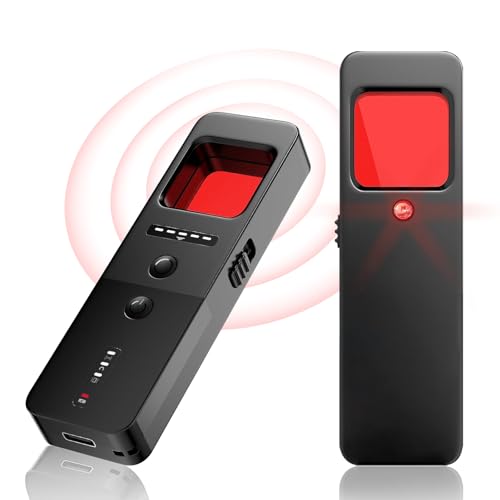
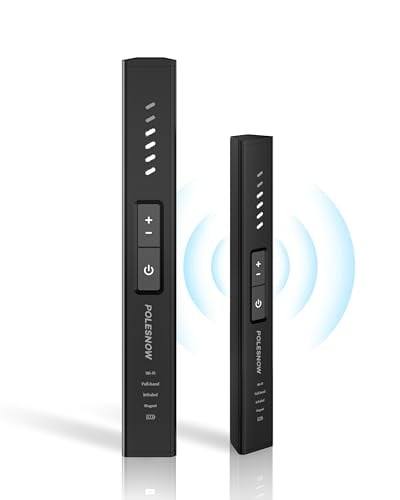
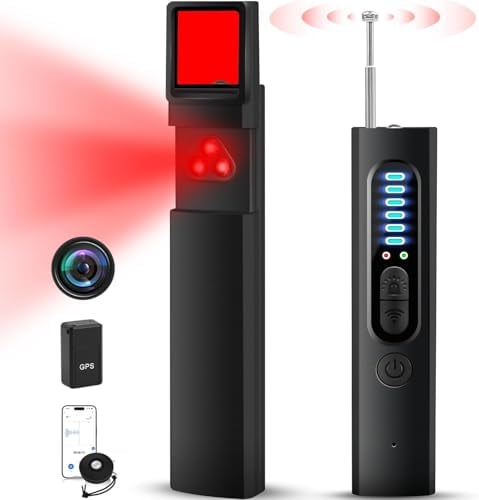
A word of caution: phone-based RF detection is limited by your phone’s hardware. Dedicated RF detectors that you can buy for $30 to $50 are significantly more sensitive. If you travel often and are genuinely concerned about surveillance, a standalone RF detector is worth the investment.
The Flashlight Reflection Method
This is one of the simplest and most effective methods. Every camera, no matter how small, has a lens. And lenses reflect light in a distinctive way.
1. Turn off all the lights in the room.
2. Turn on your phone’s flashlight.
3. Slowly sweep the flashlight across the room, focusing on objects at eye level and above.
4. Watch for a small, bright reflection. Camera lenses produce a bluish or greenish glint that’s different from the reflection you get off metal or glass.
This method works even on cameras that aren’t connected to Wi-Fi or don’t use IR, making it a good complement to the electronic methods described above. Take your time with it. Move slowly and check objects from multiple angles.
Physical Inspection: Where to Look
Hidden cameras are usually placed in everyday objects that already have a reason to be in the room. The most common hiding spots include:
Smoke detectors: Look for a small hole or lens that doesn’t match the normal design. Compare it to other smoke detectors in the property if there are multiple.
USB chargers and power adapters: Some spy cameras are built into functional USB chargers. If a charger has a tiny hole on the front face, it might contain a lens.
Alarm clocks: Clock cameras have been around for years. Check for any unusual pinhole on the front.
Wall outlets and light switches: Some cameras hide inside fake electrical outlets or switch plates. If an outlet looks slightly different from the others in the room, inspect it closely.
Picture frames and mirrors: A two-way mirror can conceal a camera behind it. Press your fingertip against the mirror surface. On a normal mirror, there’s a small gap between your finger and its reflection. On a two-way mirror, your finger and the reflection touch directly.
Stuffed animals, tissue boxes, and decorative items: Any object with a small hole facing the bed or bathroom area is worth examining.
Checking for Wired Cameras
Not all hidden cameras are wireless. Some are hardwired into the building’s electrical system or connected via Ethernet. Look for wires that seem out of place, especially thin cables running along baseboards or behind furniture to an object that wouldn’t normally need power. If you notice a wire running to a smoke detector, air freshener, or decorative item, take a closer look.
What to Do If You Find a Hidden Camera
If you find something suspicious, don’t tamper with it or remove it. Take photos of the device and its location. Leave the room and contact the property owner or manager first. If you’re in a hotel, report it to the front desk and ask for a room change. If you’re in an Airbnb, contact Airbnb support directly through the app, as this violates their policy.
In many places, recording someone without consent in a private space like a bedroom or bathroom is illegal. If the property manager is uncooperative, contact local law enforcement. Keep your photos as evidence and note the exact location of the camera.
For the best results, combine at least two or three of these methods during your sweep. Start with the flashlight method and IR detection in a dark room, then follow up with a Wi-Fi scan. The whole process takes about 10 to 15 minutes and can save you a lot of worry.