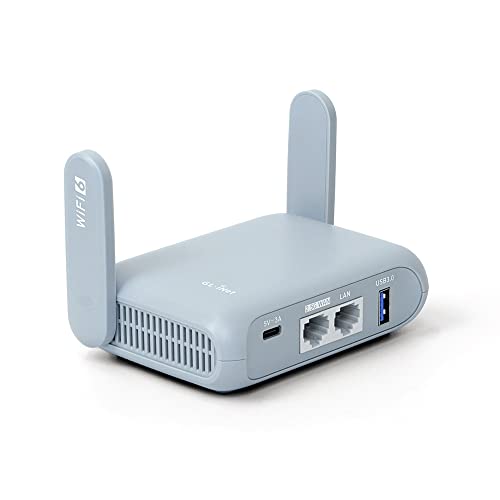
A router does not need a modem to work. Most people assume the two devices are inseparable, but a router’s core job is connecting devices to each other, not to the internet. Plug a router into a power outlet, turn it on, and it immediately creates a local network. Computers, phones, printers, and game consoles can all connect to it and communicate with each other.
The modem’s role is separate. It translates the signal from your ISP (cable, DSL, or satellite) into data your router can distribute. Without a modem, you lose internet access through that ISP connection. But the local network still works perfectly. File sharing, LAN gaming, printer access, and media streaming between devices all function without any internet at all.
There are also situations where internet access works fine without a traditional modem. Fiber optic connections use an ONT instead. 5G home internet uses a cellular gateway. Mobile hotspots and USB tethering provide internet through your phone. In all of these cases, the modem is already out of the picture.
Can You Use a Router Without a Modem
Yes. A router without a modem creates a fully functional local area network (LAN). Every device connected to the router, whether through Wi-Fi or Ethernet, can see and communicate with other devices on the same network. The router assigns IP addresses through its built-in DHCP server, manages traffic between devices, and broadcasts a Wi-Fi signal just like it would with a modem plugged in.
What you lose is internet access from an ISP. No modem means no connection to the outside world through a cable or DSL line. Web browsing, streaming services, cloud storage, and online gaming all require an internet source. But everything that happens between your local devices works without one.
Here is what works and what does not work when you run a router without a modem.
| Function | Works Without Modem | Notes |
|---|---|---|
| Wi-Fi broadcasting | Yes | Router creates a wireless network as soon as it powers on |
| LAN file sharing | Yes | Devices on the same network can share files directly |
| LAN gaming | Yes | Local multiplayer over the network without internet |
| Network printing | Yes | Printers connected to the router are accessible to all devices |
| Media streaming (local) | Yes | Plex, Jellyfin, and similar servers work over LAN |
| Web browsing | No | Requires an internet source |
| Online gaming | No | Requires an internet source |
| Streaming (Netflix, YouTube) | No | Requires an internet source |
| Smart home devices (cloud) | No | Most smart home devices need internet for remote control |
How to Set Up a Router Without a Modem for a Local Network
Setting up a standalone router for a local network takes about ten minutes. You do not need an ISP subscription or any special equipment beyond the router itself, a power cable, and the devices you want to connect.
- Plug the router into a power outlet and turn it on. Wait about two minutes for it to fully boot. The power LED should turn solid, and the Wi-Fi indicator should start blinking or turn steady depending on the model.
- Connect a computer to the router. Use an Ethernet cable plugged into one of the LAN ports (not the WAN/Internet port) for the initial setup. You can also connect over Wi-Fi using the default network name and password printed on the router’s label.
- Open a web browser and type the router’s admin address. This is usually 192.168.0.1 or 192.168.1.1. Check the label on the bottom of the router if neither works. Log in with the default admin credentials printed on the same label.
- Set a custom Wi-Fi network name (SSID) and a strong password. Use WPA3 if your router supports it, or WPA2 as the fallback. This secures your local network even without internet access.
- Enable the DHCP server if it is not already active. DHCP automatically assigns IP addresses to every device that connects. Most routers have this enabled by default.
- Connect your other devices to the Wi-Fi network or plug them into the remaining LAN ports with Ethernet cables. Each device receives an IP address and can communicate with every other device on the network.
Leave the WAN/Internet port empty. Nothing needs to plug into it for a local-only network. Some routers display an “internet disconnected” warning in the admin panel. Ignore that notification. The local network is fully operational regardless.
How to Set Up a Local Network for File Sharing
Once your router is running, file sharing between computers takes a few extra steps on each machine. The process differs slightly between Windows and Mac, but the concept is the same: you enable network sharing, pick the folders you want to share, and set permissions.
On Windows 11: Open Settings, go to Network and Internet, then Advanced network settings, and click Advanced sharing settings. Turn on Network discovery and File and printer sharing for your Private network profile. Then right-click any folder you want to share, select Properties, go to the Sharing tab, and click Share. Add the users or select “Everyone” to share with all network devices.
On Mac: Open System Settings, click General, then Sharing. Turn on File Sharing. Click the info button next to it, then add the folders you want to share under Shared Folders. Set permissions for each user or group.
After sharing is enabled on both machines, open File Explorer on Windows and look under the Network section in the sidebar. On Mac, open Finder and check the Network section. Shared folders from other computers on the router’s network appear there automatically.
We walk through WiFi router for gaming step by step in a separate post.
How to Set Up a LAN Party Without Internet
LAN gaming without internet works with any router. The router acts as a switch, connecting all the gaming PCs or consoles to the same local network. Many popular games support LAN multiplayer even in 2026, including Minecraft, Counter-Strike 2, and various titles through Steam’s Remote Play Together.
- Set up the router as described in the local network section above. Ethernet connections are strongly recommended for gaming because they eliminate wireless latency.
- Connect each gaming PC or console to the router’s LAN ports using Ethernet cables. A standard router has four LAN ports. If you need more, connect a network switch to one of the LAN ports, then plug additional devices into the switch.
- Verify that all devices are on the same subnet. Open a command prompt on each PC and type
ipconfig(Windows) orifconfig(Mac/Linux). Every device should have an IP address starting with the same three number groups, such as 192.168.1.x. - Launch the game and look for LAN, Local, or Direct Connect options in the multiplayer menu. One player hosts the game, and others join using the host’s local IP address.
For the best LAN gaming experience, use Cat 5e or Cat 6 Ethernet cables. Disable the router’s Wi-Fi if nobody needs it, since that reduces interference on the wired connections. Keep all gaming devices within the same room or nearby rooms to keep cable runs short.
How to Use a Router as a Wireless Access Point
An old router can serve as a wireless access point (AP) to extend the coverage of your existing network. This is useful when you already have a primary router handling your internet connection and need Wi-Fi in another part of the house. The second router broadcasts Wi-Fi without needing its own modem.
- Connect a computer to the second router using an Ethernet cable. Log into the admin panel (192.168.0.1 or 192.168.1.1).
- Change the second router’s IP address so it does not conflict with the primary router. If your main router uses 192.168.1.1, set the second router to something like 192.168.1.2.
- Disable the DHCP server on the second router. The primary router should be the only device assigning IP addresses. Running two DHCP servers on the same network causes conflicts and dropped connections.
- Set the Wi-Fi name and password on the second router. You can use the same SSID and password as your primary router for seamless roaming, or use a different name if you want to control which access point your devices connect to.
- Run an Ethernet cable from one of the primary router’s LAN ports to one of the second router’s LAN ports. Do not use the WAN/Internet port on the second router.
- Place the second router in the area with weak Wi-Fi coverage. Power it on, and it will broadcast Wi-Fi while the primary router handles all routing and DHCP duties.
Some routers have a dedicated Access Point mode in the settings menu. Enabling that mode automatically disables DHCP and other routing functions, simplifying the setup. Check your router’s admin panel under Advanced or Operation Mode settings.
How to Use a Mobile Hotspot as a Router’s Internet Source
A mobile hotspot from your phone can provide internet to a router, which then distributes the connection to all your devices. This is practical in temporary setups, rural areas without wired ISPs, or as a backup when your primary internet goes down.
There are two ways to connect a phone’s hotspot to a router: Wi-Fi bridging and USB tethering. Wi-Fi bridging is wireless and works with most modern routers. USB tethering uses a cable and provides a more stable connection with lower latency.
How to Connect a Router to a Phone Hotspot Over Wi-Fi
Not every router supports this feature. You need a router with a “Wireless WAN,” “WISP” (Wireless Internet Service Provider), or “Media Bridge” mode. Many third-party firmware options like OpenWrt and DD-WRT add this capability to routers that lack it out of the box.
- Enable the mobile hotspot on your phone. On iPhone, go to Settings, then Personal Hotspot, and toggle it on. On Android, go to Settings, then Connections or Network, then Mobile Hotspot, and toggle it on. Note the hotspot name and password.
- Log into your router’s admin panel from a computer connected to the router via Ethernet.
- Find the WAN or Internet settings. Look for an option labeled Wireless WAN, WISP mode, Client mode, or Repeater/Bridge mode. The exact name varies by manufacturer.
- Select your phone’s hotspot from the list of available wireless networks. Enter the hotspot password when prompted.
- Save the settings and reboot the router. After restarting, the router connects to your phone’s hotspot for internet while still broadcasting its own Wi-Fi network for all your devices.
Keep your phone plugged into a charger while using it as a hotspot source. Hotspot mode drains the battery quickly, and the phone needs to maintain a steady cellular connection for all the devices on your router.
How to Use USB Tethering With a Router
USB tethering creates a wired connection between your phone and the router. This method is faster and more reliable than wireless hotspot bridging, and it charges your phone at the same time. However, your router needs a USB port and firmware that supports USB tethering.
- Connect your phone to the router’s USB port using a USB cable.
- On Android, go to Settings, then Connections or Network, then Tethering, and enable USB Tethering. On iPhone, USB tethering activates automatically when Personal Hotspot is on and the phone is connected via USB to a compatible device.
- Log into the router’s admin panel. Navigate to the WAN or Internet settings. Select USB as the WAN connection type. Some routers auto-detect the USB tethering connection and configure it without manual input.
- Save the settings. The router should now show an active internet connection sourced from your phone’s cellular data.
Routers running OpenWrt handle USB tethering particularly well. After installing the necessary USB networking packages (kmod-usb-net, kmod-usb-net-rndis for Android, kmod-usb-net-ipheth for iPhone), the tethered phone appears as a network interface that can be assigned as the WAN source.
| Method | Speed | Stability | Phone Battery | Router Requirement |
|---|---|---|---|---|
| Wi-Fi hotspot bridging | Moderate | Depends on signal | Drains fast | WISP or bridge mode |
| USB tethering | Faster | Very stable | Charges while connected | USB port with tethering support |
| Bluetooth tethering | Slow (2-3 Mbps max) | Moderate | Low drain | Bluetooth adapter (rare on routers) |
When Do You Not Need a Modem
Several types of internet connections skip the modem entirely. If you have any of the following services, your router plugs directly into the device provided by the ISP or carrier. No modem required.
You might also want to read our WiFi router for large home guide for the full picture.
Fiber optic internet (FTTP): Fiber connections use an Optical Network Terminal (ONT) instead of a modem. The ONT is a small box usually mounted on your wall, inside a utility closet, or in your garage. It converts the fiber optic light signal into an electrical Ethernet signal. You run an Ethernet cable from the ONT directly to your router’s WAN port. Providers like Verizon Fios, AT&T Fiber, Google Fiber, and Frontier Fiber all use ONTs.
5G home internet: T-Mobile, Verizon, and other carriers offer 5G home internet gateways that function as both the modem and the router in one device. The gateway connects to the cellular tower over 5G and broadcasts Wi-Fi throughout your home. You can also connect your own router to the gateway’s Ethernet port for better coverage or more advanced features.
Fixed wireless internet: Providers like Starlink, T-Mobile Home Internet (4G/5G), and regional WISPs deliver internet through a receiver or antenna. The receiver connects to your router with an Ethernet cable. There is no modem in the chain. Starlink’s kit includes its own router, but you can bypass it and connect the dish’s Ethernet adapter to any third-party router.
How to Connect a Router to a Fiber ONT
Connecting a router to a fiber ONT is simpler than a traditional modem setup. The ONT already handles the signal conversion, so your router just needs an Ethernet connection to it.
- Locate your ONT. It is usually installed near where the fiber line enters your home. Look for a small white or gray box with a green or solid light indicating an active fiber connection.
- Run an Ethernet cable from the ONT’s Ethernet port to your router’s WAN (or Internet) port. Use a Cat 5e or Cat 6 cable. If you have a gigabit or faster fiber plan, Cat 6 is recommended for full speed support.
- Power on your router. It should automatically detect the internet connection from the ONT and begin assigning IP addresses to connected devices. Most fiber connections use DHCP, so the router picks up the IP settings without any manual configuration.
- If the connection does not activate automatically, log into the router’s admin panel and set the WAN connection type to Dynamic IP (DHCP). Some fiber providers like AT&T Fiber require PPPoE authentication instead, in which case you enter the credentials your ISP provided.
One thing to watch: some ISPs lock the ONT to their own branded router using MAC address authentication. If you replace the ISP’s router with your own, you may need to call the ISP and ask them to register your new router’s MAC address. Alternatively, most routers have a MAC clone feature in the WAN settings that lets you copy the old router’s MAC address.
How to Use Your Own Router With 5G Home Internet
5G home internet gateways from T-Mobile and Verizon already include a built-in router with Wi-Fi. But the built-in Wi-Fi is often limited in range, settings, and device management compared to a standalone router. Adding your own router gives you more control.
- Plug an Ethernet cable from the 5G gateway’s Ethernet port into the WAN port of your router.
- Log into your router’s admin panel and set the WAN connection type to Dynamic IP (DHCP). The 5G gateway assigns an IP address to your router the same way any modem would.
- Disable Wi-Fi on the 5G gateway to avoid interference. The gateway’s Wi-Fi and your router’s Wi-Fi will compete with each other if both are active. On T-Mobile gateways, log into 192.168.12.1 and turn off the Wi-Fi radios. On Verizon, use the My Verizon app or the gateway’s admin page.
- Configure your router’s Wi-Fi name, password, and security settings as you normally would.
Your router now handles all Wi-Fi and local networking, while the 5G gateway only provides the internet connection. This is called a double NAT setup, which works fine for general browsing, streaming, and most online gaming. If you experience issues with specific applications, enable IP passthrough or bridge mode on the 5G gateway if available.
Router Without Modem vs Router With Modem
| Setup | Internet Access | Local Network | Best For |
|---|---|---|---|
| Router only (no modem, no alternative source) | No | Full LAN functionality | File sharing, LAN gaming, network printing, local media servers |
| Router + modem (cable/DSL) | Yes (via ISP) | Full LAN functionality | Standard home internet setup |
| Router + fiber ONT | Yes (fiber) | Full LAN functionality | Fiber internet without a modem |
| Router + 5G gateway | Yes (cellular) | Full LAN functionality | Fixed wireless or 5G home internet |
| Router + phone hotspot/USB tether | Yes (cellular) | Full LAN functionality | Temporary internet, travel, backup connection |
Router Without Modem FAQs
Can I use a router without a modem for Wi-Fi?
Yes. The router broadcasts a Wi-Fi signal as soon as it powers on, regardless of whether a modem is connected. Devices can connect to the Wi-Fi network and communicate with each other over the local network. You will not have internet access through that Wi-Fi unless you connect an alternative internet source like a mobile hotspot, USB tether, fiber ONT, or 5G gateway.
Do I need a modem if I have fiber internet?
No. Fiber internet uses an ONT (Optical Network Terminal) instead of a modem. The ONT handles the signal conversion from fiber optic to Ethernet. You connect your router directly to the ONT with an Ethernet cable. The modem is completely unnecessary in a fiber setup.
Can I connect my phone hotspot to a router?
Yes, if your router supports WISP mode, wireless bridging, or USB tethering. Most routers with third-party firmware like OpenWrt support one or both methods. USB tethering is the more reliable option because it provides a wired connection and charges your phone simultaneously. Keep in mind that mobile hotspot data counts toward your cellular plan’s data cap.
Will a router work as a network switch without a modem?
A router can work like a switch for connecting multiple wired devices, but a dedicated network switch is a better choice if that is all you need. Routers add overhead with features like NAT, firewall, and DHCP that a switch skips entirely. For a simple LAN party or connecting a few devices in one room, a $15 unmanaged switch does the job with less configuration.
Do I need a modem with T-Mobile or Verizon 5G home internet?
No. The 5G gateway device provided by T-Mobile or Verizon acts as both the modem and router. It receives the cellular signal and distributes it over Wi-Fi and Ethernet. You can connect your own router to the gateway’s Ethernet port for better Wi-Fi performance, but you never need a separate modem.
Can I use two routers without a modem?
Yes. Configure the first router as the main network controller with DHCP enabled. Set up the second router as an access point with DHCP disabled and connect it to the first router via Ethernet. This extends your local network’s Wi-Fi coverage without any internet connection or modem involved.
Sources
If your WiFi feels slow even after optimizing, the bottleneck might be your internet plan. See what providers and speed tiers are available in your area.
TP-Link – How to Use a Router as an Access Point | T-Mobile – T-Mobile 5G Home Internet | Verizon – Verizon 5G Home | OpenWrt – USB Tethering Guide | Wi-Fi Alliance – Wi-Fi Security Standards