Choosing the Right Spot on Your Monitor
Knowing how to attach a webcam to a monitor is straightforward once you understand the mounting hardware that comes with most cameras. Whether you’re gearing up for video calls at work or catching up with friends, proper webcam placement makes a noticeable difference in video quality and eye contact.
Most external webcams ship with a foldable base that doubles as a clip. Some models include a detachable stand that can sit on a flat surface or grip the top edge of a display. Before you attach anything, take a moment to figure out which mounting style your webcam supports.
How to Position the Webcam
Camera placement affects lighting, angle, and how natural you look on screen. Follow these guidelines for the best results.
HP user? See our HP docking station dual monitor setup guide.
1. Unfold or Detach the Base
Open the webcam’s packaging and locate the base or clip mechanism. Many models fold flat for shipping, so you may need to swing the base out until it clicks into position. If the clip separates from the camera body, remove it and set it aside until you decide on a mounting method.
We also cover how to connect 2 monitors to Chromebook in a separate article worth checking out.
2. Pick a Location on the Monitor
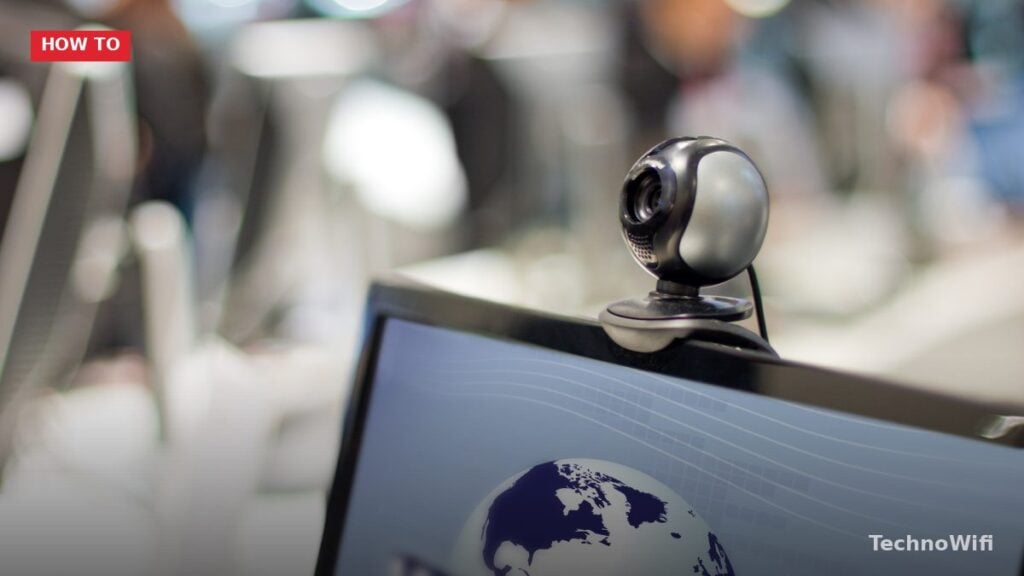
Top-center is usually the best choice because it lines up closely with the screen, creating the impression of direct eye contact during calls. If your monitor is tilted at a steep angle or has a very thin bezel, positioning the camera slightly off-center toward one end may be more stable. Experiment with a few spots before locking it down.
3. Clip the Webcam to the Monitor
Place the front of the clip on the monitor’s top edge with the camera lens facing you. Then release or press the rear part of the clip to tighten its grip. The clamping pressure depends on your monitor’s thickness:
- On thicker bezels, the clip usually grips securely with no extra effort.
- On ultra-thin monitors, you may need to add a small rubber pad or piece of adhesive foam between the clip and the bezel to prevent slipping.
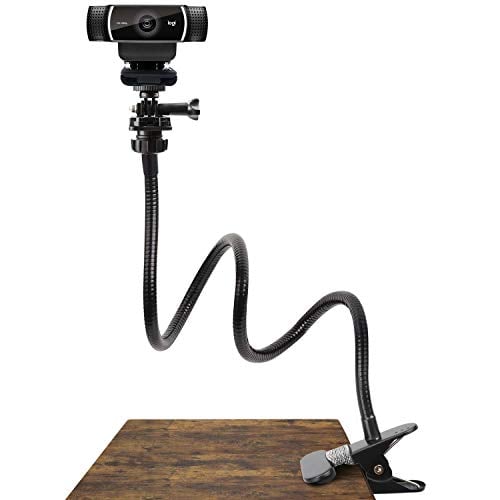
If clipping is not an option at all, try a small desktop tripod or even a stack of books to raise the webcam to eye level.
4. Fine-Tune the Angle
Once the webcam is secure, tilt and rotate it until the lens sits at roughly the same height as your eyes. A camera that points slightly downward tends to produce a more flattering angle than one aimed upward. Lock the hinge or tighten the pivot screw (if your model has one) to keep the angle fixed.
If you are still exploring options, our startech docking stations dual monitor setup guide is a solid next read.
How to Connect the Webcam to Your Computer
After physically attaching the webcam, you need to connect it to your PC or Mac so the system recognizes it.
- Plug in the USB cable. Most webcams use USB-A. If your computer only has USB-C ports, use an adapter or a USB-C to USB-A hub. Insert the cable into an available port.
- Wait for driver installation. In 2026, Windows 10, Windows 11, and macOS all support standard USB webcams out of the box. Your operating system should detect the device within a few seconds and install any required drivers automatically.
- Install manufacturer software (optional). Some brands offer companion apps that unlock features like background blur, exposure controls, and firmware updates. Check the manufacturer’s website if you want those extras.
- Follow any on-screen prompts. If a setup wizard appears, walk through the steps and click Install or Finish when done.
- Adjust settings. Open your preferred video app (Zoom, Microsoft Teams, Google Meet) and select the external webcam from the video-source dropdown to make sure it is being used instead of a built-in camera.
How to Enable the Webcam in Windows
If your webcam connects but apps cannot access it, camera permissions may be turned off. Here is how to fix that on Windows 10 and 11:
- Open Settings (press Win + I).
- Go to Privacy & Security and select Camera.
- Toggle Camera access to On.
- Scroll down and make sure the apps you plan to use (Teams, Zoom, Camera) are toggled on as well.
- Close Settings.
How to Test Your Webcam
A quick test confirms that both video and audio are working before you join a real meeting.
- Click the Start menu and type Camera.
- Open the Camera app from the results.
- You should see a live preview from the external webcam. If the built-in camera appears instead, click the camera-switch icon to toggle to the external device.
- Adjust the webcam angle until your face is centered on the screen.
- Click the record button, speak a few sentences, then stop recording.
- Play back the clip to verify picture and sound quality.
Once everything looks and sounds good, your webcam is ready for video calls, streaming, or content creation.
Quick Troubleshooting
For triple HP setups, check our 3 monitors on HP docking station guide.
For a complete walkthrough on multi-monitor setups, see our triple monitor setup guide.
If the webcam image looks blurry, wipe the lens with a microfiber cloth and make sure there is enough ambient light. A desk lamp positioned in front of you (not behind) improves picture quality dramatically. If the webcam keeps tilting or falling off the monitor, consider a webcam with a heavier clamp or switch to a tripod mount for added stability.