Nikon D850 Landscape Settings: Getting the Best from 45.7 Megapixels
If you’re looking to dial in the best Nikon D850 landscape settings, you’ve picked one of the finest cameras ever made for this type of photography. Whether you’re a professional photographer shooting wildlife and scenic vistas or a hobbyist chasing golden hour light, the D850’s 45.7-megapixel full-frame sensor captures a level of detail that few other DSLRs can match.
Nikon has earned a strong reputation among photographers of all skill levels, and the D850 represents the best of what the company offers in a DSLR body. It combines rapid shutter speeds, precise autofocus, and the kind of dynamic range that landscape photographers need to handle bright skies and dark foregrounds in a single exposure.
How to Capture Stunning Landscape Photos with the Nikon D850
Step 1. Take Advantage of the 153-Point Autofocus System
Nikon D850 landscape settings – autofocusThe D850 features Nikon’s Multi-CAM 20K autofocus module with 153 focus points (99 of which are cross-type). For landscape work, switch to single-point AF (AF-S mode) and manually place the focus point on a specific area of the scene, usually about one-third into the frame. This technique, sometimes called “hyperfocal focusing,” maximizes sharpness from foreground to background. The 15 central focus points that support f/8 lenses are especially useful when you’re shooting through a teleconverter, like pairing a 2x TC with an f/4 lens and still getting accurate autofocus.
Step 2. Shoot at f/8 for Maximum Sharpness
Most lenses hit their sharpest performance between f/5.6 and f/11, and f/8 is the sweet spot for the majority of landscape lenses. At 45.7 megapixels, the D850 reveals every bit of lens sharpness (and every flaw, too). Stopping down past f/11 introduces diffraction that softens the image, and the D850’s high resolution makes this more visible than on lower-megapixel cameras. If you need more depth of field than f/8 provides, consider focus stacking (covered in Step 5) rather than stopping down to f/16 or f/22.
When using teleconverters for distant landscape subjects, the D850 maintains full autofocus with 1.4x and 1.7x TCs on compatible lenses. This lets you reach subjects like distant mountain peaks while keeping image quality high.
Step 3. Set Your Aperture for the Scene
Nikon D850 landscape settings – apertureThe D850’s autofocus system works down to -4 EV, which is remarkably sensitive for a DSLR. Combined with the 45.7MP sensor, this means you can shoot landscapes in pre-dawn twilight, post-sunset blue hour, and other low-light conditions where other cameras would hunt for focus. Set the camera to Aperture Priority (A mode) for most landscape situations. This lets you pick the aperture while the D850 handles shutter speed. Use a narrow aperture (f/8 to f/11) for deep depth of field, or open wider (f/4 or f/2.8) when you want a shallow-focus effect on a foreground subject.
Step 4. Choose the Right Zoom Lens
The D850 works with Nikon’s full lineup of F-mount lenses, and having the right glass matters just as much as the camera settings themselves. Here are the go-to zoom lenses for landscape photography on the D850:
The Nikon 14-24mm f/2.8G is the classic ultra-wide choice for sweeping vistas. The Nikon 24-70mm f/2.8E VR covers the standard range and handles most landscape compositions well. The Nikon 70-200mm f/2.8E FL is excellent for compressing distant scenes and isolating specific details within a landscape. For a more budget-friendly option, the Sigma 24-35mm f/2 Art lens delivers outstanding sharpness and a bright f/2 aperture that’s useful for twilight and astrophotography.
Pick the focal length range based on the type of landscape you’re shooting. Wide angles (14-24mm) suit big open scenes with dramatic foregrounds. Mid-range zooms (24-70mm) are the most versatile all-around. Telephoto zooms (70-200mm) pull distant elements closer and create a layered, compressed look.
Step 5. Use Focus Stacking for Front-to-Back Sharpness
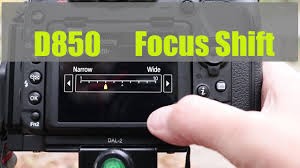
One of the D850’s standout features is built-in focus stacking. The camera can automatically shoot up to 300 images, shifting the focus point slightly between each frame. You then merge these shots in post-processing (Photoshop or Helicon Focus works well) to create a single image that’s sharp from the nearest foreground element to the farthest background.
This is incredibly useful when you have a wildflower inches from the lens and a mountain range in the distance. Normally, you’d have to choose between a sharp foreground or a sharp background (or stop down to f/22 and deal with diffraction). Focus stacking at f/8 gives you the best of both worlds.
To set it up, go to Menu > Photo Shooting Menu > Focus Shift Shooting. Set the number of shots, the focus step width (start with 5 and adjust from there), and the interval between shots. Use a tripod since the camera needs to stay perfectly still between frames.
Step 6. Set White Balance to Natural Light Auto
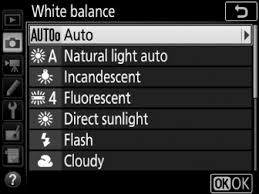
The D850 has a “Natural Light Auto” white balance setting that’s specifically designed to preserve the warm tones you see during golden hour and sunset. Regular Auto White Balance tends to “correct” these warm colors back toward neutral, which strips the atmosphere right out of your landscape shots. Natural Light Auto keeps the warmth intact.
You’ll find this setting under Menu > Photo Shooting Menu > White Balance > Auto > Natural Light Auto (or “keep warm lighting colors”). If you shoot in RAW (and you should on a 45.7MP camera), you can always adjust white balance later in post, but getting it right in-camera saves editing time and gives you a better preview on the LCD.
Step 7. Set ISO for Clean, Noise-Free Images

The D850’s base ISO of 64 is lower than most cameras, which gives you exceptionally clean images with maximum dynamic range. Stick to ISO 64 whenever you can (typically any time you’re using a tripod). The native range extends to ISO 25,600, and you can push it to ISO 32 (Lo 1) for even more highlight headroom or up to ISO 102,400 (Hi 2) in extreme low light.
For practical landscape photography, ISO 64 through ISO 400 produces excellent results. Up to ISO 1600 is still very usable with minimal visible noise. Beyond that, grain starts to become more apparent, though the D850 handles high ISO better than most 45MP+ cameras thanks to its BSI sensor design. The buffer can hold up to 51 14-bit uncompressed RAW images in a burst, which is plenty for bracketed exposure sequences or focus stacking runs.
The Nikon D850 is a landscape photographer’s dream camera when you know how to set it up properly. Its combination of resolution, dynamic range, and built-in features like focus stacking make it one of the best tools available for capturing outdoor scenes in all their detail.