GoPro Hero 10 Review: What the GP2 Chip Changes
The Hero 10 Black launched with two taglines. First: “A New Era,” which is a bold statement from a company that’s led the action camera market for over a decade.
That tagline refers to the GP2 processor, basically the engine that powers everything inside the Hero 10. The GP2 brings noticeably higher frame rates and smoother overall performance, though the core shooting modes for stills and video haven’t changed much from the Hero 9.
The second tagline, “Speed with Ease,” actually holds up. The Hero 10 is genuinely faster and more responsive than its predecessor.
But does the new processor deliver on all of GoPro’s promises? Here’s our take in this GoPro Hero 10 review.
Technical Specifications
- Sensor Type: CMOS Sensor
- Sensor Size: 1/2.3″
- Sensor Resolution: 23 Megapixels
- Max Shooting Resolution: 5.3K (3840p)
- Display: Front: 1.14″ Live View Monitor and Rear: 2.27″ Fixed-Type Touchscreen
- Image Capture Speed: 120 fps
- Image Stabilization: Yes
- Lens Mount: Max Lens Mod
- Optical Zoom: None
- Video Format: HEVC (H.265) and MP4
- Video Output: 1x USB Type-C 3.1
- Native ISO: 100-6400
- Shutter Speed: 1/25 – 1/2,000 sec
- Audio Input: None
- Audio Output: None
- Storage: 1x SDHC or SDXC
- Microphone: Built-in directional microphone
- Battery: 1720mAh Li-ion
- Dimensions: ‐2.8 x 2.0 x 1.3 inches
- Weight: ‐5.6 ounces
Other Key Features
Battery
The Hero 10 uses the same 1,720mAh battery as the Hero 9, which is bigger than all previous GoPro batteries.
The catch? The Hero 10’s more demanding dual displays and high frame-rate modes eat through that capacity faster. In testing, continuous 4K@30fps recording with HyperSmooth on and screen brightness at 50% lasted about 70 minutes.
We break down GoPro 9 in a separate post that complements this one.
That’s noticeably shorter than the Hero 9, though close to what the Hero 8 delivered. The takeaway: always carry a spare battery or two. That advice hasn’t changed.
Design
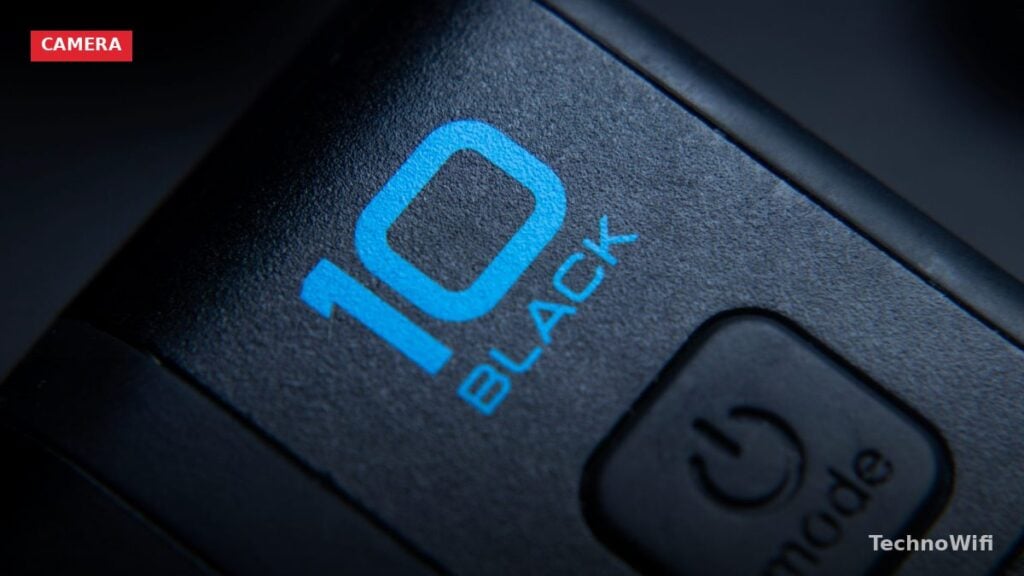
Other than a blue logo, the Hero 10 looks nearly identical to the Hero 9.
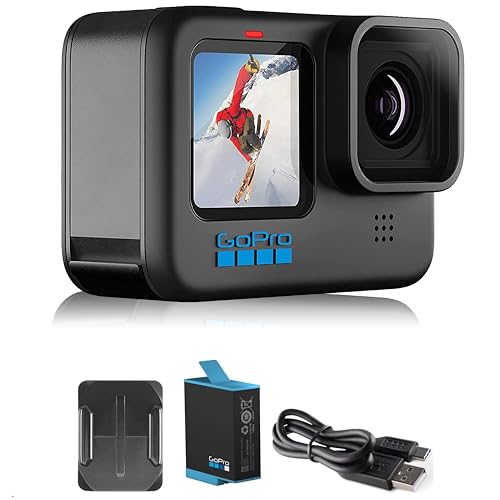
The power and record buttons sit in a slightly darker hard plastic frame. Pop open the side flap and you’ll find the battery, micro SD card slot, and USB Type-C 3.1 port.
A small 1.14″ screen sits on the rubberized front, while the rear 2.27″ touchscreen handles most of the controls. It’s all very familiar if you’ve used a Hero 9.
GoPro also brought back the flip-out mounting feet that debuted on the Hero 8. These make attaching the camera to accessories easy, even without an external housing.
Image and Video Quality
Since the Hero 10 shares the same sensor as the Hero 9, you shouldn’t expect night-and-day differences in photo and video quality.
However, GoPro says the GP2 processor improves low-light performance through better processing algorithms. That checks out in practice. You’ll notice less grain in both stills and video shot under dim lighting compared to the Hero 9.
For a different take, see our guide on camera polarizer lens.
Color reproduction looks well-balanced across stills and video, with a nice mix of punch and natural tones. Contrast handling has improved in tricky situations like backlighting or shooting toward strong light sources.
Still photos are decent, but the camera has its limits. GoPro claims better night mode performance, but for any serious night photography, you’ll still want the Hero 10 on a tripod.
Performance
The GP2 processor makes the Hero 10 feel more polished and enjoyable to use than the Hero 9. Menus are snappier, mode switching is faster, and the overall experience is smoother.
That said, some long-standing GoPro issues persist. Battery drain and overheating are still concerns, especially when shooting at higher resolutions and frame rates.
Price
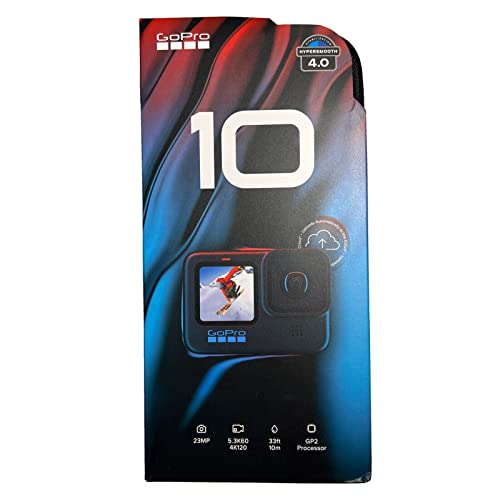
The GoPro Hero 10 costs $500, or $400 for GoPro subscribers.
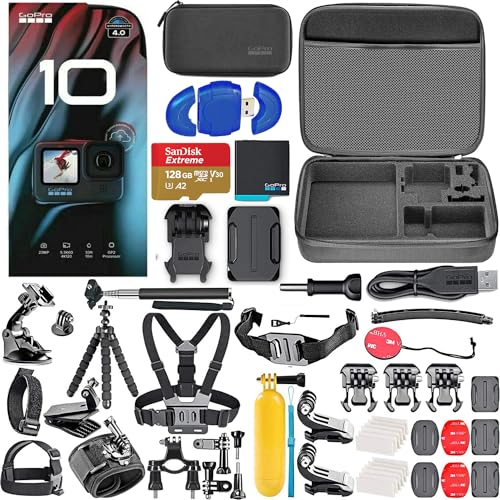
A combo bundle with the camera, a 32GB SD card, two batteries, and a tripod runs $450 with a GoPro subscription (formerly GoPro Plus) or $550 without one. Existing GoPro members can grab the combo for $400.
Final Thoughts
The Hero 10 may look the same as the Hero 9 on the outside, but the real upgrade is under the hood. The new GP2 processor pushes video up to 5.3K at 60fps, doubling the frame rate of the Hero 9 at that resolution.
It captures stills at 23 megapixels, and the improved image stabilization is where you’ll notice the biggest difference compared to older GoPro cameras. If you’re upgrading from a Hero 8 or earlier, the jump is significant.