Canon EOS R5 vs R6: Which Camera Is Right for You?
A lot of photographers want to know: which is the better buy, the EOS R5 or the R6?
The EOS R5 is an 8K powerhouse, which makes it the clear frontrunner for video. But it also packs a 45-megapixel full-frame CMOS sensor for stills.
The EOS R6 isn’t exactly a slouch, though. It delivers better ISO performance and low-light AF (autofocus), which makes it a strong contender for specific shooting situations.
These cameras also share plenty of core specs, including in-body image stabilization. So there’s quite a bit to break down here.
Both of these rank among the best mirrorless cameras you can buy right now. Let’s look at their features side by side.
Key Specifications
EOS R5
- Image Resolution: 45 Megapixels
- Burst Shooting: 12fps
- Connectivity: Built-in Wireless
- Display: 3.2″ Fully Articulating Touchscreen
- Lens Mount: Canon RF
- Lens Type: Full-Frame CMOS
- Video Resolution: 8K (4320p)
- Viewfinder: 5760k dot Electronic
- Dimensions: 5.43 x 3.84 x 3.44 inches
- Weight: 26.03 Ounces
EOS R6
- Image Resolution: 20 Megapixels
- Burst Shooting: 12fps
- Connectivity: Built-in Wireless
- Display: 3.2″ Fully Articulating Touchscreen
- Lens Mount: Canon RF
- Lens Type: Full-Frame CMOS
- Video Resolution: 4K (2160p)
- Viewfinder: 3690k dot Electronic
- Dimensions: 5.43 x 3.84 x 3.48 inches
- Weight: 23.99 Ounces
Autofocus
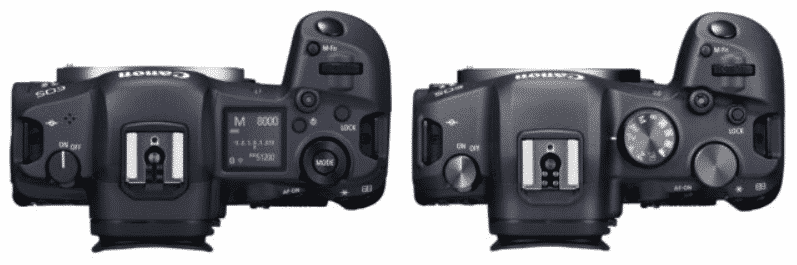
The EOS R5 and R6 share the same AF system, including the Dual Pixel CMOS AF II phase detection powered by the Digic X chip.
They also both include the same Deep Learning AF feature found on the flagship EOS-1D X Mark III.
The R6 offers better low-light autofocus thanks to its higher ISO sensitivity. It can autofocus down to -6.5EV, which is roughly the equivalent of a dark room lit by a single candle. The R5 can autofocus down to -6EV.
For the complete picture, our Canon 4K cameras guide fills in the gaps.
For pure speed, the EOS R5 is the winner. Canon claims it has the fastest AF speed available at just .05 seconds.
Burst Shooting

The EOS R5 and R6 both have blazing fast continuous shooting modes: up to 20fps with the electronic shutter and 12fps with the mechanical shutter.
While the raw speeds are identical, the buffer depths differ because each camera has a different resolution sensor.
Connectivity
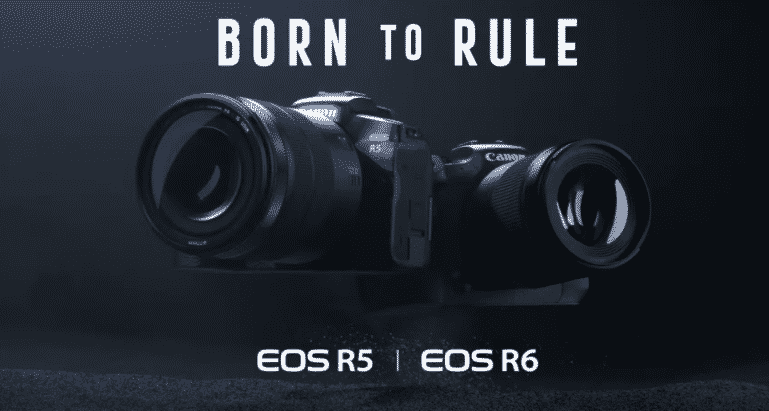
Both cameras have the same physical connections, including a 3.5mm port, microphone, micro HDMI, and USB-C.
The remote terminals are different, though. The R5 has an N3 terminal, and the R6 has an E3 terminal.
Both cameras have Bluetooth 4.2 and WiFi (2.4 GHz) for wireless connectivity.
The R5 also supports dual-band WiFi (2.4 GHz and 5 GHz), which actually makes it better than Canon’s own flagship, the EOS-1D X Mark III, in this area.
Design
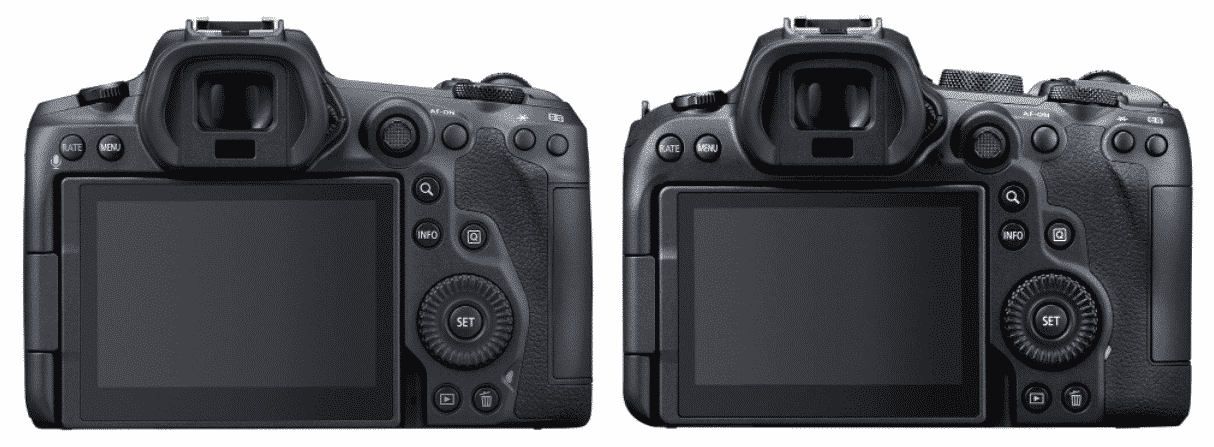
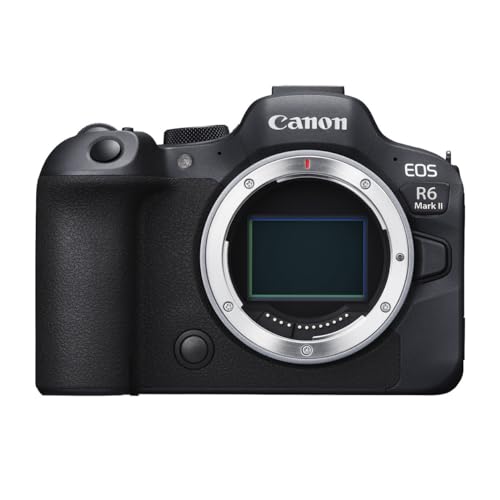
You’ll need to look at both cameras up close to notice that the EOS R6 is actually slightly larger than the EOS R5. It’s a bit bulkier, though the depth and height are the same.
We break down Canon mirrorless cameras in a separate post that complements this one.
It’s also noticeably lighter at 24 ounces, compared to the R5 at just over 26 ounces.
The size difference means the R6 loses the shooting data display on top, so you’ll need to rely on the touch display to see your settings.
Resolution
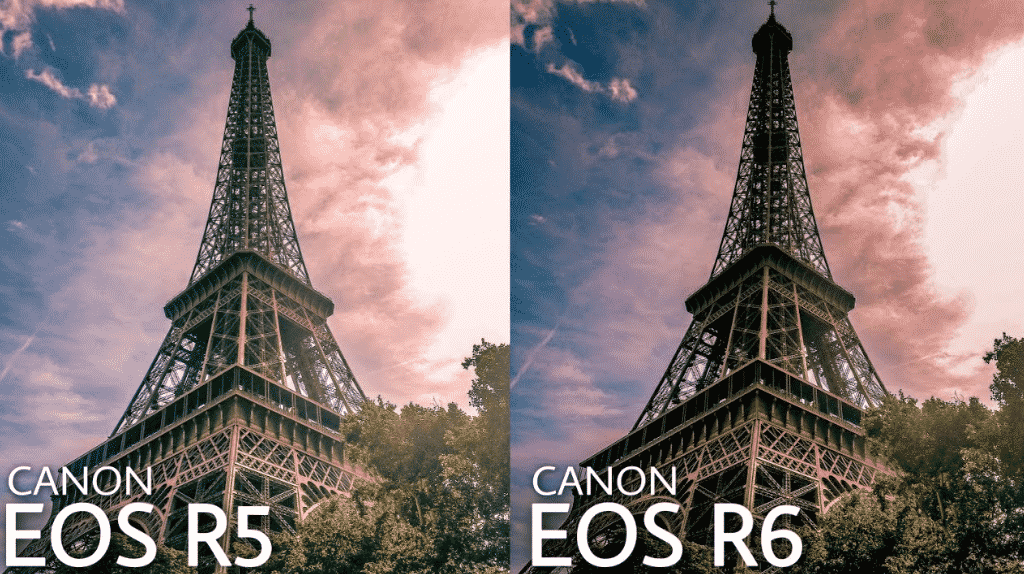
Both cameras use the same sensor size. What’s impressive about the R5 is that it doesn’t suffer from the typical limitations of high-res sensors, like reduced burst shooting speed.
Even at 45 Megapixels, it delivers impressive results without compromise.
Video
Besides resolution, this is where the biggest gap between the R5 and R6 shows up.
The EOS R5 can shoot 8K (4320p) raw footage internally at up to 30fps and captures in both DCI and UHD formats.
The EOS R6 doesn’t offer 8K raw footage. Instead, it captures oversampled 5K raw footage, which produces 4K (2160p) UHD video in 8-bit H264 format at up to 60fps.
The EOS R6 can also capture Full HD (1080p) video at 120fps. Full Dual Pixel CMOS autofocus is available in all video modes on both the R5 and R6.
Pricing
The price tag is the most obvious difference between the Canon EOS R5 and Canon EOS R6.
The EOS R5 body is priced at $3900 or £4200, while the EOS R6 body is considerably more affordable at $2500 or £2500.
Final Thought
When you add up all the differences between these two Canon cameras, they’re clearly designed for different photographers.
The EOS R5 is built for pros who want the most from their gear, whether that’s detailed footage or high-resolution stills.
The EOS R6 is more of a stills-focused camera built for event and sports photographers who need reliability and speed in changing conditions.