This Canon EOS M10 review takes an honest look at one of Canon’s earliest entry-level mirrorless cameras, a compact, beginner-friendly body that has been discontinued but still turns up on the used market at tempting prices. If you are considering a budget mirrorless camera in 2026, here is everything you need to know before spending your money.
Canon EOS M10 at a Glance
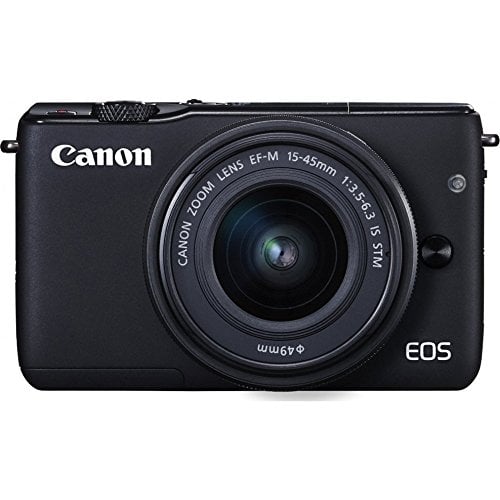
Released in 2015, the Canon EOS M10 was designed as a step up from point-and-shoot cameras for everyday photographers. It uses the EF-M mount with an 18-megapixel APS-C CMOS sensor, and its slim body is closer in size to a compact camera than a traditional DSLR.
Canon has since discontinued the entire EF-M system in favor of the RF mount. That means no new EF-M lenses are coming, which is an important factor to weigh before buying into this system in 2026.
Design and Build Quality
The M10 is remarkably small. It weighs just 301 grams with the battery and kit lens, making it easy to slip into a bag or even a large jacket pocket. The body is mostly plastic, but it feels well-assembled for its price class.
Available in black, white, and grey, it looks more like a lifestyle accessory than a serious camera, and that was exactly Canon’s intention. The minimalist design appeals to casual shooters and travel photographers who want something lighter than a canon camera DSLR.
Touchscreen and Controls
The 3-inch flip-up touchscreen is the primary interface. It tilts upward 180 degrees for selfies, which was a standout feature when the camera launched. Touch controls are responsive and intuitive, you can tap to focus, swipe through images, and navigate menus easily.
Physical controls are sparse. There is no mode dial on top, which means you change shooting modes through the touchscreen. Experienced photographers may find this limiting, but beginners appreciate the simplicity.
Image Quality
The 18-megapixel APS-C sensor uses Canon’s DIGIC 6 processor. Image quality is genuinely good for the class, sharp detail, accurate colors, and pleasant skin tones that Canon is known for.
Low-light performance is acceptable up to ISO 3200, with noise becoming noticeable at ISO 6400 and above. This is typical for APS-C sensors of this generation. You will get solid results in daylight and well-lit indoor environments.
JPEG and RAW Output
JPEGs straight from the camera look polished with natural colors and gentle contrast. RAW files offer reasonable flexibility for post-processing, though dynamic range is a step behind more recent Canon sensors like the one in the M50 Mark II.
Autofocus Performance
The M10 uses a Hybrid CMOS AF II system with 49 AF points. In good light, focusing is quick and accurate for stationary subjects. However, continuous autofocus for moving subjects is unreliable, this camera struggles with sports, pets, and active children.
There is no Eye Detection AF. You can tap the touchscreen to set focus points, which works well for portraits when your subject is still.
Video Capabilities
Video recording maxes out at 1080p at 30 fps. There is no 4K option, which is expected for a 2015 release but a notable limitation if you want to create content in 2026. Footage is decent for social media clips and casual family videos.
The built-in microphone captures serviceable audio, and there is no external microphone jack. Video autofocus uses the same Hybrid CMOS AF II system, which hunts occasionally in low contrast scenes.
Wireless Connectivity
WiFi and NFC
Built-in WiFi lets you transfer images to your smartphone using Canon’s Camera Connect app. NFC allows one-tap pairing with compatible Android devices. These wireless features work well and remain functional in 2026.
You can also use the app for basic remote shooting, handy for group photos or tripod-mounted shots where you cannot reach the shutter button.
EF-M Lens Ecosystem
Canon made about a dozen EF-M lenses before discontinuing the mount. The standout options include the EF-M 22mm f/2 STM pancake lens, the EF-M 11-22mm f/4-5.6 IS STM wide-angle, and the EF-M 32mm f/1.4 STM.
You can also adapt Canon EF and EF-S lenses using the EF-EOS M adapter. This opens up hundreds of lenses, though the size advantage disappears when you mount a full-size DSLR lens on this tiny body.
The Discontinued Mount Problem
Since Canon has moved to the RF mount for mirrorless, buying into EF-M in 2026 means accepting a closed ecosystem. Lens prices for EF-M optics are actually quite low on the used market, which is a silver lining. Just do not expect any new releases.
Battery Life
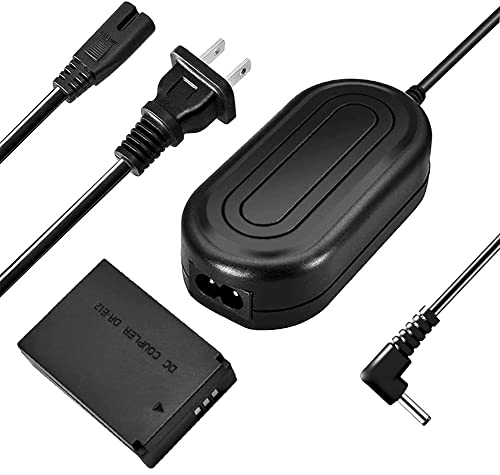
The LP-E12 battery is rated for approximately 255 shots per charge. This is average for a small mirrorless camera. Carry a spare if you plan to shoot heavily during a day trip or event.
Who Should Buy the Canon EOS M10 in 2026?
At used prices well under $200, the M10 makes sense as a first interchangeable-lens camera for absolute beginners, a lightweight travel companion for casual snapshots, or a backup body for Canon shooters who already own EF-M lenses.
It does not make sense if you want 4K video, fast autofocus for action, or a camera system you can grow with over the next five years. The discontinued mount limits long-term investment.
Alternatives Worth Considering
The Canon EOS M50 Mark II offers significant upgrades, better AF, 4K video, and an electronic viewfinder, and sells used at reasonable prices. If you want to stay in Canon’s current ecosystem, the EOS R50 gives you the RF mount with a similarly compact body.
Outside Canon, the Sony A6000 is another used-market bargain with faster autofocus and a larger lens selection.
Canon EOS M10 Review: Final Verdict
The Canon EOS M10 delivers charming simplicity and solid image quality in an incredibly small package. As a budget used camera in 2026, it still takes beautiful photos in good light and remains one of the easiest cameras to learn on. Just go in with realistic expectations about its limitations, no 4K, sluggish continuous AF, and a lens mount with no future. For the right buyer at the right price, it is a genuinely fun little camera.