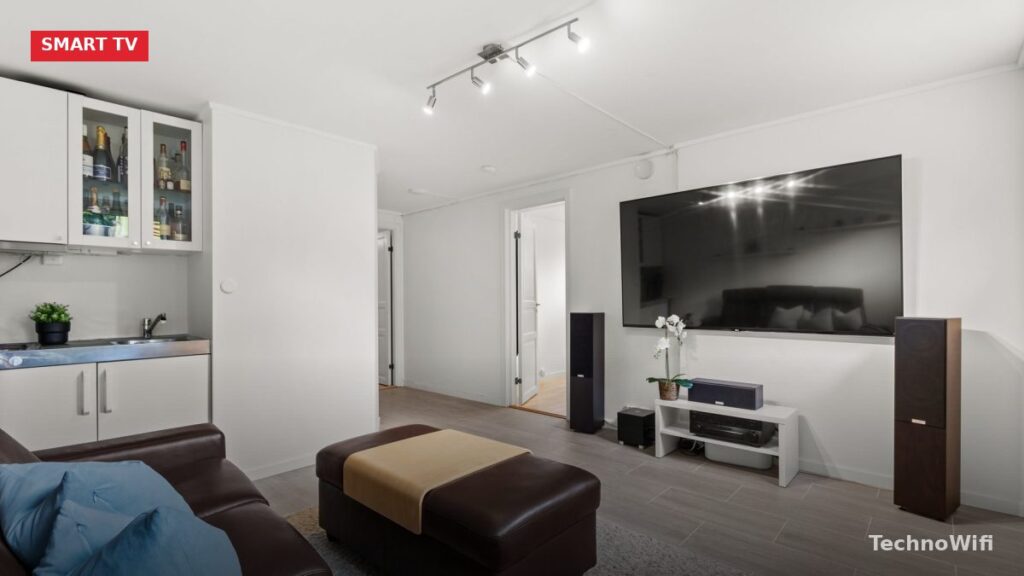
8K televisions have been on store shelves since 2019, and the prices have dropped each year. But dropping from $15,000 to $3,000 doesn’t automatically make something a good buy. The question most people are really asking is whether 8K delivers a visible improvement over 4K at home – and whether there’s actually anything to watch in 8K resolution.
For the majority of buyers in 2026, the honest answer is no. 4K remains the sweet spot for picture quality, content availability, and value. But there are specific situations where 8K makes sense, and understanding the technology helps you make a smarter purchase.
What Does 8K Resolution Actually Mean
8K refers to a display resolution of 7680 x 4320 pixels. That works out to roughly 33.2 million pixels on the screen. To put that in perspective, a 4K display (3840 x 2160) has about 8.3 million pixels, and a 1080p display (1920 x 1080) has about 2.1 million pixels.
So 8K packs four times the pixel count of 4K and sixteen times the pixel count of 1080p into the same screen size. Each pixel is physically smaller, which should produce a sharper, more detailed image – especially on very large screens where individual pixels would otherwise be visible.
| Resolution | Pixel Dimensions | Total Pixels | Typical Screen Sizes | Content Availability |
|---|---|---|---|---|
| 1080p (Full HD) | 1920 x 1080 | ~2.1 million | 24″ – 55″ | Very high – broadcast TV, most streaming, Blu-ray |
| 4K (Ultra HD) | 3840 x 2160 | ~8.3 million | 43″ – 85″ | High – Netflix, Disney+, Apple TV+, 4K Blu-ray |
| 8K (Full Ultra HD) | 7680 x 4320 | ~33.2 million | 65″ – 98″ | Very low – limited YouTube, no streaming services, no 8K disc format |
On paper, the jump from 4K to 8K sounds dramatic. In practice, the pixel density increase hits a wall defined by human eyesight and how far you sit from the screen.
Can You Actually Tell the Difference Between 4K and 8K
Human visual acuity has a hard limit. At a typical viewing distance of 6 to 10 feet from the TV, your eyes physically cannot resolve individual pixels on a 4K screen that’s 65 inches or smaller. The pixels are already too small to see. Adding four times more pixels to a screen where you couldn’t see the existing ones doesn’t produce a visible improvement.
The 8K advantage only becomes apparent in two scenarios. First, on very large screens – 85 inches and above – where you sit close enough that the screen fills a wide portion of your visual field. Second, when viewing native 8K content that was shot and mastered at full 8K resolution, which brings us to the bigger problem.
Is There Any 8K Content Available to Watch in 2026
This is where the 8K argument falls apart for most people. As of 2026, native 8K content is extremely scarce. YouTube supports 8K video uploads, and you can find tech demos, nature footage, and some travel videos in 8K. A handful of creators shoot in 8K. That’s about it.
No major streaming service – Netflix, Disney+, Apple TV+, Amazon Prime Video, HBO Max – offers 8K streams. Most are still working on delivering consistent 4K quality with HDR. There is no 8K Blu-ray disc format, and no plans to create one. Broadcast television doesn’t support 8K in the United States.
Japan’s NHK launched some 8K broadcasts for special events, but that remains an exception rather than a trend. The gaming world isn’t there either. Current-generation consoles like the PlayStation 5 and Xbox Series X target 4K (and sometimes struggle to maintain it). PC gaming at 8K requires extremely expensive hardware and still can’t hit 60 frames per second in most titles.
How Does 8K Upscaling Work on Modern TVs
Since native 8K content barely exists, every 8K TV spends most of its time upscaling lower-resolution content. Samsung uses its Neural Quantum Processor, LG uses its Alpha 9 AI processor, and Sony uses its Cognitive Processor XR. All three use machine learning to analyze incoming 4K or 1080p signals and fill in the missing pixels.
The results are genuinely impressive on high-end models. Samsung’s Neo QLED 8K TVs, for example, apply AI-based texture analysis to sharpen edges and add detail that the original source didn’t contain. Side by side, upscaled 4K content on a good 8K TV can look slightly crisper than the same content on a 4K TV of the same size.
But “slightly crisper” is the key phrase. In blind viewing tests at normal distances, most people struggle to consistently pick the 8K display. The improvement is subtle at best and invisible at worst, depending on the source material and viewing distance.
How Close Do You Need to Sit to See 8K
Viewing distance is the factor that matters most when deciding between 4K and 8K. The closer you sit, the more pixels your eyes can resolve. The further you sit, the more those extra pixels are wasted.
Here are the approximate distances where you could begin to notice the difference between 4K and 8K resolution, based on 20/20 visual acuity.
| Screen Size | 4K – Minimum Distance to See Full Detail | 8K – Minimum Distance to See Full Detail | Typical Living Room Distance |
|---|---|---|---|
| 55″ | 3.6 feet | 1.8 feet | 7 – 9 feet |
| 65″ | 4.3 feet | 2.1 feet | 7 – 10 feet |
| 75″ | 4.9 feet | 2.5 feet | 8 – 10 feet |
| 85″ | 5.6 feet | 2.8 feet | 8 – 12 feet |
| 98″ | 6.4 feet | 3.2 feet | 9 – 14 feet |
Look at the “8K – Minimum Distance” column. To see the full benefit of 8K on a 65-inch TV, you’d need to sit about 2 feet away from the screen. Nobody watches TV from 2 feet. Even on a massive 98-inch display, you’d need to be within 3.2 feet to resolve every 8K pixel – far closer than most people sit in a living room.
At a typical distance of 8 to 10 feet, 4K and 8K look nearly identical on any screen under 85 inches. The 8K advantage only starts to appear on 85-inch and larger screens when the viewer is seated relatively close.
How Much More Does an 8K TV Cost vs 4K
Price is another major hurdle. In 2026, 8K TVs remain significantly more expensive than their 4K equivalents. A Samsung 65-inch Neo QLED 4K TV runs around $1,500 to $2,000. The same size in 8K starts at $3,500 and goes higher. At 85 inches, the gap widens further – expect to pay $3,000 to $4,000 for a premium 4K model versus $5,000 to $7,000 for 8K.
You’re paying a 2x to 3x premium for a resolution increase that most people can’t see at normal viewing distances, displaying content that doesn’t exist natively in 8K. That extra money would buy a meaningful upgrade to a premium 4K OLED with better contrast, HDR performance, and color accuracy – all of which produce a more visible improvement in picture quality than extra pixels.
Do You Need Special HDMI Cables for 8K
Yes. 8K at 60 frames per second requires HDMI 2.1 bandwidth. An 8K signal at 60fps needs about 48 Gbps of throughput, which is the maximum supported by HDMI 2.1. Older HDMI 2.0 cables max out at 18 Gbps – not enough to carry an uncompressed 8K signal.
You’ll need Ultra High Speed HDMI cables, which are certified for 48 Gbps. These cables are labeled “Ultra High Speed” and carry the HDMI 2.1 specification. They cost $10 to $20 and are widely available. Most 8K TVs include one in the box.
Your source devices also need HDMI 2.1 ports. Most 2026 AV receivers, the PlayStation 5, Xbox Series X, and recent NVIDIA and AMD graphics cards support HDMI 2.1. Older streaming devices, soundbars, and cable boxes may only have HDMI 2.0 ports, which limits output to 4K.
Who Should Actually Buy an 8K TV in 2026
8K makes sense for a small group of buyers. If you’re buying an 85-inch or larger TV and you sit within 8 feet of the screen, you may notice the added sharpness – especially with high-quality upscaled content. At that screen size and distance, the extra pixels start to matter.
Professional video editors and photographers who work with 8K footage also benefit. Editing native 8K video on an 8K monitor lets you see the full resolution of your source material, zoom into footage without losing detail, and deliver a final product at the highest quality. Samsung and LG both market their 8K panels to creative professionals for this reason.
Buyers who want to future-proof their investment for the next 7 to 10 years could also consider 8K, though this is a gamble. 8K content will eventually arrive, but the timeline is uncertain. If you’re the type of person who keeps a TV for a decade, buying 8K now means you’ll be ready when the content catches up.
Who Should Skip 8K and Buy a 4K TV Instead
Most people. If your budget is under $3,000, if your screen size is under 75 inches, or if you sit more than 8 feet from the TV, a 4K set will deliver the same viewing experience for less money. The content ecosystem is built around 4K right now. Streaming services, Blu-ray discs, gaming consoles, and broadcast standards all target 4K as the high-end format.
Instead of spending extra on 8K, put that budget toward better panel technology. A 4K OLED from LG or Sony will produce deeper blacks, wider viewing angles, and more vivid HDR highlights than an 8K LED at the same price point. Contrast and color accuracy have a bigger impact on perceived picture quality than pixel count alone.
Is 8K Worth It FAQs
Can you tell the difference between 4K and 8K?
At typical living room distances of 7 to 10 feet, most people cannot tell the difference on screens smaller than 85 inches. The human eye has a resolution limit, and at those distances, 4K pixels are already too small to see individually. On a 98-inch screen at 6 feet, the difference becomes visible but still subtle.
Is there 8K content to watch?
Very little. YouTube has some 8K videos, mostly tech demos and nature footage. No streaming service offers 8K. There is no 8K Blu-ray format. Gaming consoles don’t output at 8K. Japan’s NHK has aired limited 8K broadcasts, but this hasn’t expanded globally. In 2026, your 8K TV will spend nearly all its time upscaling 4K and 1080p content.
Do you need a special HDMI cable for 8K?
Yes. You need an Ultra High Speed HDMI cable that supports HDMI 2.1 and 48 Gbps bandwidth. Standard HDMI cables (HDMI 2.0) can only handle 4K at 60fps. Most 8K TVs come with one Ultra High Speed cable in the box. Additional cables cost $10 to $20 and are easy to find online or at electronics stores.
Will 8K become the standard?
Eventually, but not soon. The transition from 1080p to 4K took roughly a decade, and 4K only reached mainstream adoption around 2020. 8K adoption requires affordable 8K cameras, editing tools, distribution infrastructure, and enough consumer demand to justify the cost. Most industry analysts don’t expect 8K to become mainstream before 2030 at the earliest. For now, 4K is the standard that the entire content pipeline is built around.
Sources
Samsung – 8K TVs and Neo QLED 8K Technology | HDMI.org – HDMI 2.1 Specification