DSLR cameras aren’t the newest tech on the block anymore. Canon and Nikon have shifted their engineering focus to mirrorless systems, and new DSLR development has essentially stopped. But here’s the upside: that shift has created one of the best buying opportunities in photography history. Proven DSLR bodies with excellent image quality are now selling at steep discounts, and the used lens market is overflowing with affordable glass.


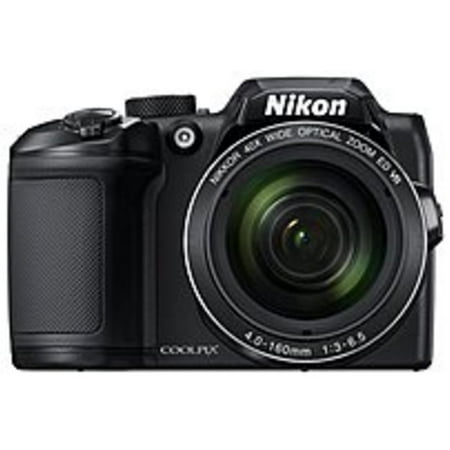
For anyone getting into photography on a budget, a DSLR under $500 still makes a lot of sense in August 2026. You get an optical viewfinder with zero lag, battery life that outlasts any mirrorless competitor, and access to decades of compatible lenses. These are mature cameras with well-documented quirks and massive online communities ready to help.
We evaluated the best DSLR cameras under $500 based on image quality, autofocus performance, ease of use, battery life, and overall value. Every camera on this list delivers outstanding results for beginners and hobbyists alike.
What are the best DSLR cameras under $500?
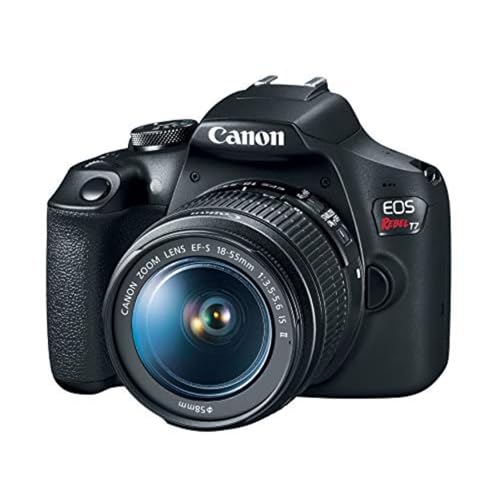
The Canon EOS Rebel T7 is the easiest recommendation for anyone buying new. It pairs a reliable 24.1-megapixel sensor with Wi-Fi connectivity, a huge lens ecosystem, and a street price around $400 with a kit lens. For those open to discontinued or refurbished models, the Nikon D3500 offers a lighter body, longer battery life, and equally strong image quality.
Beyond those two, the Canon EOS Rebel SL3 brings 4K video and a flip screen to the table. The Nikon D5600 delivers a touchscreen and excellent handling. And the Pentax K-70 stands alone with weather sealing and in-body image stabilization at this price point.
Here’s how the top five DSLR cameras under $500 compare on the specs that matter most.
| Camera | Megapixels | AF Points | Max Video | Battery Life | Weight (body) | Price Range |
|---|---|---|---|---|---|---|
| Canon EOS Rebel T7 | 24.1 MP | 9-point | 1080p/30fps | ~500 shots | 475 g | $380-$430 |
| Nikon D3500 | 24.2 MP | 11-point | 1080p/60fps | ~1,550 shots | 365 g | $350-$450 |
| Canon EOS Rebel SL3 | 24.1 MP | 9-point (143 Dual Pixel) | 4K/24fps (cropped) | ~1,070 shots | 449 g | $480-$530 |
| Nikon D5600 | 24.2 MP | 39-point | 1080p/60fps | ~970 shots | 465 g | $400-$500 |
| Pentax K-70 | 24.2 MP | 11-point | 1080p/60fps | ~480 shots | 688 g | $400-$500 |
Which DSLR camera is best for beginners under $500?
Canon EOS Rebel T7 (EOS 2000D), best new DSLR under $500
The Canon EOS Rebel T7 is the most straightforward DSLR you can buy new today. Canon designed it for first-time camera owners, and that focus on simplicity shows in every aspect of the experience. The 24.1-megapixel APS-C sensor produces clean, detailed images in good light. Colors are warm and pleasing straight out of the camera, which means less time editing and more time shooting.
Built-in Wi-Fi and NFC make it easy to transfer photos to your phone through the Canon Camera Connect app. The 9-point autofocus system is basic by modern standards, but the center point is a cross-type sensor that locks on quickly and accurately. For portraits, landscapes, and everyday shooting, this AF system does the job without fuss.
Video tops out at 1080p/30fps, which is the T7’s most obvious limitation. There’s no 4K recording and no articulating screen. If video is a priority, you should look at the Canon SL3 instead. Still, the T7 records decent Full HD footage for casual use, and the massive Canon EF lens ecosystem means you can add everything from a $100 portrait lens to professional-grade L glass as your skills grow.
| Spec | Detail |
|---|---|
| Sensor | 24.1 MP APS-C CMOS |
| Autofocus | 9-point (1 cross-type) |
| ISO Range | 100-6400 (expandable to 12800) |
| Burst Rate | 3 fps |
| Video | 1080p at 30fps |
| Screen | 3-inch fixed LCD |
| Connectivity | Wi-Fi, NFC |
| Battery | LP-E10 (~500 shots) |
| Weight | 475 g (body only) |
| Price | ~$400 with 18-55mm kit lens |
At around $400 with the 18-55mm kit lens, the Rebel T7 is an honest camera that does the fundamentals well. It won’t impress pixel-peeping reviewers with flashy features, but it’ll teach you photography without getting in the way.
Nikon D3500, best lightweight DSLR for learning
Nikon discontinued the D3500, yet it remains one of the best beginner DSLRs ever made. At just 365 grams, it’s the lightest DSLR on this list by a wide margin. That low weight matters when you’re carrying a camera all day on vacation or a photo walk. Combined with its compact body, the D3500 feels surprisingly comfortable in smaller hands.
Image quality matches or beats every other camera in this price range. The 24.2-megapixel sensor delivers sharp, clean photos with accurate colors. High-ISO performance is solid up to ISO 3200, and images stay usable at ISO 6400 with some noise reduction in post. Dynamic range is excellent for an entry-level body, so you can recover shadows and highlights with real flexibility.
Battery life is the D3500’s killer feature. Nikon rates it at 1,550 shots per charge, which is roughly triple what most mirrorless cameras deliver. You can take this camera on a long weekend trip without packing a charger. No other camera under $500 comes close to this level of endurance.
The built-in Guide Mode walks beginners through camera settings with on-screen explanations. Rather than leaving you to decode icons and abbreviations, Guide Mode explains what each setting does and how changing it will affect your photo. This feature alone makes the D3500 an outstanding learning tool.
| Spec | Detail |
|---|---|
| Sensor | 24.2 MP APS-C CMOS (no AA filter) |
| Autofocus | 11-point (1 cross-type) |
| ISO Range | 100-25600 |
| Burst Rate | 5 fps |
| Video | 1080p at 60fps |
| Screen | 3-inch fixed LCD |
| Connectivity | Bluetooth |
| Battery | EN-EL25a (~1,550 shots) |
| Weight | 365 g (body only) |
| Price | ~$350-$450 new/refurbished |
Because the D3500 is discontinued, your best options are refurbished units from Nikon’s official outlet, Amazon Renewed, or reputable camera retailers like B&H Photo and KEH. Expect to pay between $350 and $450 with the 18-55mm AF-P kit lens. At that price, you’re getting one of the most capable entry-level DSLRs ever produced.
Canon EOS Rebel SL3 (EOS 250D), best DSLR with 4K video under $500
The Canon EOS Rebel SL3 is the most feature-packed DSLR at this price point. It records 4K video, has a vari-angle flip screen, and uses Canon’s Dual Pixel CMOS AF for smooth, accurate autofocus during Live View and video recording. Those three features alone put it ahead of every other DSLR under $500 for content creators who split their time between photos and video.
There are a few caveats about the 4K mode. The video has a significant 1.6x crop, which narrows your field of view substantially. Using a wide-angle lens helps compensate, but you won’t get the same expansive look as a native 4K mirrorless camera. Full HD recording at 1080p has no crop and looks excellent, so many users stick with that mode for most shooting.
Dual Pixel AF is the real star here. When you shoot through Live View or record video, the SL3’s autofocus tracks subjects smoothly across the frame. Touch the screen to shift focus between subjects, and the camera responds quickly without hunting. This is a massive upgrade over the basic contrast-detect AF found in the Rebel T7 and Nikon D3500 during Live View.
The flip screen makes selfies, vlogging, and low-angle shots far easier. You can tilt it forward to face yourself while recording, or angle it downward to shoot above crowds. Build quality is plastic but solid, and the body is compact enough to carry comfortably all day.
| Spec | Detail |
|---|---|
| Sensor | 24.1 MP APS-C CMOS |
| Autofocus | 9-point viewfinder / 143-point Dual Pixel (Live View) |
| ISO Range | 100-25600 (expandable to 51200) |
| Burst Rate | 5 fps |
| Video | 4K at 24fps (cropped), 1080p at 60fps |
| Screen | 3-inch vari-angle touchscreen LCD |
| Connectivity | Wi-Fi, Bluetooth |
| Battery | LP-E17 (~1,070 shots) |
| Weight | 449 g (body only) |
| Price | ~$500 with 18-55mm STM kit lens |
At roughly $500 with the kit lens, the SL3 sits right at the ceiling of our budget. It’s worth stretching for if video matters to you. Otherwise, the T7 or D3500 deliver the same still photo quality for less money.
Is the Nikon D5600 still worth buying in 2026?
Absolutely. The Nikon D5600 sits a step above the D3500 in Nikon’s lineup, and the extra features justify seeking one out on the used market. The 39-point autofocus system is noticeably faster and more reliable than the D3500’s 11-point system. More focus points mean better tracking of moving subjects, which helps with sports, pets, and active children.
A 3.2-inch vari-angle touchscreen is the other major upgrade. You can flip the screen out for selfies, tilt it for waist-level shooting, and tap to focus on any part of the frame. The touchscreen also makes navigating menus quicker, especially when you’re still learning where settings live.
Image quality is identical to the D3500 since both cameras share the same 24.2-megapixel sensor. Colors, dynamic range, and high-ISO performance are all the same. The D5600 adds time-lapse recording, more advanced bracketing options, and an intervalometer built into the body. These features become increasingly useful as your skills develop.
Used D5600 bodies sell between $400 and $500 depending on condition and included accessories. Refurbished units with a shutter count under 10,000 are excellent value. Since Nikon also discontinued this model, the used market is your primary option. Check the shutter count before buying, as DSLRs have a mechanical limit typically around 100,000 to 150,000 actuations.
What makes the Pentax K-70 different from Canon and Nikon DSLRs?
The Pentax K-70 is the most unique DSLR on this list. Where Canon and Nikon stripped features to hit budget prices, Pentax packed in advanced capabilities that you’d normally find in cameras costing twice as much. Weather sealing, in-body image stabilization, and an Astrotracer mode set it apart from every competitor.
Weather sealing means the K-70 can handle rain, snow, dust, and freezing temperatures without damage. One hundred seals protect the body from moisture and debris. If you shoot outdoors in unpredictable conditions, this camera gives you peace of mind that a Canon Rebel or Nikon D3500 simply can’t match.
In-body image stabilization (IBIS) reduces camera shake by up to 4.5 stops with any lens you attach. Canon and Nikon DSLRs at this price require optically stabilized lenses to get shake reduction. With the K-70, even old manual-focus lenses from the 1970s benefit from stabilization. This opens up a massive library of affordable vintage glass.
Astrotracer mode uses the GPS and IBIS system to track the rotation of the earth, allowing longer exposures of the night sky without star trails. No other camera under $500 offers anything like this feature. Astrophotography enthusiasts on a budget should give the K-70 serious consideration.
| Spec | Detail |
|---|---|
| Sensor | 24.2 MP APS-C CMOS (no AA filter) |
| Autofocus | 11-point (9 cross-type) |
| ISO Range | 100-102400 |
| Burst Rate | 6 fps |
| Video | 1080p at 30fps |
| Screen | 3-inch vari-angle LCD |
| Stabilization | In-body (Shake Reduction, 4.5 stops) |
| Weather Sealing | Yes (100 seals) |
| Battery | D-LI109 (~480 shots) |
| Weight | 688 g (body only) |
| Price | ~$400-$500 |
The tradeoffs are real, though. Pentax has a much smaller lens ecosystem than Canon or Nikon. The autofocus system is slower, especially for tracking fast-moving subjects. Video capabilities are limited to 1080p/30fps. And the body is noticeably heavier at 688 grams. For landscape, nature, and astrophotography, the K-70 is a hidden gem. For general-purpose shooting or video work, Canon and Nikon are safer choices.
Should you buy a used flagship DSLR instead?
This is one of the smartest strategies for getting the most camera for your money. Canon and Nikon’s mid-range and semi-professional DSLRs from 2015 to 2019 now fall well under $500 on the used market. These bodies were originally designed for serious enthusiasts and working photographers, so their build quality, autofocus systems, and ergonomics far exceed any entry-level DSLR.
The Canon EOS 80D is a prime example. Originally launched at $1,199, clean used copies now sell for $350 to $450. You get a 45-point all cross-type autofocus system, weather sealing, Dual Pixel AF for video, 7 fps burst shooting, and a strong magnesium alloy body. Image quality from its 24.2-megapixel sensor matches the Rebel T7 shot for shot, but the handling and responsiveness are in a completely different league.
On the Nikon side, the D7200 offers similar value. This was Nikon’s flagship APS-C DSLR when it launched, and it shows. A 51-point autofocus system, dual SD card slots, weather sealing, and 6 fps continuous shooting make it feel like a professional tool. Used prices hover between $350 and $450, which is remarkable for a camera this capable.
Buying used does come with risks. Always check the shutter count using a tool like myshuttercount.com or the camera’s built-in shot counter. Ask for sample photos from the seller to verify sensor and lens quality. Purchase from reputable sources that offer return policies. KEH, MPB, B&H Used, and Amazon Renewed are all reliable options. A 90-day warranty from a dealer is worth paying a small premium over a private sale with no protection.
Are DSLR cameras still worth buying over mirrorless in 2026?
The answer depends entirely on your priorities. Mirrorless cameras have clear advantages in autofocus speed, video features, size, and access to the latest lens designs. The Canon EOS R100 and Sony ZV-E10 are both available under $500 and offer more modern technology than any DSLR at the same price.
However, DSLRs still hold meaningful advantages in several areas. Battery life is the most obvious. The Nikon D3500’s 1,550-shot rating dwarfs the 300 to 500 shots typical of budget mirrorless cameras. For travel photography where charging opportunities are limited, this difference is significant.
Optical viewfinders are another DSLR strength. They show you the actual scene with zero lag, zero blackout, and zero battery drain. Some photographers strongly prefer the optical experience over electronic viewfinders, especially for landscape and street photography. This is a genuine preference, not just nostalgia.
The used lens market is where DSLRs truly shine. Decades of Canon EF, Nikon F, and Pentax K-mount lenses are available at rock-bottom prices. A used Canon 50mm f/1.8 STM costs around $80. A Nikon 35mm f/1.8G DX runs about $120. Third-party options from Sigma, Tamron, and Tokina push prices even lower. Building a versatile lens kit for under $300 is entirely realistic with a DSLR system.
The bottom line is straightforward. If you want the latest technology and plan to invest heavily in a camera system over the next decade, start with mirrorless. If you want the best possible image quality per dollar right now and don’t mind buying into a mature ecosystem, a DSLR under $500 is an exceptional value.
What should you look for when buying a DSLR under $500?
Sensor resolution matters less than you might think. Every camera on this list uses a 24-megapixel APS-C sensor, and they all produce similar image quality in good light. The differences show up in autofocus speed, video capabilities, handling, and extra features. Focus on what you plan to shoot most often, and match the camera to those needs.
Autofocus points directly affect how well a camera tracks moving subjects. The Canon Rebel T7’s 9-point system works fine for still subjects like portraits and landscapes. If you shoot sports, kids, or pets, the Nikon D5600’s 39-point system or a used Canon 80D’s 45-point system will serve you much better. More focus points also give you more composition flexibility since you can place your subject off-center and still get sharp focus.
Video capabilities vary widely. Only the Canon SL3 shoots 4K among current-production DSLRs in this price range. If you plan to create YouTube content or short films, the SL3’s flip screen and Dual Pixel AF make it the clear choice. For occasional video clips of family events, 1080p from the T7 or D3500 is perfectly adequate.
Battery life ranges from 480 shots on the Pentax K-70 to 1,550 shots on the Nikon D3500. Think about how you shoot. If you take 50 photos on a Saturday afternoon, any camera on this list will last weeks between charges. If you shoot 500 photos at a full-day event, the D3500’s endurance becomes a genuine advantage.
Lens ecosystem is a long-term consideration. Canon EF and Nikon F mount lenses are the most abundant and affordable on the used market. Pentax K-mount lenses are less common but still available. Consider what lenses you might want in the future before committing to a system. A fast 50mm portrait lens, a wide-angle zoom, and a telephoto zoom cover most shooting situations.
What are the best budget lenses for DSLR cameras under $500?
Pairing a budget DSLR with the right lens makes a bigger difference than upgrading the camera body. The kit lens that comes with most DSLRs (typically an 18-55mm zoom) is a good starting point, but a few affordable additions will dramatically expand your creative options.
The Canon EF 50mm f/1.8 STM is often called the “nifty fifty” for good reason. At around $80 used, it produces beautiful background blur for portraits, handles low light far better than any zoom lens, and forces you to think about composition by removing the zoom crutch. Every Canon DSLR owner should have one.
Nikon’s equivalent is the AF-S 35mm f/1.8G DX, priced around $120 used. On APS-C Nikon bodies, 35mm gives you roughly the same field of view as a 50mm on full frame, making it an excellent everyday lens. Sharpness is outstanding even wide open, and the compact size pairs perfectly with the lightweight D3500.
For telephoto reach, the Canon EF 55-250mm f/4-5.6 IS STM and Nikon AF-P 70-300mm f/4.5-6.3G ED DX are both available for under $150 used. These lenses bring distant subjects close for wildlife, sports, and candid photography. Image stabilization in both lenses keeps handheld shots sharp at longer focal lengths.
Third-party options from Sigma and Tamron round out the budget lens selection. The Sigma 17-50mm f/2.8 EX DC OS HSM is available for both Canon and Nikon mounts at around $200 used. It replaces the kit lens with a faster, sharper alternative that excels in low light. The constant f/2.8 aperture is a significant upgrade for indoor shooting and events.
Frequently Asked Questions
How long will DSLR cameras continue to be supported?
Canon and Nikon haven’t announced any end-of-support dates for their DSLR product lines. Firmware updates have slowed, but both manufacturers continue to service existing DSLR bodies and sell replacement parts. Third-party repair shops also have extensive parts inventories for popular models. The EF and F lens mounts will remain functional indefinitely since they are mechanical and electronic standards. Expect continued support for accessories, batteries, and repairs for at least another five to ten years based on historical patterns with other discontinued camera systems.
Can DSLR lenses be used on mirrorless cameras?
Yes, with an adapter. Canon EF lenses work on Canon RF mirrorless bodies using the official Canon EF-EOS R adapter. Nikon F lenses work on Nikon Z bodies with the Nikon FTZ or FTZ II adapter. Autofocus performance varies depending on the lens age and the adapter used, but most modern AF lenses work well. Manual focus vintage lenses adapt easily to almost any mirrorless system. Buying a DSLR now doesn’t lock you out of mirrorless later, because your lens investment transfers.
What is the difference between the Canon Rebel T7 and the Rebel T8i?
The Rebel T8i (EOS 850D) is a significant step up from the T7 in several areas. It has a 45-point all cross-type autofocus system versus the T7’s 9-point system. The T8i shoots 4K video and has a vari-angle touchscreen, while the T7 is limited to 1080p with a fixed screen. Burst shooting is faster at 7 fps compared to 3 fps. However, the T8i typically sells for $700 to $800, placing it well outside our $500 budget. If you find one used for under $500, it’s an excellent buy.
Is a refurbished DSLR camera safe to buy?
Refurbished cameras from manufacturers and authorized dealers are generally excellent purchases. Canon and Nikon refurbished programs include full inspection, replacement of worn parts, sensor cleaning, and a warranty (typically 90 days to one year). Third-party refurbishers like KEH grade cameras on a standardized scale from “Like New” to “Bargain,” with detailed descriptions of cosmetic wear. The key risk is shutter count. A DSLR shutter is rated for a specific number of actuations, typically 100,000 for entry-level bodies and 150,000 or more for mid-range models. A camera with 5,000 actuations has over 95 percent of its shutter life remaining.
Do DSLR cameras have Wi-Fi and Bluetooth?
Most modern DSLRs include some form of wireless connectivity, but the implementation varies. The Canon Rebel T7 has Wi-Fi and NFC for quick phone transfers through the Canon Camera Connect app. Canon’s SL3 adds Bluetooth for a persistent low-power connection. On the Nikon side, the D3500 has Bluetooth only, using SnapBridge for automatic image transfer. The D5600 includes both Wi-Fi and Bluetooth. Pentax built Wi-Fi into the K-70 as well. All of these wireless features work well enough for transferring photos to your phone, though none are as smooth or polished as the implementations found in recent mirrorless cameras.
How much should you budget for accessories beyond the camera?
Plan for an additional $100 to $200 in essential accessories. A quality SD card (64GB or 128GB, UHS-I class 10) costs $10 to $20. Spare batteries run $15 to $30 for third-party options or $30 to $50 for OEM. A basic camera bag that fits a body and two lenses ranges from $25 to $50. UV filters for lens protection cost $10 to $15. Beyond those essentials, a tripod ($30 to $80), a cleaning kit ($10 to $15), and a fast prime lens ($80 to $150) round out a complete starter setup without breaking the bank.
Sources
Canon USA – usa.canon.com, Nikon USA – nikonusa.com, Ricoh Imaging (Pentax) – ricoh-imaging.co.jp, KEH Camera – keh.com, MPB – mpb.com, B&H Photo – bhphotovideo.com, Digital Photography Review – dpreview.com
TechnoWifi is reader-supported. When you buy through links on our site, we may earn an affiliate commission. Product specifications and prices are accurate as of the date of publication and may change. Always verify current details with the manufacturer or retailer before purchasing.