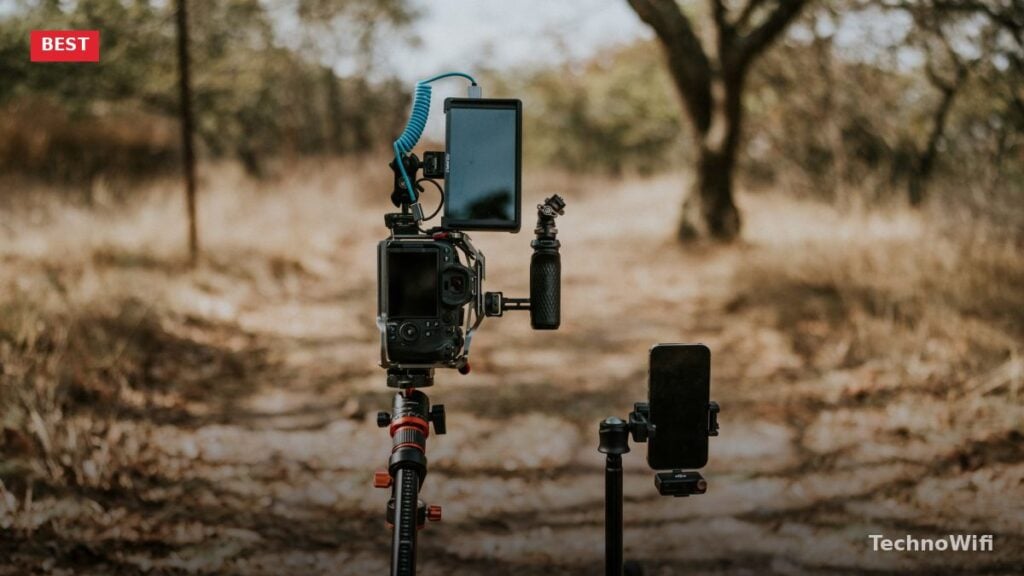
Trail cameras have gotten ridiculously good. Five years ago, you’d hike out to your camera, pull the SD card, hike back, and hope the images were worth the trip. Now the best trail cameras send 4K photos straight to your phone over a cellular connection while you sit on the couch. Battery life has stretched from a few weeks to several months. Trigger speeds have dropped below a quarter of a second. And prices have come down far enough that running multiple cameras across your property is realistic on a normal budget.

The catch is that the market is flooded with options, and the specs on the box don’t always tell you what matters. A camera bragging about 48MP resolution might produce worse images than a 22MP model with a better sensor. A fast trigger speed means nothing if the detection range only reaches 40 feet. This guide covers the trail cameras that actually perform well in the field in 2026, along with what to look for and how to set them up properly.
What is the best trail camera right now?
The Tactacam Reveal X Gen 3.0 is the best trail camera you can buy in 2026. It shoots 4K photos and 1080p video, runs on auto carrier selection that switches between cell networks for the strongest signal in your area, and gets outstanding battery life on a set of lithium AAs. For most hunters and land managers, this is the one to get.
If transmission speed matters most to you, the Tactacam Reveal X Pro 2.0 delivers photos to your phone faster than any other cellular camera we’ve tested. Image quality is excellent, and performance stays consistent even during heavy activity periods like the rut when your camera might fire hundreds of times a day. It runs about $200.
For hunters who want cellular without spending $200, the Spypoint Flex M is the best budget option. Spypoint includes a free plan that gives you 100 photos per month at no cost. That’s enough for low-traffic areas or for hunters who just want to check a spot periodically. The camera itself costs around $149 and setup takes about five minutes.
Below is a side-by-side comparison of all six cameras we recommend this year.
| Camera | Resolution | Video | Trigger Speed | Detection Range | Cellular | Approx. Price |
|---|---|---|---|---|---|---|
| Tactacam Reveal X Gen 3.0 | 4K photo | 1080p | 0.3s | 80 ft | Yes (auto carrier) | $180-$220 |
| Tactacam Reveal X Pro 2.0 | 24MP | 1080p | 0.25s | 80 ft | Yes | ~$200 |
| Spypoint Flex M | 28MP | 720p | 0.4s | 70 ft | Yes (free 100/mo plan) | ~$149 |
| Browning Defender Pro Scout Max Extreme | 22MP | 1080p | 0.2s | 100 ft | Yes | $250-$300 |
| Stealth Cam Fusion X | 32MP | 1080p | 0.4s | 80 ft | Yes | $150-$180 |
| SEHMUA Trail Camera | 24MP | 1080p | 0.5s | 65 ft | Yes | Under $100 |
Tactacam Reveal X Gen 3.0 – Best Overall
The Gen 3.0 version of the Reveal X fixed the connectivity complaints that plagued earlier models. The biggest upgrade is auto carrier selection. Instead of locking you into one cellular provider, the camera automatically detects and connects to whichever carrier has the strongest signal at your location. If you hunt remote ridgelines or timber where one carrier has coverage and another doesn’t, this feature alone is worth the upgrade.
Photo quality at 4K is sharp enough to read ear tag numbers on cattle at 30 yards and clearly identify individual bucks by antler characteristics. The 1080p video captures smooth footage with usable audio, which is helpful for identifying turkey activity or hearing how deer are moving through an area.
Battery life is the other standout. Running lithium AA batteries, the Gen 3.0 routinely hits 12 to 16 weeks in our testing depending on how many photos it takes per day. That’s a full season on one set of batteries for most hunting situations. Alkaline AAs will work, but expect roughly half the battery life, especially in cold weather when alkalines lose capacity fast.
Tactacam Reveal X Pro 2.0 – Fastest Transmission
The Pro 2.0 is built for hunters who check their phone constantly during hunting season and don’t want to wait for photos. Transmission speed is noticeably faster than the standard Gen 3.0, with most images arriving within 30 seconds to a minute of being captured. During peak rut activity, when a camera might fire 200 or more times per day, that speed difference adds up.
Image quality is excellent. The 24MP sensor produces clean, well-exposed photos in daylight. Night images use a no-glow infrared flash that doesn’t spook animals, and the quality is good enough to identify individual deer consistently. The Pro 2.0 handles the transition between day and night exposures smoothly, without the washed-out dusk and dawn photos that cheaper cameras often produce.
At around $200, it costs a bit more than the standard Reveal X. For hunters running just one or two cameras who want the best possible performance, the Pro 2.0 justifies the premium. If you’re running five or more cameras across a large property, the standard Gen 3.0 gives you 90% of the performance at a lower per-unit cost.
Spypoint Flex M – Best Budget Cellular
Spypoint’s free photo plan is what makes the Flex M stand out. You get 100 photos per month transmitted to your phone at no cost. That won’t cover a high-traffic food plot, but it’s perfect for a scrape line, pinch point, or mineral site where you only expect a handful of triggers per day. If you need more, paid plans start low and scale based on how many photos you want.
Setup is genuinely easy. Download the Spypoint app, create an account, power on the camera, and scan the QR code on the screen. The camera walks you through activation step by step. Spypoint’s app is also one of the better trail camera apps available, with clean photo organization, filtering by date, and the ability to share images with hunting partners.
The trade-off for the lower price is slower trigger speed at 0.4 seconds and 720p video instead of 1080p. For deer hunting, 0.4 seconds is fast enough that you’ll rarely miss an animal in the frame. You might lose the occasional photo of a trotting coyote or a bird flying through the detection zone. Video quality is fine for identifying animals but won’t win any cinematography awards.
Browning Defender Pro Scout Max Extreme – Premium Pick
The Browning Defender Pro Scout Max Extreme is the camera you buy when you want everything and don’t mind paying for it. The 0.2-second trigger speed is the fastest on this list. The 100-foot detection range is the longest. And the dual-sensor system uses separate optimized sensors for daytime and nighttime, which means you get better image quality in both conditions instead of one sensor trying to compromise between the two.
At 22MP, the resolution is lower on paper than some competitors. In practice, the image quality is better than cameras with higher megapixel counts. Browning’s sensor and lens combination produces sharper, more detailed photos than the interpolated high-megapixel images from budget cameras. A genuinely good 22MP photo beats a noisy 40MP photo every time.
The 100-foot detection range is a real advantage on open food plots and agricultural fields. Most cameras start missing animals at 60 to 80 feet. The Browning picks up movement well beyond that, which means you get photos of deer entering your plot from the tree line instead of just photos of deer already standing in the middle of it. This extra range gives you more information about travel routes and entry points.
Stealth Cam Fusion X – Best Value Cellular
The Fusion X hits a sweet spot between the budget Spypoint and the premium Browning. You get 32MP photos, 1080p video, cellular connectivity, and solid overall performance for $150 to $180. It doesn’t have the fastest trigger speed or the longest detection range, but it does everything well enough that most hunters will be happy with it.
The 32MP resolution produces detailed photos in good light. Color accuracy is above average for this price range, and the camera handles backlighting situations better than you’d expect. Night photos are usable but not exceptional. You can identify species and individual animals without trouble, but fine details like antler points sometimes get lost in the infrared exposure.
The Fusion X is a good choice for hunters who want to run multiple cellular cameras without spending $200 or more per unit. Three Fusion X cameras covering different parts of your property will give you more useful intel than one premium camera on a single location.
SEHMUA Trail Camera – Best Cheap Cellular
SEHMUA was not a name most hunters recognized before 2026. This camera showed up as a budget option on Amazon and surprised a lot of people with its performance relative to its price. Under $100 for a cellular trail camera that actually works is rare. Most cameras in this price range have connection problems, terrible apps, or image quality that makes identification difficult.
The SEHMUA delivers acceptable photo quality, reliable cellular transmission, and a functional app. It won’t match the Tactacam or Browning in any single category, but for hunters on a tight budget who want photos sent to their phone, it gets the job done. Think of it as the entry point into cellular trail cameras.
Battery life and build quality are where the price shows. Expect 6 to 8 weeks on lithium batteries rather than 12 to 16 weeks. The housing feels less weather-resistant than premium options, so consider a protective case or careful placement under tree cover. For a camera you’re placing on public land where theft is a concern, the low replacement cost actually works in your favor.
What should I look for when buying a trail camera?
Trigger speed tells you how fast the camera takes a photo after detecting motion. A deer walking through the frame at a normal pace covers about 3 feet per second. At a 0.5-second trigger speed, the animal has moved 18 inches from where it was when the sensor detected it. At 0.2 seconds, it has moved about 7 inches. For cameras pointed at trails, scrapes, or feeders where animals are moving through the frame, faster trigger speeds produce more centered photos with fewer empty frames.
Detection range determines how far away an animal can be and still trigger the camera. Most trail cameras detect motion at 60 to 100 feet. Longer range matters most on open food plots and field edges. For tight timber setups where you’re watching a trail at 15 yards, even a short detection range works fine because every animal walks right through the sweet spot.
Flash type affects both image quality and animal behavior. No-glow infrared is invisible to animals and humans, making it ideal for security use and for areas where you don’t want to alert pressured deer. Low-glow infrared produces a faint red glow that most animals ignore but that observant humans can spot. White flash produces full-color night photos but creates a visible flash that can spook some animals.
| Flash Type | Night Photo Color | Visible to Animals | Best Use |
|---|---|---|---|
| No-glow IR | Black and white | No | Pressured deer, security, public land |
| Low-glow IR | Black and white | Faint red glow | Private land, general scouting |
| White flash | Full color | Yes (bright flash) | Wildlife photography, identification |
Battery life depends heavily on battery type. Lithium AA batteries outperform alkaline batteries in trail cameras by a wide margin. Lithiums hold voltage longer, work better in extreme cold, weigh less, and typically last 10 to 16 weeks depending on camera activity. Alkaline batteries usually last 4 to 8 weeks and lose capacity rapidly once temperatures drop below freezing. The higher upfront cost of lithium batteries pays for itself by cutting the number of times you need to visit your camera.
Photo resolution in trail cameras ranges from 16MP to 48MP. Higher numbers sound better but don’t always mean better images. Most sensors in trail cameras are 5 to 8MP natively, and the camera interpolates the image up to a higher resolution. A well-engineered 22MP camera often produces better photos than a cheap 48MP camera using heavy interpolation. Look at sample photos from actual users rather than relying on the megapixel count on the box.
Weather resistance ratings vary. Look for cameras rated IP66 or higher if your camera will be exposed to direct rain, snow, and ice. An IP66 rating means the camera is fully sealed against dust and can handle strong jets of water. Lower ratings like IP54 offer basic splash protection but may let moisture in during heavy storms or prolonged wet conditions.
Are cellular trail cameras worth the monthly cost?
If you hunt land that’s more than 20 minutes from your home, cellular cameras save you an enormous amount of time and gas. Every SD card check means a round trip. Over a five-month season, that’s 10 to 20 trips if you’re checking every week or two. At current gas prices, the fuel cost alone might exceed the annual data plan cost for a cellular camera.
The bigger benefit is reduced human pressure. Every time you walk to a camera, you leave scent, disturb the area, and risk bumping deer off their pattern. Mature bucks are notorious for shifting their movement after detecting human intrusion. A cellular camera lets you monitor activity without ever setting foot near the camera after initial setup. For serious whitetail hunters targeting older age class bucks, this is the primary reason to go cellular.
Data plan costs range from free (Spypoint’s 100 photos per month) to about $10 to $15 per month for unlimited photo plans. Most hunters running two to four cameras spend $30 to $60 per month during hunting season. Some plans let you pause during the off-season so you’re not paying year-round. When you factor in the time saved, the gas saved, and the reduced disturbance to your hunting area, cellular plans pay for themselves quickly.
Standard SD card cameras still make sense in certain situations. If your cameras are within a short walk of your house, the monthly cost of cellular plans adds up without saving you much time. Budget-conscious hunters running six or more cameras might prefer SD card models at $40 to $80 each rather than spending $150 or more per camera plus a monthly plan. And in areas with no cell service, standard cameras are your only option regardless.
How do I set up a trail camera for the best results?
Placement matters more than the camera itself. A $300 camera pointed at the wrong spot gives you nothing useful. A $100 camera positioned correctly on a well-used trail produces actionable scouting information every single day. Follow these steps for the best results from any trail camera.
- Choose a location where animal sign confirms regular activity. Fresh tracks, worn trails, rubs, scrapes, scat, and feeding areas are all strong indicators. Don’t guess. Look for physical evidence before committing a camera to a spot.
- Mount the camera at a height of about 3 feet for deer, which puts the sensor roughly at the chest height of a mature whitetail. For other animals, adjust accordingly. Turkey cameras work well at 12 to 18 inches. Bear cameras should be at 4 to 5 feet.
- Face the camera north or south whenever possible. East-facing and west-facing cameras catch direct sunrise or sunset light, which washes out photos and creates false triggers from shifting shadows. A north or south orientation avoids direct sun and produces more consistently exposed images throughout the day.
- Clear any vegetation, branches, or tall grass within 10 feet of the camera’s detection zone. Moving vegetation triggers false photos, drains batteries, fills your SD card or data plan with worthless images, and buries your actual animal photos in hundreds of wind-blown grass shots.
- Angle the camera slightly downward, about 5 to 10 degrees from horizontal. This helps the passive infrared sensor detect animals moving across the frame at various distances. A camera pointed straight out or slightly upward tends to miss animals at close range.
- Set the camera to take a burst of 3 photos per trigger event. A single photo might catch the animal mid-stride or partially obscured. A 3-photo burst gives you the animal entering the frame, centered in the frame, and exiting the frame. This dramatically increases your chances of getting a clear identification shot.
- Set the delay between trigger events to 5 to 10 seconds. Too short (1 second) and you fill up your storage with nearly identical photos of the same animal. Too long (30 seconds or more) and you miss animals passing through in groups.
- Test the camera before leaving. Walk through the detection zone yourself and verify that the camera triggers properly and captures you in the frame at the correct position. Check the first few images on your phone (cellular) or the camera’s built-in screen if it has one.
For cellular cameras, confirm you have cell signal at the mounting location before installing. Hold your phone at camera height and check for at least one bar of service on the same carrier your camera uses. Auto carrier cameras like the Tactacam Reveal X Gen 3.0 are more forgiving here since they’ll find whatever signal is available, but you still need at least minimal coverage from some carrier.
Security is worth considering, especially on public land. Use a cable lock through the camera’s mounting bracket and around the tree. Python-style cable locks work well and cost $10 to $15. Position the camera higher than normal (5 to 6 feet) and angle it downward to make it less visible to passersby. Some hunters spray-paint their cameras with camo patterns for additional concealment, though this can void the warranty.
Frequently Asked Questions
How long do trail camera batteries last?
Lithium AA batteries typically last 10 to 16 weeks in most trail cameras, depending on how many photos the camera takes per day and whether you’re using cellular transmission. Alkaline batteries last 4 to 8 weeks under the same conditions. Cold weather shortens alkaline battery life dramatically. Below freezing, alkaline batteries can lose half their capacity. Lithium batteries maintain nearly full performance down to about -20 degrees Fahrenheit, which makes them the clear choice for late-season hunting in cold climates.
Do trail cameras work at night?
Yes. All modern trail cameras include an infrared flash or a white flash for nighttime illumination. Infrared cameras produce black-and-white night images but are invisible or nearly invisible to animals. White flash cameras produce full-color night images but emit a visible burst of light that some animals react to. Most hunters choose infrared for this reason. The detection sensor (passive infrared or PIR) works identically in daylight and darkness since it detects heat signatures rather than visible light.
Can trail cameras be used for home security?
Trail cameras work well as a basic outdoor security camera. They’re weatherproof, battery-powered, and don’t need a WiFi connection. Cellular models send photos to your phone when motion is detected, functioning similarly to a Ring or Blink camera. The main limitations compared to dedicated security cameras are the lack of live video streaming, no two-way audio, and a narrower field of view. For monitoring a driveway, shed, or gate on a rural property where you don’t have WiFi coverage, a cellular trail camera is an effective and affordable option.
What SD card size should I use in a trail camera?
A 32GB SD card holds roughly 10,000 to 15,000 photos at typical trail camera resolutions. For most non-cellular cameras checked every two weeks, 32GB is plenty. If you record video, use a 64GB or 128GB card since video files are much larger. Some older trail cameras don’t support cards larger than 32GB, so check your camera’s specifications before buying a larger card. Always format the SD card in the camera before first use rather than on your computer. Camera formatting ensures the file system matches what the camera expects.
How far away can a trail camera detect movement?
Detection range varies from about 40 feet on budget cameras to 100 feet or more on premium models like the Browning Defender Pro Scout Max Extreme. The stated range assumes an animal crossing perpendicular to the sensor. Animals walking directly toward the camera are harder to detect because they present less lateral movement for the PIR sensor to pick up. Temperature also affects detection. PIR sensors detect the contrast between body heat and ambient temperature. On very hot days when the background temperature is close to body temperature, detection range drops.
Do I need a data plan for a cellular trail camera?
Yes. Cellular trail cameras require an active data plan to transmit photos to your phone. Plans are sold by the camera manufacturer (Tactacam, Spypoint, Stealth Cam, etc.) and range from free limited plans to paid monthly or annual subscriptions. Spypoint offers a free plan with 100 photos per month. Most other manufacturers charge $5 to $15 per month depending on the number of photos included. Without an active plan, a cellular camera still takes photos and saves them to the SD card, but it won’t transmit them wirelessly.
Sources:
Tactacam, “Reveal X Gen 3.0 Specifications,” tactacam.com, 2026.
Tactacam, “Reveal X Pro 2.0 Product Page,” tactacam.com, 2026.
Spypoint, “Flex M Cellular Trail Camera Specs and Plans,” spypoint.com, 2026.
Browning Trail Cameras, “Defender Pro Scout Max Extreme Features,” browningtrailcameras.com, 2026.
Stealth Cam, “Fusion X Product Specifications,” stealthcam.com, 2026.
Quality Deer Management Association, “Trail Camera Strategies for Whitetail Hunters,” qdma.com, 2025.
National Deer Association, “How Trail Cameras Affect Deer Behavior,” deerassociation.com, 2025.
TechnoWifi is reader-supported. When you buy through links on our site, we may earn an affiliate commission. Product specifications and prices are accurate as of the date of publication and may change. Always verify current details with the manufacturer or retailer before purchasing.