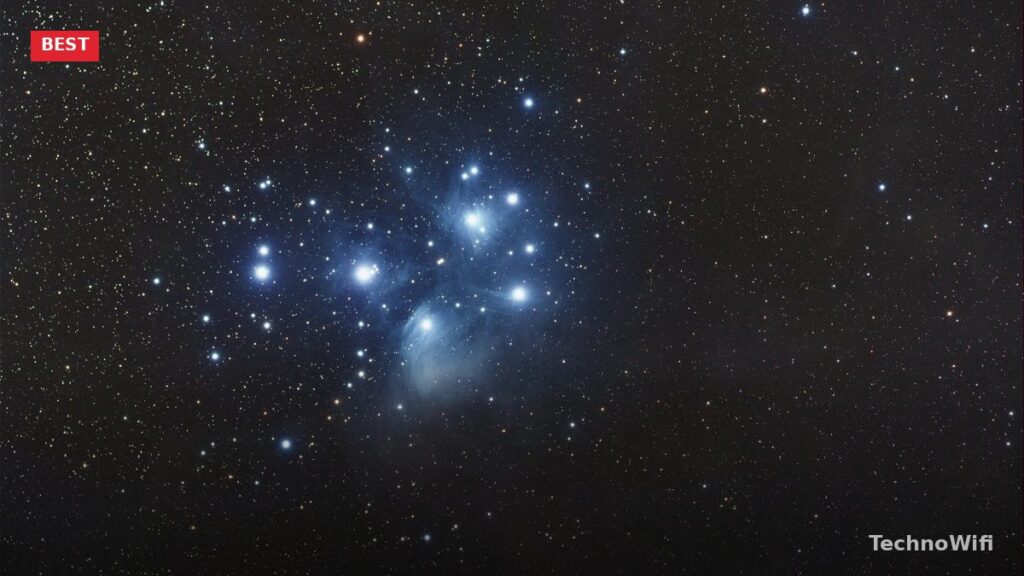
Astrophotography is one of the hardest things you can do with a camera. You’re shooting in near-total darkness with exposures of 15, 20, sometimes 30+ seconds. Your sensor has to pull light out of nothing while keeping noise in check. Autofocus? Mostly useless when you’re pointing at infinity in the dark. What actually matters here is sensor size, ISO performance, and how clean the files look when you crank up the sensitivity.
Sure, any camera can snap a photo of the moon. But if you want to capture the Milky Way core, resolve individual stars in a cluster, or pull out the faint red glow of a nebula, you need the right gear. The wrong camera gives you muddy, grainy shots no matter how good your lens or tripod is. The right one delivers clean, detailed files that stack and process beautifully.
This guide covers the best cameras for astrophotography in 2026, based on real-world low-light results, sensor characteristics, and feedback from the astrophotography community. Every camera on this list has been used to produce published night sky images.
What camera is best for astrophotography?
The Canon EOS R8 is the best overall camera for astrophotography in 2026. It has a full-frame 24.2MP sensor with excellent high-ISO noise performance, and it runs about $1,500 body-only. That resolution is right in the sweet spot for night sky work. You get enough detail to crop into star fields without dealing with the massive file sizes and declining noise performance that higher-megapixel sensors bring.
If you want a camera purpose-built for this kind of shooting, the Canon EOS Ra is still the gold standard. Canon modified the infrared-cut filter in front of the sensor specifically for astrophotography. That modification lets roughly four times more hydrogen-alpha light pass through, which makes a huge difference when you’re shooting emission nebulae like the Orion Nebula or the Rosette Nebula. The EOS Ra was discontinued, but used units are still around and hold their value well.
Sony shooters have the strongest track record in competitive astrophotography. The Sony A7 III has been the most-used mirrorless camera among Astronomy Photographer of the Year finalists for seven years straight. Its full-frame sensor, expandable ISO range up to 204,800, and aggressive used market pricing make it the best value pick in this category.
Here’s a quick look at which camera fits which situation.
| Camera | Best For | Sensor | Resolution | ISO Range | Price (Body) |
|---|---|---|---|---|---|
| Canon EOS R8 | Best overall | Full-frame | 24.2 MP | 100-102,400 (exp. 204,800) | ~$1,500 |
| Canon EOS Ra | Dedicated astro work | Full-frame | 30.3 MP | 100-40,000 (exp. 102,400) | ~$2,000-2,500 used |
| Sony A7 III | Best value | Full-frame | 24.2 MP | 100-51,200 (exp. 204,800) | ~$1,000-1,200 used |
| Sony A7R V | High-resolution astro | Full-frame | 61 MP | 100-32,000 (exp. 102,400) | ~$3,200 |
| Canon EOS R6 Mark II | Low-light versatility | Full-frame | 24.2 MP | 100-102,400 (exp. 204,800) | ~$2,500 |
| Nikon Z6 III | Nikon system users | Full-frame | 24.5 MP | 100-64,000 (exp. 204,800) | ~$2,500 |
| Canon EOS R5 | Detailed nebula shots | Full-frame | 45 MP | 100-51,200 (exp. 102,400) | ~$2,800 |
Best cameras for astrophotography reviewed
Canon EOS R8 – Best Overall
The EOS R8 packs the same 24.2MP full-frame sensor found in Canon’s higher-end bodies, paired with the DIGIC X processor. For astrophotography, this combo produces clean images at ISO 3200 and 6400, the settings most Milky Way photographers work with. Noise shows up at ISO 12,800 but stays manageable through stacking.
Bulb mode is on board for exposures beyond 30 seconds, which you need for tracked deep-sky imaging. There’s also an electronic first curtain shutter that kills vibration during long exposures. The fully articulating screen is a lifesaver when the camera is pointed straight up at the sky and you don’t want to crane your neck to frame the shot.
At about $1,500, the R8 undercuts most full-frame mirrorless cameras while delivering night sky results that rival bodies costing twice as much. The main trade-off? No in-body image stabilization (IBIS). But that matters less for astrophotography since you’re always on a tripod or tracker anyway.
Canon EOS Ra – Best Dedicated Astrophotography Camera
Canon built the EOS Ra for one purpose. The modified infrared-cut filter transmits roughly four times more hydrogen-alpha wavelength light (656nm) than a standard camera. Hydrogen-alpha is the specific red light emitted by ionized hydrogen gas in nebulae. A normal camera blocks most of this light. With the Ra, nebulae appear dramatically brighter and more detailed without any external filter modifications.
The 30.3MP full-frame sensor is the same one from the original EOS R, which has proven noise characteristics for long-exposure work. The Ra also includes 30x magnification in live view specifically for focusing on stars, double the 15x magnification available on standard Canon bodies.
Canon discontinued the EOS Ra, and there’s no direct replacement. Used prices typically fall between $2,000 and $2,500 depending on condition and shutter count. If you shoot nebulae regularly, the Ra saves you from paying for an aftermarket sensor modification on another camera body. Those mods typically cost $300 to $500 and void your warranty.
Sony A7 III – Best Value
The Sony A7 III has been dominating astrophotography competitions for years. Its back-illuminated 24.2MP full-frame sensor delivers excellent dynamic range, and ISO performance stays clean well into the 6400 range. The expandable ISO goes up to 204,800, though you’d never shoot that high for astro work. What counts is that the native range handles the ISO 1600-6400 bracket with low noise and good color accuracy.
Sony’s color science handles starlight particularly well. Stars keep their natural color temperature in A7 III files, producing white, blue, and orange stars that look correct without heavy post-processing. That’s not true of every camera. Some sensors clip star colors or shift them toward magenta at high ISO values.
The A7 III launched back in 2018, but used units now sell for $1,000 to $1,200 body-only. That puts full-frame astrophotography within reach for photographers who can’t justify spending $2,500 or more. Battery life is also strong for a mirrorless camera. You can shoot several hundred long exposures on a single charge, which matters during all-night imaging sessions.
Sony A7R V – Best for High-Resolution Astrophotography
The A7R V pushes resolution to 61MP on a full-frame sensor. For astrophotography, that resolution lets you crop aggressively into star fields and still retain enough pixels for large prints. It’s especially useful for widefield Milky Way panoramas where you want to show both the landscape foreground and the sky detail at poster-size resolution.
The trade-off is noise. Higher pixel density means each pixel is physically smaller, so each one collects less light. At ISO 6400, the A7R V shows more noise per pixel than the 24.2MP A7 III. But when you downsample the A7R V file to the same output size, the noise averages out and the result is comparable. The extra resolution gives you the option of either keeping the detail or trading it for noise reduction.
At around $3,200, this is a camera for photographers who already have a solid astrophotography setup and want to push image quality further. It pairs well with high-end lenses like the Sony 14mm f/1.8 GM or the Sigma 20mm f/1.4 Art, where the glass can actually resolve detail at this pixel density.
Canon EOS R6 Mark II – Best Low-Light Versatility
The R6 Mark II shares the same 24.2MP sweet spot as the R8 but adds in-body image stabilization rated at up to 8 stops. IBIS won’t help during tracked astrophotography on a star tracker, but it’s really useful for handheld twilight shots, time-lapses, and the general photography you do when you’re not shooting stars.
Canon’s Dual Pixel CMOS AF II system in this camera is one of the best available. While autofocus is rarely useful for deep-sky astrophotography, it helps a lot when you’re shooting star trail compositions that include foreground elements, or when you switch from astro work to dawn landscape photography.
The R6 Mark II produces clean files at ISO 6400 and usable files at ISO 12,800. Its noise characteristics are very similar to the R8 since they share the same sensor architecture. The higher price (around $2,500) gets you IBIS, a more durable body with better weather sealing, and dual card slots for backup during critical shoots. If you want one camera that handles both astrophotography and general photography equally well, the R6 Mark II is the one to get.
Nikon Z6 III – Best Nikon Option
Nikon’s Z6 III uses a 24.5MP full-frame sensor with a partially stacked design that improves readout speed and reduces rolling shutter. For astrophotography, the sensor delivers excellent ISO performance with clean files at ISO 3200 and 6400. The native ISO range extends to 64,000, with expansion up to 204,800.
The Z6 III supports a star AF mode through firmware updates, which tries to detect and focus on stars automatically. It works best on bright stars and isn’t reliable for focusing on dim deep-sky targets, but it can speed up the initial focusing process compared to manual live view focusing.
Nikon’s lens ecosystem includes several excellent options for night sky work, including the Nikkor Z 20mm f/1.8 S and the Nikkor Z 14-24mm f/2.8 S. Both lenses show minimal coma and astigmatism in the corners, the optical flaws that turn pinpoint stars into smeared shapes. At around $2,500, the Z6 III is competitive with the Canon R6 Mark II and is the clear choice for photographers already invested in Nikon Z-mount glass.
Canon EOS R5 – Best for Detailed Nebula Imaging
The EOS R5 packs 45MP into a full-frame sensor, placing it between the 24MP standard-resolution cameras and Sony’s 61MP A7R V. That resolution is high enough to resolve fine nebula structure and dense star clusters with more detail than a 24MP sensor, while avoiding the noise penalty that comes with extreme megapixel counts.
For tracked deep-sky imaging through a telescope, the R5’s pixel size of 4.39 microns is well-matched to mid-focal-length refractors and SCT telescopes. The high resolution also helps when you’re shooting with shorter focal length lenses and want to crop into a specific region of the sky.
The R5 includes 8-stop IBIS, dual card slots, and weather sealing. It has a reputation for overheating during extended 8K video recording, but that’s a non-issue for astrophotography since still-image long exposures don’t generate the same thermal load. Used prices have dropped to around $2,800 as the R5 Mark II has taken over as Canon’s flagship.
What features matter most for astrophotography?
Sensor size is the single most important spec. A full-frame sensor (36mm x 24mm) has roughly 2.5 times the surface area of an APS-C sensor (typically 23.5mm x 15.6mm). More surface area means more light-gathering capability, which directly translates to cleaner images at the high ISO values astrophotography requires.
The numbers back this up. At the 2025 Astronomy Photographer of the Year competition, 94% of landscape astrophotography finalists used full-frame cameras. The remaining entries used medium format or modified cameras. Zero finalists in that category used an APS-C body.
Resolution matters, but more isn’t always better. The 20 to 30 megapixel range hits the sweet spot for most astrophotography work. These sensors have pixel sizes around 5.7 to 6.2 microns, which collect enough light per pixel to keep noise manageable at ISO 3200-6400. Higher-resolution sensors (45MP and above) produce more detailed images but require cleaner technique and heavier post-processing to manage noise.
ISO range tells you how far the camera can amplify the sensor signal. For astrophotography, you want a camera that produces clean images at ISO 3200 and acceptable images at ISO 6400. The maximum ISO number on the spec sheet matters less than actual noise performance at working ISOs. A camera advertising ISO 409,600 is useless if ISO 6400 looks like static.
Bulb mode is non-negotiable. This mode holds the shutter open for as long as you want, beyond the typical 30-second maximum. Deep-sky astrophotography through a telescope often requires exposures of 60 to 300 seconds. Without bulb mode, you’re limited to 30-second frames, which forces you to stack many more images for the same result.
An intervalometer lets the camera automatically take a sequence of exposures with a set delay between each one. Some cameras have this built in. Others require an external intervalometer, which typically costs $15 to $30. Either way, you need this functionality because astrophotography involves taking dozens or hundreds of identical exposures that get stacked in software to reduce noise and bring out faint detail.
Do I need a full-frame camera for astrophotography?
You don’t strictly need one, but full-frame sensors produce significantly better results for night sky photography. The larger pixel pitch on a full-frame sensor collects more photons per pixel at any given ISO setting. That translates directly to lower noise, which is the primary enemy in astrophotography.
An APS-C camera like the Canon EOS R10 or Fujifilm X-T5 can take decent Milky Way photos. The results improve a lot when you stack multiple frames. But a single frame from a full-frame camera at ISO 3200 will look noticeably cleaner than a single frame from an APS-C camera at the same ISO and exposure time.
APS-C cameras do have one advantage for deep-sky imaging through a telescope. The 1.5x or 1.6x crop factor gives you extra effective focal length for free. A telescope with a 1000mm focal length becomes effectively 1500mm or 1600mm with an APS-C sensor. That extra magnification is useful for small targets like planetary nebulae and distant galaxies. But the noise trade-off still applies.
If you’re starting out and astrophotography is one of several types of shooting you do, an APS-C camera is a reasonable entry point. If night sky photography is your primary focus and you’re investing in quality lenses and a star tracker, buy a full-frame body. The image quality difference is substantial and becomes more apparent the more you process and print your images.
What settings should I use for astrophotography?
Astrophotography settings depend on whether you’re shooting untracked (camera on a stationary tripod) or tracked (camera mounted on a motorized star tracker that compensates for Earth’s rotation). Here are the recommended starting points for each.
Untracked Milky Way photography (camera on tripod):
- Set your lens to its widest aperture (f/1.4, f/1.8, or f/2.8 depending on your lens).
- Switch to manual focus and focus on a bright star using live view at maximum magnification. The star should appear as the smallest possible point of light.
- Set your ISO between 3200 and 6400. Start at 3200 and increase if the image is too dark.
- Calculate your maximum exposure time using the 500 rule: divide 500 by your focal length (in full-frame equivalent). For a 20mm lens on a full-frame camera, that gives you 25 seconds. For a 14mm lens, 35 seconds. Going beyond this time causes stars to trail.
- Set your white balance to around 4000K (daylight) or use auto white balance and correct in post. Shooting in RAW lets you change white balance after the fact with no quality loss.
- Turn off long exposure noise reduction. This feature takes a second “dark frame” after each exposure, which doubles your shooting time without providing better results than software noise reduction during stacking.
- Shoot 20 to 50 identical frames of the same composition. Stack them later in software like Sequator (free, Windows), Starry Landscape Stacker (Mac), or DeepSkyStacker (free, Windows).
Tracked deep-sky photography (camera on star tracker):
- Mount your camera on a polar-aligned star tracker. Accurate polar alignment is more important than any camera setting.
- Use a focal length between 50mm and 200mm to target specific deep-sky objects. Wider lenses work for large nebulae like the North America Nebula.
- Set your aperture to f/2.8 or one stop down from wide open. Stopping down slightly improves corner sharpness and reduces coma.
- Lower your ISO to 1600 or 800 since the tracker allows longer exposures that collect more light at lower gain.
- Set exposure time to 60 to 120 seconds per frame. The tracker compensates for star movement, so trails aren’t a concern as long as your alignment is accurate.
- Shoot 30 to 100 frames depending on the brightness of your target. Fainter objects need more frames to build signal through stacking.
- Take 20 to 30 dark frames (same exposure time and ISO, but with the lens cap on). These calibration frames help stacking software subtract sensor noise patterns from your light frames.
Frequently Asked Questions
Can I use a crop sensor camera for astrophotography?
Yes, but with limitations. Crop sensor (APS-C) cameras have smaller pixels that collect less light individually, producing more noise at the same ISO compared to full-frame sensors. You can get good Milky Way shots with a crop sensor camera by using a fast lens (f/1.4 or f/1.8) and stacking multiple exposures. The results improve with image stacking, but a single frame from a crop sensor will always be noisier than one from a full-frame sensor at the same settings.
Is a modified camera worth it for astrophotography?
A modified camera has its IR-cut filter removed or replaced, letting more hydrogen-alpha light reach the sensor. This makes a dramatic difference for emission nebulae photography. The Orion Nebula, Rosette Nebula, Heart Nebula, and similar targets appear significantly brighter and more detailed. The modification typically costs $300 to $500 through services like Kolari Vision or LifePixel. The downside is that a modified camera produces incorrect colors for daytime photography, so most people dedicate a modified body exclusively to astrophotography.
How much should I spend on an astrophotography camera?
A used Sony A7 III at $1,000 to $1,200 gives you full-frame astrophotography performance for the lowest entry cost. If you’re buying new, the Canon EOS R8 at $1,500 offers the best combination of image quality and price. Budget $500 to $1,500 on top of the camera body for a fast wide-angle lens, a sturdy tripod, and an intervalometer. Spending $3,000 or more on a body makes sense only if you already own quality lenses and a star tracker and want to push image quality further.
What is the best lens for astrophotography?
For Milky Way photography, a wide-angle prime lens between 14mm and 24mm with a maximum aperture of f/1.4 or f/1.8 is ideal. Popular choices include the Sigma 14mm f/1.4 DG DN Art, the Sony 20mm f/1.8 G, the Nikon Z 20mm f/1.8 S, and the Rokinon/Samyang 14mm f/2.8. The lens matters as much as the camera body. A sharp, fast lens on a mid-range body will outperform a slow kit lens on an expensive body every time.
Do I need a star tracker for astrophotography?
Not for basic Milky Way photography, where exposures of 15 to 30 seconds on a stationary tripod work well. You do need a star tracker for deep-sky photography of nebulae, galaxies, and star clusters. A tracker like the iOptron SkyGuider Pro or the Sky-Watcher Star Adventurer GTi costs $300 to $500 and lets you take exposures of 60 to 300 seconds without star trailing. That longer exposure time collects dramatically more light and reveals objects invisible in shorter exposures.
What software do I need to process astrophotography images?
At minimum, you need an image stacking program and a photo editor. For stacking, DeepSkyStacker (free, Windows) and Sequator (free, Windows) are the most popular free options. Starry Landscape Stacker is a paid option for Mac. For editing, Adobe Lightroom and Photoshop are the industry standard, but free alternatives like GIMP and RawTherapee handle astrophotography processing well. Dedicated astrophotography processing software like PixInsight ($280) offers tools specifically designed for noise reduction, star removal, and narrowband image processing.
Sources:
Canon USA – EOS R8 Specifications. usa.canon.com
Canon USA – EOS Ra Specifications. usa.canon.com
Sony – Alpha 7 III Specifications. sony.com
Sony – Alpha 7R V Specifications. sony.com
Nikon – Z6III Specifications. nikonusa.com
Royal Museums Greenwich – Astronomy Photographer of the Year 2025 Shortlist. rmg.co.uk
World Health Organization – Safe Listening. who.int (referenced for noise exposure guidelines adapted to sensor noise context)
TechnoWifi is reader-supported. When you buy through links on our site, we may earn an affiliate commission. Product specifications and prices are accurate as of the date of publication and may change. Always verify current details with the manufacturer or retailer before purchasing.