Sony vs LG Smart TV: Which Brand Should You Buy in 2026?
Choosing between Sony and LG for your next television is one of the most common dilemmas in the TV market. Both brands make excellent displays across multiple price points, but they take fundamentally different approaches to picture processing, smart TV platforms, and feature sets. This Sony vs LG smart TV comparison breaks down everything you need to know to make the right decision for your living room in 2026.
Picture Quality: Where the Real Differences Live
Picture quality is the primary reason most people care about TV brands, and this is where Sony and LG diverge most clearly.
Sony’s Approach: Processing Power
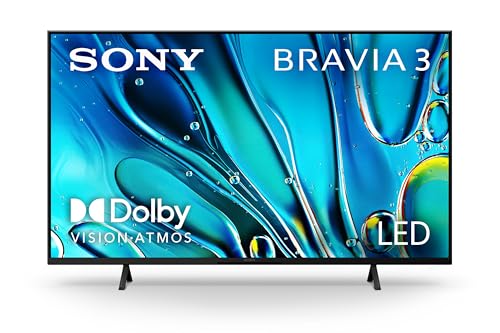
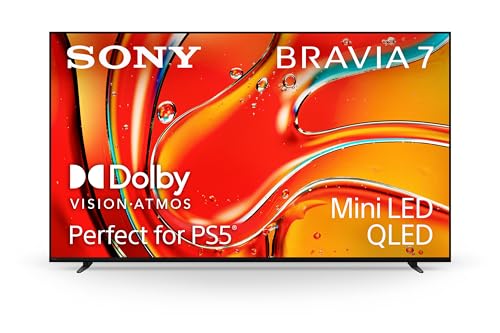
Sony’s 2026 lineup centers on the Bravia XR series, powered by their Cognitive Processor XR. This chip analyzes the image the way the human eye works, identifying a focal point in the frame and optimizing detail, contrast, and color around it. The result is a picture that looks natural and cinematic, with a particular emphasis on accurate motion handling.
Sony uses both OLED panels (in their A-series) and Mini LED panels (in the X-series) in 2026. Their OLED TVs use panels sourced from LG Display (the manufacturing arm, separate from LG Electronics), but Sony’s processing makes the same panel look noticeably different from an LG TV using the same hardware.
Where Sony consistently excels: motion handling in movies and sports, color accuracy out of the box, and upscaling lower-resolution content to look sharp on a 4K screen.
LG’s Approach: Panel Technology Leadership
LG is the world’s leading manufacturer of OLED panels, and their 2026 consumer TV lineup showcases that dominance. The LG C4 and G4 OLED models feature their latest evo panels with improved brightness, while the QNED series covers the LED/Mini LED tier.
LG’s OLED TVs deliver perfect black levels (individual pixels turn completely off), infinite contrast ratios, and wide viewing angles. These are inherent advantages of OLED technology, and LG’s panels set the standard that competitors, including Sony, build upon.
Where LG consistently excels: absolute black levels, viewing angles, pixel response time (essentially zero motion blur at the panel level), and cutting-edge panel brightness with their MLA (Micro Lens Array) technology in the G4 series.
The Verdict on Picture Quality
For movie enthusiasts who care about accurate color and natural motion, Sony has a slight edge, their processing is refined and cinematic. For viewers who prioritize contrast, deep blacks, and vibrant HDR, LG’s OLED lineup delivers a more immediately impressive image. Both are excellent; the difference is one of character rather than quality.
Smart TV Platform: Google TV vs webOS
The software running your TV matters more than you might think. You’ll interact with it every time you turn the TV on, so it needs to be fast, intuitive, and well-supported.
Sony: Google TV
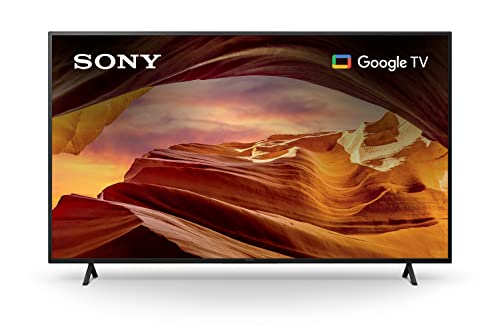
Sony’s 2026 TVs run Google TV, which is essentially a TV-optimized version of Android. The interface is content-first, it surfaces recommendations from your streaming services on the home screen so you can jump straight into watching something.
Advantages include access to the Google Play Store (thousands of apps), built-in Chromecast for easy casting from your phone, and tight integration with Google Assistant for voice control. If you’re already in the Google ecosystem, Sony’s platform feels like an extension of your existing setup.
The downside? Google TV can feel cluttered with recommendations and ads. It’s also more resource-intensive than simpler platforms, which can lead to occasional sluggishness on lower-end Sony models.
LG: webOS
LG’s webOS has been refined over many years and offers a clean, straightforward interface. The launcher bar along the bottom of the screen gives you quick access to your apps and inputs, and the overall experience is snappy and responsive.
LG’s Magic Remote, a motion-controlled pointer remote, is one of the best TV remotes in the industry. Pointing and clicking at what you want feels genuinely faster than scrolling through menus with arrow buttons.
The trade-off is a smaller app selection compared to Google TV. Most major streaming apps are available, but niche apps are sometimes missing or arrive later on webOS. LG also injects some ads into the home screen, though they’re less intrusive than what you’ll find on some competing platforms.
Gaming Performance: A Key Battleground
If you’re connecting a PS5, Xbox Series X, or gaming PC to your TV, both brands deliver strong gaming features in 2026, but with different strengths.
LG’s Gaming Advantage
LG OLED TVs are widely considered the gold standard for console gaming. The near-instantaneous pixel response time eliminates motion blur, input lag is consistently among the lowest in the industry (under 10ms in game mode), and full HDMI 2.1 support enables 4K 120Hz gaming on all four HDMI ports on the C4 and G4 models.
LG also supports VRR (Variable Refresh Rate), ALLM (Auto Low Latency Mode), Dolby Vision gaming, and AMD FreeSync Premium. The Game Optimizer menu lets you adjust settings without leaving your game.
Sony’s Gaming Story
Sony TVs also support 4K 120Hz, VRR, and ALLM on their 2026 models. Input lag is competitive, though typically a few milliseconds higher than LG’s best. Sony has a unique advantage for PS5 owners: certain features like Auto HDR Tone Mapping and Auto Genre Picture Switch work exclusively between Sony TVs and PlayStation consoles.
The Bravia XR processor’s superior upscaling also means games running at lower resolutions (like 1080p or 1440p modes for higher frame rates) look cleaner on Sony panels than on many competitors.
Gaming Winner
For pure gaming performance, LG OLED takes the crown. The combination of instant response time, ultra-low input lag, and thorough HDMI 2.1 support across all ports makes it the go-to for serious gamers. Sony is close behind and offers unique PS5 integration, but LG’s OLED gaming experience is hard to beat.
Sound Quality
Neither Sony nor LG TVs will replace a proper soundbar or home theater system, but there are differences worth noting for people who plan to use the TV’s built-in speakers.
Sony’s Acoustic Surface Audio technology (available on their OLED models) vibrates the screen itself to produce sound, creating an effect where audio seems to come directly from the on-screen action. It’s clever and genuinely sounds better than typical TV speakers.
LG’s built-in speakers are decent but unremarkable. The company clearly expects users to pair their TVs with an LG soundbar, and they offer smooth integration with their soundbar lineup through features like WOW Orchestra, which uses both the TV and soundbar speakers together.
Price and Value Comparison
Pricing shifts throughout the year, but general patterns hold in 2026:
Budget tier ($500-$800 for 55″): Both brands offer LED/QLED options at this level. LG’s QNED series and Sony’s X-series are competitive, with Sony typically costing $50-100 more for comparable models.
Mid-range ($1,000-$1,500 for 55″): LG’s OLED C4 often dips into this range during sales, making it exceptional value. Sony’s lower OLED models compete here as well.
Premium ($1,500-$3,000+ for 55″-65″): This is where both brands showcase their best technology. LG’s G4 OLED with MLA and Sony’s A95L QD-OLED battle for the top spot.
LG generally offers better value in the OLED space because they manufacture the panels themselves. Sony’s processing advantage comes at a modest price premium. For most buyers, the LG C4 OLED represents the best overall value in the TV market in 2026.
Sony vs LG Smart TV: Which Should You Buy?
Here’s the simplified decision:
Choose Sony if: You prioritize cinematic picture quality and accurate motion handling. You watch a lot of movies and sports. You want the best upscaling for cable TV and older content. You own a PS5 and want the tightest console integration. You prefer Google’s ecosystem.
Choose LG if: You want the best gaming TV on the market. You care most about contrast, deep blacks, and HDR punch. You prefer a clean, fast smart TV interface with a pointer remote. You want the best OLED value for the money. Wide viewing angles matter for your room layout.
Both Sony and LG make outstanding televisions in 2026. You genuinely can’t go wrong with either brand at any price point. The differences come down to priorities and personal preference, and that’s a good problem to have as a buyer.