Apple and Intel Lead the Move to TSMC’s 3nm Chips
Multiple reports indicated that Intel and Apple would be the first companies to adopt TSMC’s next-generation chip manufacturing technology. Both were reportedly testing chip designs on TSMC’s N3 process, with deployment expected as early as the following year according to Nikkei Asia.
Looking back from 2026, we can see how that early race for 3nm access shaped the entire semiconductor industry. Apple did ship 3nm chips first, starting with the M2 Pro and M2 Max in early 2023. Intel followed on a different timeline, leaning on TSMC’s process nodes for select products while continuing to build out its own manufacturing capacity. The decisions these two companies made about 3nm technology set the direction for everything from laptops to data centers.
The N3 Process and What It Means
TSMC’s N3 manufacturing process is a full-node upgrade over the N5 process, offering real improvements in performance, power efficiency, and chip density.
Here’s what Taiwan Semiconductor Manufacturing Co. had to say about the numbers: the 3nm process can cut power consumption by 30% (at the same clock speeds and transistor count), boost performance by up to 15% (at the same power), increase logical density by up to 70%, and improve SRAM density by up to 20% compared to 5nm.
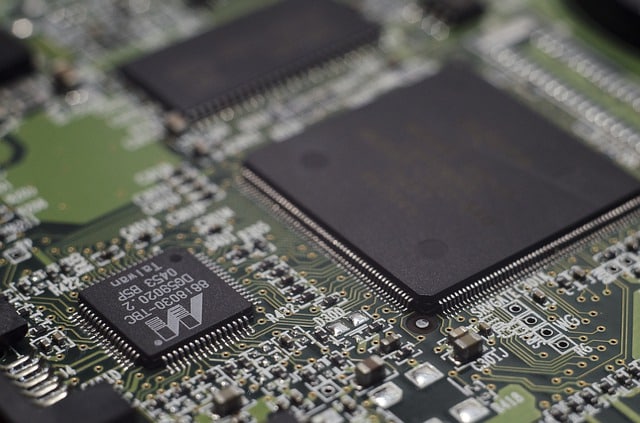
In plain terms, that means devices that last longer on a charge without needing bigger batteries. Or alternatively, manufacturers could use smaller, lighter batteries and still match the battery life of older-generation products.
TSMC confirmed that the N3 node was designed to support both smartphone and high-performance computing (HPC) applications. The node includes both high-performance and high-density chip libraries, which would let companies like Intel squeeze more speed out of their CPUs while giving system-on-chip designers room to pack in more features. At the time, the most advanced chip Apple was shipping in consumer products used TSMC’s 5nm technology (powering the iPhone 12’s processor).
How 3nm Technology Actually Works
For anyone curious about the technical side, a “3nm” process refers to the size of the transistor gates on a chip. Smaller transistors mean you can fit more of them on the same piece of silicon. More transistors, packed more tightly, allow for faster calculations while using less energy per operation.
TSMC’s N3 node uses a FinFET architecture, which is the same basic transistor design used in 5nm and 7nm chips, but refined further. The company chose to stick with FinFET rather than jumping to gate-all-around (GAA) transistors at this node, saving that transition for its 2nm process. This was a practical decision: FinFET was a known quantity, which made yields more predictable and kept costs from spiraling even higher.
Even so, manufacturing at 3nm is extraordinarily difficult. The margins for error shrink with each generation, and defect rates during early production runs tend to be higher. That’s part of why only Apple and Intel, two of the highest-volume chip buyers on the planet, could justify being first in line. Smaller companies simply couldn’t absorb the cost of early-stage wafers that might have lower yields.
Who Was First in Line?
Apple was expected to be the first major company to ship a device with N3 technology, with next-generation iPads reportedly in the pipeline. Intel, meanwhile, was working on N3-based designs for data center servers and notebooks.
One source noted that Intel’s planned chip volumes were actually larger than Apple’s initial N3 iPad run.
There were also reports that Apple had partnered with TSMC during the node’s risk production phase. Once mass production began, Intel was expected to join Apple as one of TSMC’s earliest customers, partly as a strategy to claw back market share lost to Nvidia and AMD in recent years.
If those reports were accurate, it meant both Apple and Intel had already finalized their N3 CPU and SoC designs, though it wasn’t clear whether either company had working silicon at that point.
The Timeline: From Prediction to Reality
Timeline-wise, Apple’s N3-powered iPad tablets were expected in late 2022 or early 2023. At the time, Apple’s latest iPad Pro models used the same SoCs found in entry-level and midrange Macs. There was also speculation that Macs could get the first N3 SoC, with smartphones following later on refined N3-based chips. Apple didn’t comment on any of it.
In the years since, Apple has pushed 3nm into nearly every product category. The A17 Pro chip in the iPhone 15 Pro brought 3nm to smartphones in late 2023, and the M3 family followed shortly after for Macs. By 2026, Apple’s entire product lineup runs on chips built with 3nm or newer processes. The performance and efficiency gains that TSMC promised back in 2021 have played out in real-world battery life and processing speed across iPhones, iPads, and MacBooks.
Intel confirmed that TSMC would play a role in its 2023 product lineup, with two products in development (one for notebooks, one for servers), though the company didn’t specify which process technology would be used.
Where the Industry Stands in 2026
As of 2026, 3nm is no longer the bleeding edge. TSMC has moved on to enhanced N3 variants (N3E, N3P, and N3X) and is ramping up its 2nm process for 2025 and 2026 production. Apple, Qualcomm, MediaTek, and AMD are all expected to be early adopters of 2nm.
Intel, meanwhile, has been executing its own turnaround plan. The company has invested heavily in its Intel 18A process, aiming to regain manufacturing leadership. Whether Intel achieves that goal remains an open question, but its early bet on TSMC’s 3nm technology bought it time to retool.
The broader takeaway is that the race for 3nm access back in 2021 and 2022 wasn’t just about faster chips. It was about securing a strategic position in a supply chain that only a handful of companies in the world can operate. TSMC’s dominance in advanced manufacturing has only grown since then, and the companies that locked in early access gained a real competitive advantage.
Source:
Intel and Apple First to Adopt TSMC’s 3nm Technology: Report
https://www.tomshardware.com/news/apple-intel-set-to-use-tsmc-3nm-node-for-2023-products-report
See Also
https://www.technowifi.com/news/windows-11-features/