
How to Use Sony RX100V
The Sony RX100V packs an absurd amount of technology into a body small enough to fit in your jacket pocket. A 20.1-megapixel 1-inch stacked CMOS sensor, a Zeiss 24-70mm f/1.8-2.8 lens, a 315-point phase-detection autofocus system, 24 fps continuous shooting, 4K video recording, and 960 fps super slow motion. It’s one of the most capable compact cameras ever made.
That much firepower in a small body means the controls are dense. This guide walks you through the settings that matter most so you can get the best results from this camera.
Getting Started
Battery and Memory Card
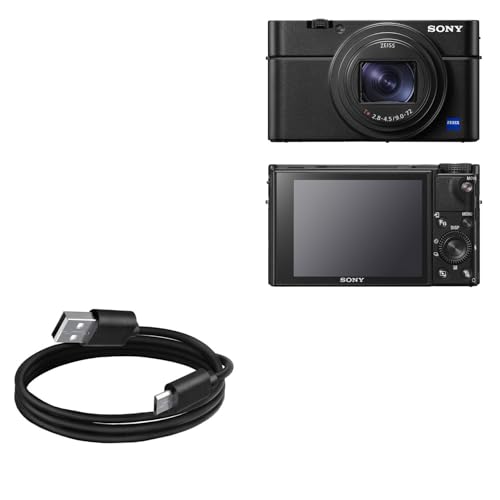
The RX100V uses the NP-BX1 battery, which delivers about 220 shots per charge. That’s not a lot, so picking up a spare battery is a smart move if you plan to shoot all day. The camera charges via Micro USB, which means you can top off from a power bank between sessions.
For the memory card, use a fast SD card. A UHS-I card with at least 60 MB/s write speed is the minimum for 4K video and 24 fps burst shooting. A UHS-II card gives you even better buffer performance during long burst sequences.
First Power-On
Slide the ON/OFF switch and the camera prompts you to set the time zone, date, and time. These get embedded in every photo and video file you create. Take a moment to set them accurately because this data keeps your files organized when importing to a computer or editing app.
The Pop-Up Electronic Viewfinder
The RX100V has a built-in OLED electronic viewfinder (EVF) with 2.36 million dots that pops up from the top of the camera. Press the small lever on the side to release it, then pull the eyepiece out toward you. It activates automatically when you bring the camera to your eye.
The EVF is a big advantage in bright sunlight when the rear LCD becomes hard to see. It also gives you a more stable shooting position because pressing the camera against your face creates a third point of contact. Use it for any situation where precision framing matters.
Shooting Modes
Turn the mode dial on top of the camera to select your shooting mode.
Intelligent Auto (iAuto): The camera analyzes the scene and picks everything for you. It works well for quick snapshots where you don’t have time to adjust settings.
Superior Auto: Similar to iAuto but shoots multiple frames and combines them for better dynamic range and low-light performance. Processing takes a moment, so it’s not ideal for fast-paced shooting.
P (Program Auto): The camera sets aperture and shutter speed, but you can shift the combination with the control ring on the lens. You keep control over ISO, white balance, and creative settings.
A (Aperture Priority): You set the aperture, the camera picks shutter speed. The Zeiss lens opens to f/1.8 at 24mm, which is impressively fast for a compact camera. Use this for controlling depth of field. Wide open at f/1.8, the background blur is noticeable even on a 1-inch sensor.
S (Shutter Priority): You pick the shutter speed, the camera handles aperture. Use 1/500+ for freezing action or 1/15 and slower for motion blur effects.
M (Manual): Full control over aperture and shutter speed. The exposure meter on screen shows whether you’re over or underexposed. The control ring adjusts one parameter while the control wheel handles the other.
Autofocus System
The RX100V’s 315-point phase-detection AF system covers about 65% of the sensor area. In practice, the camera locks focus almost instantly in good light and stays reliable even in moderately dim conditions.
AF-S (Single-shot): Focus locks on half-press. Use for still subjects.
AF-C (Continuous): Focus tracks continuously. Use for moving subjects.
DMF (Direct Manual Focus): Autofocus locks first, then you can fine-tune with the control ring. Useful for macro and precision work.
Focus Area Modes
Wide lets the camera pick from all 315 points. Zone limits focus to a section of the frame. Center uses the middle area. Flexible Spot lets you pick the exact point. For portraits, use Flexible Spot aimed at the eye. For general shooting, Wide works well and lets the camera do the work.
The Zeiss 24-70mm f/1.8-2.8 Lens
The built-in lens is one of the RX100V’s biggest selling points. At 24mm and f/1.8, it lets in a lot of light and produces noticeable background blur for a compact camera. As you zoom to 70mm, the maximum aperture narrows to f/2.8, which is still fast.
The control ring around the lens barrel can be assigned to different functions: manual focus, zoom, aperture, shutter speed, exposure compensation, or creative style. Aperture is a popular choice in A mode because it lets you change depth of field with a quick twist.
ISO and Exposure
ISO Range
The native ISO range is 125 to 12800. Images stay clean and detailed up to about ISO 1600. ISO 3200 shows some grain but is usable. ISO 6400 and above works for web-sized output but shows visible noise in prints. The stacked CMOS sensor handles low light better than most 1-inch sensors from this era.
Exposure Compensation
The dedicated exposure compensation dial on top of the camera lets you adjust brightness by up to +/- 3 stops. This is one of the fastest ways to override the meter. Bright scenes like snow or beach often need +1 to +1.5 stops. Dark backgrounds may need -0.5 to -1.
Burst Shooting
The RX100V shoots at up to 24 fps with autofocus tracking. That’s faster than most DSLRs and even some mirrorless cameras costing several times more. The buffer holds about 150 JPEGs or 44 RAW files before it slows down.
Set the drive mode to Continuous Shooting Hi+ for the full 24 fps. The electronic shutter eliminates blackout between frames, so you see a continuous live feed in the viewfinder or LCD while shooting. This makes tracking fast-moving subjects much easier.
Video Recording
The RX100V records 4K (3840×2160) at 30 and 24 fps with full pixel readout and no crop. The camera reads the full width of the sensor and downscales from 5.5K of data, producing 4K footage with excellent detail and minimal aliasing.
Full HD recording goes up to 120 fps for 5x slow motion. And the headline feature: HFR (High Frame Rate) mode captures up to 960 fps for dramatic super slow motion. At 960 fps, the resolution drops to 1136×384, but the effect is striking for creative projects.
S-Log2 is available for flat footage with maximum dynamic range for color grading. Picture Profiles offer ready-to-use color treatments if you don’t plan to grade.
The camera has a Micro USB port for charging and a Micro HDMI out for external monitors. There’s a 3.5mm mic input (via the Multi Interface Shoe with an adapter) but no headphone jack.
Wi-Fi and NFC
The RX100V has Wi-Fi and NFC for wireless image transfer and remote shooting. Use Sony’s Imaging Edge Mobile app to connect. NFC lets you tap your phone to the camera for instant pairing. Once connected, you can transfer full-resolution images, browse the camera’s card, and control the camera remotely, including shutter release and exposure settings.
Tips for Better Results
Portraits: A mode at f/1.8, zoom to 24mm or wider, get close to the subject with distance from the background. The 1-inch sensor won’t blur backgrounds like a full-frame camera, but at f/1.8 with good subject-background separation, the results are pleasing.
Street Photography: Set to P or A mode with Auto ISO (max 3200). The small body and quiet electronic shutter make this camera almost invisible. Pre-focus with AF-S and zone area for faster reaction time.
Travel: The 24-70mm range covers wide landscapes and tighter portraits. Keep Auto ISO on, shoot in A mode, and let the camera handle the rest. The EVF saves battery compared to the rear LCD.
Slow Motion: Switch to HFR mode, pick your frame rate (240, 480, or 960 fps), and set the quality priority. Good lighting is essential because faster frame rates need more light. 240 fps at 1080p gives the best balance of quality and slow-motion effect for most situations.
Video: For the best 4K, shoot at 24p in Manual mode with a fixed shutter speed of 1/50. Use the ND filter (built into the camera) to control exposure in bright conditions without closing the aperture too far.
![Screen Protector for Sony RX100 VI RX100 V RX100 IV RX100 III RX100 II RX100 I Digital Camera, ULBTER 0.3mm 9H Hardness Tempered Glass Saver Anti-Scrach Anti-Bubble [3 Pack]](https://www.technowifi.com/wp-content/uploads/2026/08/screen-protector-for-sony-rx100-vi-rx100-v-rx100-iv-rx100-iii-rx100-ii-rx100-i.jpg)
Final Thoughts
The Sony RX100V squeezes a remarkable amount of performance into a pocketable body. The 24 fps burst speed, 4K video, 960 fps slow motion, and fast f/1.8 lens make it capable of things most compact cameras can’t touch. Learn the menu system, spend time with the control ring and customizable buttons, and this camera will keep surprising you with what it can do.