Every Arlo Pro camera runs on a rechargeable battery, but the charging method varies by model. Some use removable batteries you pop out and charge separately. Others have built-in batteries that charge through a magnetic cable or USB-C port while still mounted on the wall.
The difference between a quick 2-hour charge and a camera that won’t charge at all often comes down to knowing which charger your model needs. The Arlo Pro 1 and Pro 2 require a specific 9V adapter that most people don’t have lying around. Newer models like the Pro 3, Pro 4, and Pro 5S use a magnetic cable that works with any USB power source. The Essential uses USB-C with a built-in battery you can’t remove.
This guide covers every Arlo model currently sold, the exact charging method each one uses, LED meanings, solar panel compatibility, and troubleshooting for batteries that refuse to charge.
Which Arlo Camera Do I Have and How Does It Charge
The quickest way to identify your model is to check the back of the camera for a printed model number. You can also find it in the Arlo app under Device Settings for that camera. The table below maps every current Arlo model to its specific charging method.
| Model | Battery Type | Charging Method | Charger Included | Charge Time | Battery Life |
|---|---|---|---|---|---|
| Arlo Pro (VMC4030) | Removable, rechargeable | Micro-USB on camera or Arlo Charging Station | 9V Quick Charge adapter required | ~2.5 hours | 4-6 months |
| Arlo Pro 2 (VMC4030P) | Removable, rechargeable | Micro-USB on camera or Arlo Charging Station | 9V Quick Charge adapter required | ~2.5 hours | 3-6 months |
| Arlo Pro 3 (VMC4040P) | Removable, rechargeable | Magnetic charging cable or Charging Station | Magnetic cable included | ~3 hours (magnetic), ~3.5 hours (station) | 3-6 months |
| Arlo Pro 4 (VMC4050P) | Removable, rechargeable | Magnetic charging cable | Magnetic cable included | ~3 hours | 3-6 months |
| Arlo Pro 5S 2K (VMC4060P) | Removable, rechargeable | Magnetic charging cable | Magnetic cable included | ~2.5 hours | 4-8 months |
| Arlo Essential (2nd Gen) | Built-in battery | USB-C cable | USB-C cable included | ~4 hours | 4-6 months |
| Arlo Ultra / Ultra 2 (VMC5040) | Removable, rechargeable | Magnetic charging cable | Magnetic cable included | ~3.5 hours | 3-6 months |
The biggest thing to notice in this table is the charger requirement for the Pro and Pro 2. Those two models demand a 9V Quick Charge adapter. A standard 5V phone charger won’t work, and the camera will flash amber to let you know the charger is wrong. Every other Arlo model works with any standard USB power source.
How to Charge an Arlo Pro or Pro 2 Camera
The Arlo Pro (VMC4030) and Arlo Pro 2 (VMC4030P) share the same charging design. Both have a Micro-USB port on the back of the camera, hidden under a rubber weather seal. You need to peel that rubber cover back to expose the port.
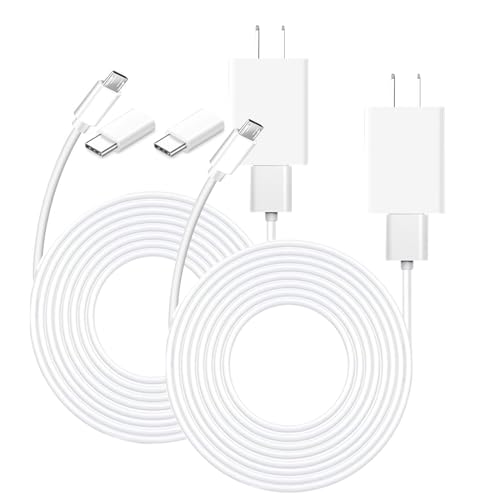
Here’s the process: bring the camera inside, peel back the rubber port cover, and plug in the Micro-USB cable. Connect the other end to the Arlo 9V Quick Charge adapter and plug that into a wall outlet.
This is where most charging problems start. You have to use the Arlo 9V Quick Charge adapter, not a standard 5V phone charger. A 5V charger won’t charge these cameras at all. When you plug in a 5V charger, the LED blinks amber for about three seconds as a warning that the voltage is wrong. If you see that amber blink, swap the adapter right away.
When charging works correctly with the 9V adapter, the LED blinks blue briefly. A solid blue light means the battery is fully charged. A full charge from a dead battery takes about 2.5 hours.
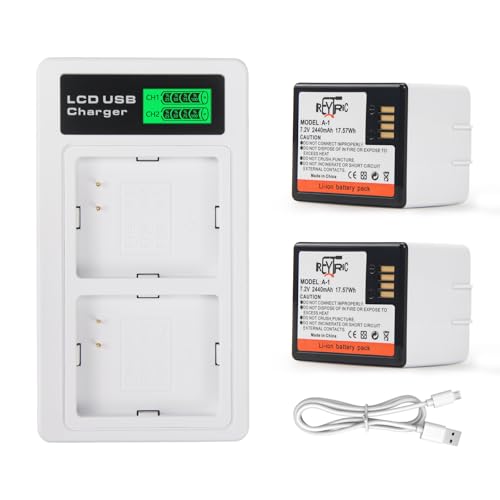
There’s an alternative: remove the battery entirely and charge it in the Arlo Charging Station (sold separately). The station holds two batteries and charges them outside the camera. A single battery takes about 2.75 hours in the station. More on the charging station below.
How to Charge an Arlo Pro 3, Pro 4, Pro 5S, or Ultra Camera
Starting with the Arlo Pro 3, Arlo switched from Micro-USB to a magnetic charging cable. This applies to the Pro 3 (VMC4040P), Pro 4 (VMC4050P), Pro 5S 2K (VMC4060P), and Ultra/Ultra 2 (VMC5040). All four models work the same way.
The magnetic connector snaps onto the back of the camera with a satisfying click. No port cover to peel back, no fumbling with a small USB plug. Just bring the cable close and the magnet pulls it into place.
The best part of the magnetic design is that you can charge these cameras while they’re still mounted outdoors. You don’t have to pull the camera off its mount, bring it inside, and put it back when charging is done. Just run the magnetic cable up to the camera, let it snap on, and plug the other end into a power source.
Unlike the Pro and Pro 2, these newer models aren’t picky about their power source. Any USB power adapter works: a standard 5V phone charger, a power bank, a laptop USB port, or a dedicated USB wall adapter. No special 9V requirement.
The LED behavior is the same across all magnetic-cable models. A slow blinking blue light means charging is in progress. A solid blue light means fully charged. Charge time varies by model: the Pro 3 takes about 3 hours, the Pro 4 about 3 hours, the Pro 5S about 2.5 hours, and the Ultra about 3.5 hours.
How to Charge an Arlo Essential Camera
The Arlo Essential (2nd Gen) is different from the Pro and Ultra lines in one big way: its battery is built in and can’t be removed. You can’t swap it for a charged one or charge it in the Arlo Charging Station.
Charging is done through a USB-C port on the back of the camera. Plug in any USB-C cable and connect it to any standard 5V USB power adapter. The camera isn’t fussy about cable brand or adapter wattage. A full charge from empty takes about 4 hours, longer than the Pro models because the Essential uses a lower charging rate.
You can charge the Essential while it’s still mounted on the wall. However, the camera goes offline briefly when you first plug in the charging cable. It reconnects on its own after a moment, but you’ll miss any motion events during that short gap. Once it reconnects, it keeps recording normally while charging.
Arlo Charging Station vs Charging on Camera
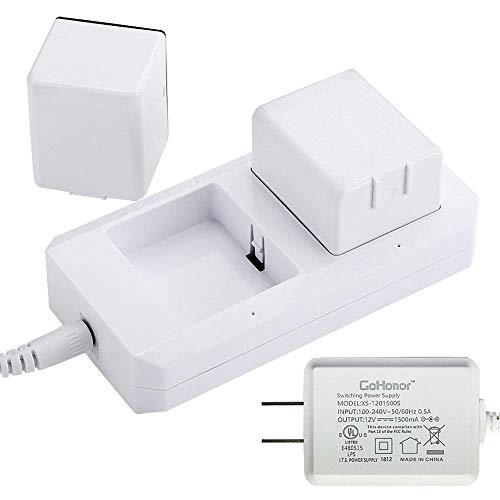
The Arlo Charging Station (model VMA4400C) is a desktop dock that charges Arlo batteries outside the camera. It has two battery slots and comes with its own power adapter. You pop the battery out of your camera, drop it into the station, and it starts charging right away.
When only one battery is in the station, a full charge takes about 2.75 hours. When both slots are occupied, the station charges one battery at a time and the total time roughly doubles to about 5.5 hours. The station is compatible with removable batteries from the Pro, Pro 2, Pro 3, Pro 4, Pro 5S, and Ultra models. It’s not compatible with the Arlo Essential because that camera’s battery doesn’t come out.
The real value of the charging station shows up when you buy spare batteries. With two batteries per camera (one in the camera and one on the station) you always have a fully charged battery ready to go. When the camera’s battery runs low, walk outside, pop out the dead battery, snap in the charged one, and the camera is back online in about 30 seconds. No downtime. No waiting hours for a charge.
Think of it like the old days of swappable phone batteries. One charges on the desk while the other one works. If you have multiple Arlo cameras, a charging station with two or three spare batteries on rotation means you never have a camera go offline for charging.
Can You Use a Solar Panel to Keep Arlo Cameras Charged
Arlo sells a solar panel designed specifically for their cameras. The Arlo Solar Panel Charger (model VMA5600) connects to the camera’s charging port and provides a continuous trickle charge from sunlight. In most locations that get 3 to 4 hours of direct sunlight per day, the solar panel can keep the battery topped off indefinitely. You never have to bring the camera inside to charge.
The solar panel connects through the magnetic charging port on Pro 3, Pro 4, Pro 5S, and Ultra models. For the Arlo Essential, it connects through USB-C. The panel mounts above or beside the camera using an adjustable bracket that lets you angle it toward the sun.
There’s one important limitation: the solar panel doesn’t work with the Arlo Pro 1 or Pro 2. Those models use a Micro-USB port with a 9V charging requirement, and the solar panel outputs standard 5V USB power. If you have a Pro or Pro 2, a solar panel won’t charge it.
The solar panel is meant for maintenance charging, not rapid charging. It won’t bring a dead battery from 0 to 100 percent on its own. The output is too low for that. Charge the battery to 100 percent first using the regular cable and adapter, then connect the solar panel to keep it topped off over time.
Third-party solar panels from Wasserstein, OLAIKE, and other brands also work with Arlo cameras and typically cost less than the official Arlo panel. Most use the same magnetic or USB-C connection. Read reviews carefully, though. Some cheaper panels don’t produce enough power in overcast conditions to keep up with the camera’s drain.
How to Make Arlo Battery Last Longer Between Charges
Battery life depends almost entirely on how often your camera records. A camera that records 20 clips per day drains much faster than one recording 5. These tips focus on reducing unnecessary recordings without sacrificing security coverage.
Open the Arlo app and go to Settings for the camera you want to adjust. Look for Power Management. The “Best Battery Life” mode reduces video quality slightly but can nearly double the time between charges. For most outdoor security purposes, the quality difference isn’t noticeable.
Reduce motion sensitivity. A camera set to high sensitivity records every passing car, windblown leaf, and neighborhood cat. Lowering the sensitivity slider means the camera only triggers on larger, closer motion events. You still catch people walking up to your door, but skip the squirrels.
Shorten the video clip length. The default recording length is often 30 to 60 seconds per motion event. Many events only need 15 to 20 seconds of footage. Cutting the clip length in half roughly halves the battery drain from recordings.
Set up activity zones. Instead of recording motion anywhere in the camera’s field of view, draw zones around the specific areas that matter: your driveway, front door, or walkway. The camera ignores motion outside those zones, which means fewer recordings and less battery drain.
Camera placement affects battery life more than most people think. The closer the camera is to your base station or Wi-Fi router, the less power it uses to maintain the wireless connection. A camera at the far edge of your Wi-Fi range works harder to stay connected and drains faster.
Avoid pointing cameras at high-traffic areas if you can. A camera watching a busy sidewalk records almost nonstop and drains the battery in weeks instead of months. If you have to cover a busy area, use activity zones aggressively and lower the sensitivity.
Disable audio detection if you don’t need it. Audio detection listens continuously for loud sounds and triggers recordings independently of motion. Turning it off reduces background power consumption.
Cold weather temporarily reduces battery life. That’s normal lithium-ion behavior, not permanent damage. When temperatures drop below freezing, the reported charge level may drop suddenly, but the battery recovers when the temperature rises.
Arlo Camera LED Lights While Charging
The LED on the front of your Arlo camera communicates charging status and potential problems. Knowing what each pattern means saves time and prevents unnecessary troubleshooting.
| LED Pattern | Meaning |
|---|---|
| Slow blinking blue | Charging in progress |
| Solid blue | Fully charged |
| Fast blinking amber (3 seconds after plugging in) | Wrong charger – 5V instead of 9V (Pro and Pro 2 only) |
| Blinking amber once per minute | Battery at 15% or below (not plugged in) |
| Alternating blue and amber | Firmware update in progress – do NOT unplug or remove battery |
| No LED | Camera is off or battery is completely dead – plug in and wait a few minutes |
Pay special attention to the fast amber blink on Pro and Pro 2 models. It shows up for about 3 seconds right after you plug in the cable and means the camera detected a 5V power source instead of the required 9V. Swap to the correct Arlo 9V Quick Charge adapter and the LED should switch to slow blinking blue.
If you see alternating blue and amber, the camera is updating its firmware. This can happen automatically when the camera is plugged in and connected to Wi-Fi. Don’t unplug the cable or remove the battery during a firmware update. Interrupting the update can brick the camera.
Arlo Battery Not Charging – Troubleshooting
Start with the most common cause. If you have an Arlo Pro or Pro 2, make sure you’re using the Arlo 9V Quick Charge adapter. A regular 5V phone charger won’t charge these cameras. The LED will blink amber briefly to confirm the voltage is wrong. This single issue accounts for most “my Arlo won’t charge” complaints online.
For all models, check that the charging cable is fully seated. Magnetic cables on newer Arlo models may not connect properly if there’s dirt or debris on the metal contacts. Wipe both the cable tip and the charging contacts on the back of the camera with a dry, lint-free cloth.
Try a different wall outlet. Then try a different cable. These two steps rule out a faulty outlet or a damaged cable, which are more common than actual camera defects.
If the battery charges to less than 100 percent and stops, or if it drains unusually fast after a full charge, the battery itself may have degraded. Lithium-ion batteries lose capacity after hundreds of charge cycles. After two to three years of regular use, an Arlo battery may only hold 60 to 70 percent of its original capacity. Replacement batteries are available from Arlo directly and from Amazon.
After a firmware update, the camera may act up or refuse to charge. Remove the battery, wait 10 seconds, and reinsert it. This power cycle resets the camera’s hardware state and often resolves post-update problems.
If you’ve tried all of the above and the battery still won’t charge, contact Arlo support. Cameras under warranty qualify for free replacement batteries or a camera swap. Arlo’s standard warranty covers battery defects for one year from purchase.
FAQs
Can I use my Arlo camera while it is charging?
Yes. All Arlo cameras continue to detect motion and record video while the battery is charging. The camera stays connected to Wi-Fi and sends alerts to your phone as usual. The only exception is the Arlo Essential, which briefly goes offline when you first plug in the USB-C charging cable. It reconnects on its own within a minute or two.
How do I know when my Arlo camera is fully charged?
The LED on the front turns solid blue when the battery reaches 100 percent. While charging, the LED blinks blue slowly. You can also check the battery level in the Arlo app anytime. Go to Devices, select your camera, and the battery percentage shows up in the device overview.
Can I use a phone charger to charge my Arlo camera?
It depends on the model. The Arlo Pro and Pro 2 require a 9V Quick Charge adapter, so a standard 5V phone charger won’t work. The Arlo Pro 3, Pro 4, Pro 5S, Ultra, and Essential all work fine with any standard phone charger. Just connect the right cable (magnetic or USB-C) and plug into any 5V USB adapter.
How long does an Arlo battery last before it needs replacing?
Arlo batteries typically last 300 to 500 charge cycles before noticeable degradation. For most users, that’s roughly 2 to 3 years of regular use. You’ll notice the battery draining faster than it used to and not reaching a full 100 percent charge. At that point, a replacement battery restores the camera to its original battery life. Replacement batteries cost between $30 and $50 depending on the model.
Can I leave my Arlo camera plugged in all the time?
You can, and it won’t damage the battery. Arlo cameras have built-in charge management that stops charging once the battery hits 100 percent. Leaving the camera plugged in keeps it at full charge without overcharging. Lots of people use the magnetic cable or a solar panel to keep their cameras permanently connected to power, basically turning a battery-powered camera into a wired one.
Where can I buy replacement Arlo batteries?
Official Arlo replacement batteries are sold on the Arlo website (arlo.com), Amazon, Best Buy, and most electronics retailers. Third-party replacement batteries from brands like Tenergy and BORTENG are also available on Amazon, usually at a lower price. Make sure the replacement matches your specific Arlo model number. Pro/Pro 2 batteries aren’t interchangeable with Pro 3/Pro 4/Ultra batteries.