Two Ways to Connect a GoPro to an iPad
There are two main methods for getting GoPro footage onto an iPad: a wireless connection through the GoPro Quik app, or a wired USB connection using an adapter. The wireless method is more convenient for transferring clips while you’re out shooting. The wired method is faster and better for moving large video files. Which one you choose depends on how much footage you’re transferring and whether you have the right cable handy.
For more creative ideas with your GoPro setup, check out our collection of GoPro tricks that can level up your footage.
Method 1: GoPro Quik App Over Wi-Fi
The GoPro Quik app is the official way to connect your GoPro to a phone or tablet. It works on iPads running iPadOS 16 or later and supports GoPro HERO5 and newer models.
Step-by-Step Wi-Fi Pairing
1. Download GoPro Quik from the App Store on your iPad.
2. Turn on your GoPro and make sure Wi-Fi is enabled. On HERO9 and newer models, swipe down on the rear screen and tap Preferences, then Connections, then Connect Device. On older models, go to Connections in the main menu.
3. Open the Quik app on your iPad. If this is your first time, create a GoPro account or sign in.
4. Tap the camera icon in the app and select Add a Camera.
5. The app will search for nearby GoPro cameras. When yours appears, tap it.
6. Confirm the pairing request on the GoPro’s screen.
7. Your iPad will prompt you to join the GoPro’s Wi-Fi network. Tap Join.
Once connected, the app shows a live preview of the camera’s view on your iPad screen. This turns your iPad into a large external monitor for framing shots, which is particularly useful when the GoPro is mounted on a helmet, drone, or tripod where you can’t easily see the built-in screen.
Transferring Clips via Quik
From the Quik app’s media gallery, you can see all the photos and videos stored on the GoPro’s SD card. Tap any clip to preview it, then tap the download icon to transfer it to the iPad. You can select multiple clips by tapping the checkbox on each one, then download them as a batch.
Wi-Fi transfer speeds typically run about 5 to 8 MB per second, depending on the GoPro model and distance between devices. A one-minute 4K clip at 60fps can be 400 to 600 MB, so expect about a minute or two per clip at this resolution. For faster transfers, keep the iPad close to the GoPro (within a few feet) and avoid areas with heavy Wi-Fi congestion.
You can also set the Quik app to download only specific clips rather than pulling everything off the card. This saves time when you shot a full day of footage but only need a few highlights.
Method 2: USB Connection with an Adapter
For faster transfers, especially with large video files, a USB cable connection is the way to go. What you need depends on your iPad model.
iPads with USB-C (iPad Pro, iPad Air 4th gen and later, iPad mini 6th gen and later): Use a USB-C to USB-C cable. GoPro HERO9 and newer models have USB-C ports on the camera. Plug one end into the GoPro and the other into the iPad.
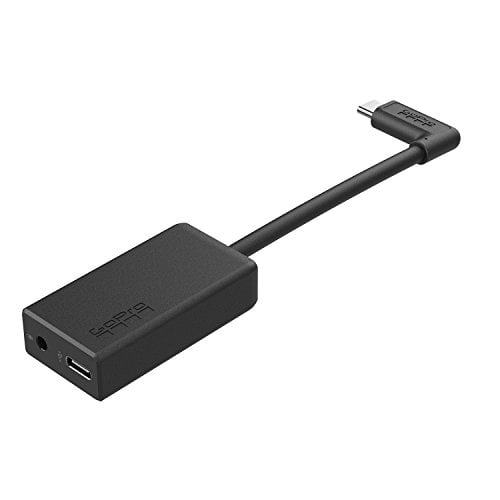
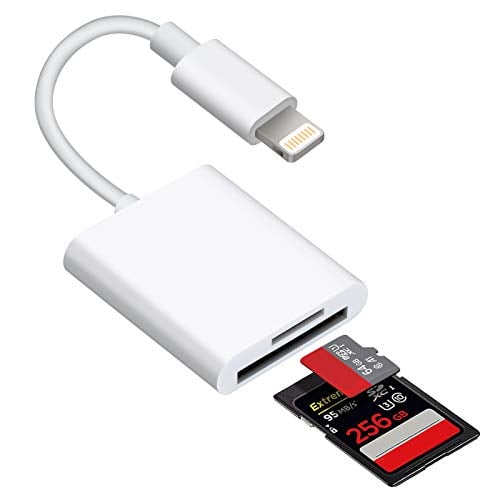
iPads with Lightning (older iPad, iPad Air 3rd gen, iPad mini 5th gen): Use Apple’s Lightning to USB Camera Adapter (or Lightning to USB 3 Camera Adapter for faster speeds), then connect a USB-C or micro-USB cable from the adapter to the GoPro.
Once plugged in, turn on the GoPro. The iPad’s Photos app should open automatically with an Import screen showing all the media on the GoPro’s SD card. If it doesn’t open on its own, open the Photos app and look for the Import tab.
Importing to the Photos App
The Import screen shows thumbnails of every photo and video on the GoPro. You can tap individual items to select them, or tap Import All to grab everything. After importing, the iPad asks if you want to delete the originals from the GoPro or keep them. Choose keep if you want a backup on the SD card.
USB transfers are significantly faster than Wi-Fi. You can expect about 30 to 40 MB per second with USB-C to USB-C, which means that same one-minute 4K clip transfers in about 15 seconds instead of a minute or two over Wi-Fi.
Editing GoPro Footage on the iPad
Once your clips are on the iPad, the GoPro Quik app offers a surprisingly capable editor. You can trim clips, adjust speed (slow motion and time-lapse), add music, apply filters, and combine multiple clips into a highlight reel. The app also includes auto-edit features that analyze your footage and create a montage with transitions and music.
For more advanced editing, LumaFusion and iMovie are both solid options on iPad. LumaFusion is a paid app that offers multi-track editing, color grading, and audio mixing. iMovie is free and handles basic cuts, transitions, and titles well. Both can work with 4K GoPro footage, though older iPads may struggle with 4K60 clips.
One workflow tip: import your GoPro clips into the Photos app first via USB, then open them in your editing app of choice. This is faster than trying to edit directly from the Quik app’s downloads, since the Photos app stores files on the iPad’s local storage where they load instantly.
Which GoPro Models Support Which Methods
Not every GoPro connects the same way. Here’s a quick breakdown:
HERO13, HERO12, HERO11, HERO10, HERO9: Wi-Fi (Quik app) and USB-C wired connection. Full support for both methods.
HERO8, HERO7, HERO6, HERO5: Wi-Fi (Quik app) and micro-USB or USB-C wired connection (varies by model). Quik app features may be limited on older models.
HERO4 and older: Wi-Fi connection through the older GoPro app (not Quik). Some models require a separate Wi-Fi remote or adapter. USB import to Photos app still works with the right cable.
GoPro MAX and GoPro Fusion: Same Wi-Fi and USB methods, but 360-degree footage requires the Quik app or GoPro Player on a computer for proper stitching before editing.
Using Your iPad as a Large Preview Monitor
One of the most practical uses of the GoPro-to-iPad connection is turning your iPad into a live viewfinder. When connected through the Quik app over Wi-Fi, the live preview on the iPad screen shows exactly what the camera sees, with a slight delay of about half a second.
This is especially useful for mounting situations where you can’t see the GoPro’s built-in screen. Set up the GoPro on a tripod, selfie stick, or vehicle mount, prop the iPad nearby, and use it to frame your shot and adjust settings before you start recording. You can change resolution, frame rate, field of view, and other settings directly from the Quik app without touching the camera.
The live preview works at a reduced resolution to keep the stream smooth, so it won’t show you every detail. But it’s more than enough for checking composition and making sure nothing is cutting off at the edges of the frame.
![[Apple MFi Certified] Lightning to SD Card Camera Reader for iPhone iPad, Dual Card Slot for iPhone iPad SD/Micro SD Memory Card Reader Adapter, Trail Game Camera Viewer, No App Required Plug and Play](https://www.technowifi.com/wp-content/uploads/2026/08/apple-mfi-certified-lightning-to-sd-card-camera-reader-for-iphone-ipad-dual.jpg)