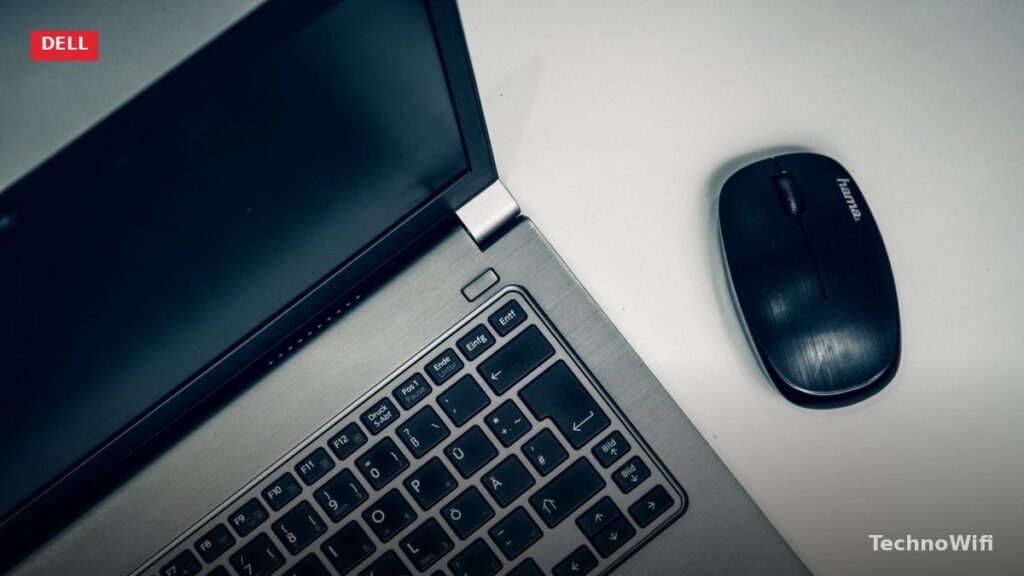
Every Dell laptop works with wireless mice from any brand. The setup takes under two minutes whether you’re connecting through a USB dongle or over Bluetooth. Both methods work on the Inspiron, Latitude, XPS, Vostro, and G-series gaming lines without any special software.
This guide walks through both connection methods on Windows 11 in 2026, covers Dell Premier mice with their multi-device features, and addresses common problems like the mouse not being detected or the cursor jumping around the screen.
How to Connect a USB Dongle Wireless Mouse to a Dell Laptop
Most wireless mice that aren’t Bluetooth use a small USB receiver called a dongle. It comes in the box with the mouse, usually stored inside the battery compartment or clipped to the bottom. This type of connection uses 2.4 GHz radio frequency and works the moment you plug the receiver in.
- Step 1: Remove the USB receiver from the mouse packaging or battery compartment. The receiver is roughly the size of a fingernail.
- Step 2: Plug the receiver into any USB-A port on your Dell laptop. Most Dell models have at least one USB-A port on the left or right side. If your Dell only has USB-C ports (common on newer XPS ultrabooks), you need a USB-C to USB-A adapter or a USB-C hub.
- Step 3: Turn the mouse on using the power switch on the bottom. A small LED may flash briefly to confirm the mouse is active.
- Step 4: Wait a few seconds. Windows 11 detects the receiver and installs the necessary drivers in the background. The cursor should respond to the mouse within 5 to 10 seconds.
No pairing button or software install is needed. The mouse and its receiver are pre-paired at the factory, so the connection happens automatically.
What If the Dongle Mouse Isn’t Responding
Make sure the batteries are installed correctly or that the rechargeable battery has some charge. Try a different USB port on the laptop. On Dell XPS models with only USB-C ports, confirm that your adapter supports data transfer and not just charging. A powered USB-C hub resolves most adapter-related issues.
How to Connect a Bluetooth Mouse to a Dell Laptop on Windows 11
Bluetooth mice connect directly to your Dell laptop’s built-in Bluetooth radio without using a USB port. Every Dell laptop sold since 2015 includes Bluetooth, so compatibility isn’t a concern on any current model.
- Step 1: Turn on the Bluetooth mouse and put it into pairing mode. On most mice, hold the pairing button on the bottom for 3 to 5 seconds until an LED starts flashing. Some mice use a dedicated Bluetooth button, while others require holding the power switch. Check the quick start card for the exact method.
- Step 2: On your Dell laptop, open Settings > Bluetooth & devices. Confirm the Bluetooth toggle is turned on.
- Step 3: Click Add device, then select Bluetooth from the options.
- Step 4: Windows scans for nearby Bluetooth devices. When your mouse appears in the list, click it to pair. The mouse may show up by its model name or simply as “Bluetooth Mouse.”
- Step 5: Wait for Windows to finish connecting. The LED on the mouse stops flashing and the cursor becomes responsive within a few seconds.
After the initial pairing, the Bluetooth mouse reconnects automatically every time you turn it on near your Dell laptop. You won’t need to repeat the pairing process unless you reset the mouse or remove it from your device list.
Bluetooth Mouse Range and Latency
Bluetooth mice typically work within about 30 feet of the laptop. Input lag on modern Bluetooth 5.0 and 5.1 mice is low enough that most people can’t tell the difference from a USB dongle during everyday use. For competitive gaming, a 2.4 GHz dongle still provides slightly lower latency.
How to Set Up a Dell Premier Wireless Mouse
Dell’s Premier wireless mice support multiple connection methods in a single device. Models like the Dell Premier Rechargeable Mouse (MS900) and the Dell Premier Wireless Mouse (MS7421W) can connect through a USB-C dongle, a USB-A dongle, Bluetooth, or Dell Universal Pairing.
Dell Universal Pairing uses a single USB receiver that supports up to six Dell peripherals simultaneously. If you already have a Dell Premier keyboard with its dongle plugged in, you can pair the mouse to that same receiver instead of using a second one.
Interested in this area? We go deeper in our Dell laptop docking station guide.
- Step 1: Flip the mouse over and slide the dongle out of its built-in storage slot. Dell Premier mice store a USB dongle inside the body of the mouse.
- Step 2: Plug the dongle into your Dell laptop. The mouse pairs with the dongle automatically and the cursor begins working within seconds.
- Step 3: To connect over Bluetooth instead, press the connection mode button on the bottom of the mouse until the Bluetooth indicator lights up. Then pair through Windows 11 Bluetooth settings using the steps described in the section above.
Dell Peripheral Manager Software
Dell Peripheral Manager is a free app available from Dell’s support site. It lets you customize button assignments, adjust scroll speed, change DPI sensitivity, and check the battery level on Dell-branded mice. Installing this software is optional. The mouse works fully without it, but the app is worth grabbing if you want to reassign the side buttons or fine-tune tracking speed.
Battery vs Rechargeable Wireless Mice for Dell Laptops
Wireless mice run on either replaceable batteries or a built-in rechargeable cell. Both approaches have trade-offs, and the better option depends on how you use your laptop and where you use it.
| Feature | Battery-powered mouse | Rechargeable mouse |
|---|---|---|
| Power source | 1 or 2 AA/AAA batteries | Built-in lithium-ion battery |
| Battery life | 6 to 24 months per set | 1 to 3 months per charge |
| Charging method | Swap in fresh batteries | USB-C cable (most 2026 models) |
| Weight | Heavier with batteries installed | Lighter overall |
| Long-term cost | Ongoing battery purchases | No extra cost after purchase |
| Downtime when dead | None with spare batteries on hand | Must charge, though some work while charging |
| Environmental impact | Disposable battery waste | Lower waste, battery degrades after 2 to 3 years |
Battery-powered mice last much longer between power changes. A Logitech M185, for example, runs for about 12 months on a single AA battery. Rechargeable mice offer shorter runtime but eliminate the hassle of keeping spare batteries around.
Which Type Works Better for Travel
For travel with a Dell laptop, rechargeable mice are generally more practical. You don’t need to pack spare batteries, and a quick 10-minute charge on many 2026 models gives several hours of use. For a permanent desk setup where the mouse rarely moves, either type works equally well.
Why Is My Wireless Mouse Not Working on My Dell Laptop
A wireless mouse that stops responding or isn’t detected usually comes down to one of a few common causes. Work through these fixes in order before assuming the mouse itself is defective.
- Check the batteries or charge level. Dead batteries are the single most common reason a wireless mouse stops working. Replace the batteries or charge the mouse for at least 15 minutes before trying anything else.
- Confirm the USB receiver is seated firmly. If you use a dongle mouse, the tiny receiver can work itself loose, especially on laptops that get carried around. Pull it out and push it back in. Try a different USB port if the first one isn’t working.
- Turn the mouse off and back on. Flip the power switch on the bottom to off, wait three seconds, then switch it back on. This forces the mouse to re-establish its wireless connection.
- Remove and re-pair a Bluetooth mouse. Go to Settings > Bluetooth & devices, find the mouse in your device list, click the three-dot menu next to it, and select Remove device. Then pair the mouse again from scratch.
- Check Device Manager for driver problems. Right-click the Start button, open Device Manager, and expand Mice and other pointing devices. A yellow warning triangle means there’s a driver issue. Right-click the entry and select Update driver > Search automatically for drivers.
- Restart the laptop. A simple reboot clears many USB and Bluetooth glitches that persist through sleep and wake cycles. This is especially effective after a recent Windows update.
How to Fix Cursor Jumping and Lag on a Dell Laptop
Cursor lag, stuttering, or erratic jumping usually points to wireless interference rather than a hardware defect. The 2.4 GHz frequency used by RF dongle mice is shared with Wi-Fi routers, cordless phones, and other wireless devices. Bluetooth mice can experience similar interference from nearby 2.4 GHz sources.
Move the USB receiver closer to the mouse if it’s plugged into a port on the back of a docking station or hidden behind a monitor. A short USB extension cable brings the receiver out into the open and improves signal quality noticeably.
Surface and Sensor Issues
Optical and laser sensors struggle on glass, highly reflective, or very dark surfaces. A mouse pad provides consistent tracking regardless of desk material. Even a sheet of paper works as a quick fix if you suspect the surface is the problem.
Dust, hair, or lint near the sensor on the bottom of the mouse also causes tracking problems. Turn the mouse over and use compressed air or blow gently to clear the sensor window.
Touchpad Conflicts on Dell Laptops
Dell laptops keep the touchpad active when a mouse is connected. Accidental palm touches on the touchpad while typing can make the cursor jump unexpectedly. Go to Settings > Bluetooth & devices > Touchpad and reduce sensitivity or turn off tap-to-click to prevent this.
For the complete picture, our triple display docking stations guide fills in the gaps.
Updating your Dell laptop’s Bluetooth and Wi-Fi drivers also helps. Visit support.dell.com, enter your Service Tag or model number, and grab the latest wireless drivers. Outdated Bluetooth drivers frequently cause connection drops and lag, particularly after major Windows 11 feature updates.
Do You Need Special Dell Drivers for a Wireless Mouse
For the vast majority of wireless mice, no. Windows 11 includes built-in HID (Human Interface Device) drivers that handle every standard wireless mouse from any manufacturer. When you plug in a USB receiver or pair a Bluetooth mouse, Windows installs the correct driver automatically without any downloads.
Dell Peripheral Manager is the one piece of optional software worth considering. It adds button customization, DPI adjustment, and battery monitoring for Dell-branded mice. The mouse works perfectly without it, but the software gives you access to configuration options that Windows settings alone don’t cover.
Third-party mice from Logitech, Razer, Microsoft, and other brands have their own optional apps. Logitech Options+ customizes Logitech mice. Razer Synapse handles Razer peripherals. None of these are required for basic functionality. They add convenience features like per-application button profiles and gesture support.
If you use a Dell docking station with a wireless mouse receiver plugged into the dock, keep the docking station firmware current. Outdated dock firmware occasionally causes USB port issues that affect the mouse receiver. Download docking station updates from Dell’s support page for your specific dock model.
Wireless Mouse Connection Methods for Dell Laptops Compared
| Feature | USB dongle (2.4 GHz) | Bluetooth | Dell Universal Pairing |
|---|---|---|---|
| Requires USB port | Yes (USB-A) | No | Yes (USB-A or USB-C) |
| Pairing process | Plug in and works immediately | Manual pairing through Settings | Plug in and works, or pair via Dell software |
| Typical latency | Under 8ms | 8 to 16ms on Bluetooth 5.0+ | Under 8ms |
| Range | About 33 feet | About 30 feet | About 33 feet |
| Multiple devices per receiver | No (one mouse per dongle) | N/A | Yes (up to 6 Dell peripherals) |
| Works with Bluetooth disabled | Yes | No | Yes |
For most people, a USB dongle mouse is the simplest starting point. Plug it in and it works with zero configuration. Bluetooth is the better choice if your Dell laptop is short on USB ports or if you prefer fewer dongles to keep track of. Dell Universal Pairing makes sense if you already own multiple Dell peripherals and want them all on a single receiver.
Wireless Mouse for Dell Laptop FAQs
Can I use any wireless mouse with a Dell laptop?
Yes. Dell laptops work with any wireless mouse from any brand. There are no compatibility restrictions. A Logitech, Microsoft, Razer, HP, or store-brand wireless mouse connects to a Dell laptop the same way it connects to any other Windows computer. Use the included USB dongle or pair over Bluetooth depending on what the mouse supports.
Why is my Dell laptop not detecting my Bluetooth mouse?
First confirm that Bluetooth is enabled on the laptop. Open Settings > Bluetooth & devices and check the toggle. Make sure the mouse is in pairing mode with its LED flashing. If Windows still doesn’t find it, toggle Bluetooth off and back on. Updating the Bluetooth driver through Dell’s support site or Device Manager also fixes detection issues that sometimes appear after Windows updates.
Do wireless mice cause input lag on Dell laptops?
Modern wireless mice produce very little noticeable lag. A 2.4 GHz dongle mouse typically has 1 to 8 milliseconds of latency, which is imperceptible for office work and browsing. Bluetooth 5.0 mice range from 8 to 16 milliseconds. For competitive gaming, a wired or 2.4 GHz dongle mouse is still preferred, but the difference is negligible for everyday tasks.
Can I connect two wireless mice to one Dell laptop at the same time?
Windows 11 supports multiple pointing devices simultaneously. You can have a USB dongle mouse and a Bluetooth mouse both connected at the same time, and both will control the same on-screen cursor. This is practical if you keep a travel mouse in your bag and a full-size mouse at your desk.
How do I check wireless mouse battery level on Windows 11?
For Bluetooth mice, Windows 11 shows the battery percentage in Settings > Bluetooth & devices next to the mouse name. Not every Bluetooth mouse reports its battery level to Windows, but most modern ones do. For USB dongle mice, battery level is usually displayed through the manufacturer’s app (like Logitech Options+ or Dell Peripheral Manager) or indicated by a low-battery LED on the mouse.
Sources
Dell Support – dell.com, Microsoft Windows Support – support.microsoft.com, Dell Peripheral Manager – dell.com, Bluetooth Technology Overview – bluetooth.com, Logitech Support – support.logi.com