How To Use GoPro As Dashcam: What You Need To Know
How to use GoPro as dashcam is a question that comes up often, especially if you already own one and would rather not buy a separate device for your car. The good news is that with a few settings changes and the right accessories, a GoPro can work as a dash cam. The setup takes about 15 minutes, and the video quality is usually better than what you get from budget dash cams. That said, there are trade-offs compared to purpose-built dashboard cameras, and this guide covers all of them so you can decide if a GoPro is the right fit for your vehicle in 2026.
GoPro vs. Dedicated Dash Cam
GoPro cameras are designed for action and outdoor activities. They shoot high-resolution video, handle water and dust, and fit in your pocket. You can connect them to your phone or computer to review footage, and the wide-angle lens captures a big field of view without distortion.
Dash cams, by contrast, are built specifically for vehicles. They mount to the windshield or dashboard and record the road ahead automatically when you start your car. Many models include dual cameras for front and rear coverage, a G-sensor that locks footage during a collision, GPS tracking, and a parking surveillance mode that records when the car is off.
Both devices record video, and both can be useful for traffic monitoring, insurance claims, and capturing road trips. The difference is that a dash cam does all of this out of the box with zero effort, while a GoPro requires manual setup and lacks several automated features. If you already own a GoPro, though, repurposing it can save you $100 to $300 on a dedicated unit.
How To Use GoPro As Dashcam: Step-by-Step
Follow these steps to set up your GoPro as a working dash cam in your car or truck.
We put together a full guide on action camera for motovlogging that pairs well with this.
1. Configure the Right Settings
Open your GoPro settings and select Wide FOV (field of view). This captures as much of the road as possible, including traffic in adjacent lanes. Set the resolution to 1080p at 30 frames per second. This gives you clear, detailed footage without creating files that are too large to manage. You can bump it up to 2.7K or 4K if you want sharper license plate capture, but your memory card will fill up much faster.
2. Turn On Loop Recording
Loop recording is the feature that makes a GoPro work like a dash cam. When it is on, the camera records continuously and overwrites the oldest clips when the memory card fills up. Without this feature, the camera simply stops recording once storage runs out, and you might miss the one moment that matters.
You can set the loop interval to 5, 20, 60, or 120 minutes, or select MAX to let the camera manage it. A 20-minute interval is a practical choice for most drivers. It keeps enough recent footage to cover any incident without overwriting clips too quickly.
3. Use Quick Capture for One-Button Start
Quick Capture lets you start and stop recording with a single button press, even when the GoPro is powered off. Press the button, and the camera boots up and begins recording immediately. Press it again to stop. This is safer than navigating touchscreen menus while sitting in the driver’s seat, and it means you can get recording before you pull out of the driveway.
4. Mount the Camera and Connect Power
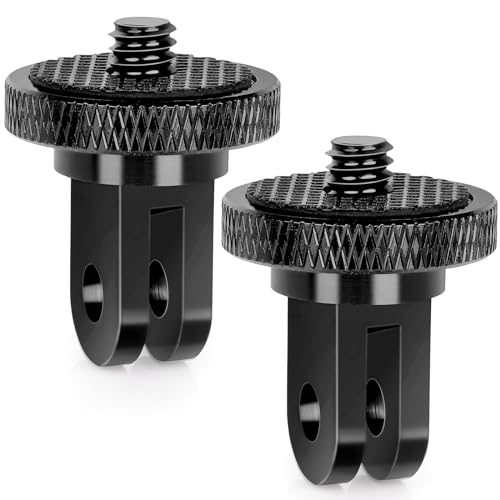
A secure mount is the most important part of this setup. A suction cup mount is the most popular choice. It attaches to the windshield and holds the camera steady through turns, bumps, and highway vibration. Make sure the suction cup is rated for your GoPro model and can support its weight.
Our how does a GoPro work? walkthrough covers this from a different angle.
You will also need these accessories:
- 12V USB Adapter: Plug this into your car’s cigarette lighter or 12V port to keep the GoPro charged. Running on battery alone, most GoPro models last about 90 minutes to two hours, which is not enough for a full day of driving.
- Protective Housing: Older GoPro models (Hero8 and earlier) may need a frame or housing that exposes the USB port. This lets you charge while recording and protects the camera from heat and vibration.
- Windshield Mount: A windshield mount keeps the camera high with an unobstructed view. It frees up dashboard space and tends to stay secure over rough roads better than dashboard mounts.
Before you start driving, confirm that the GoPro is powered on, connected to USB power, and actively recording. A quick glance at the screen or the blinking red light tells you everything is working.
Important Considerations Before Using GoPro As Dashcam
A GoPro can work as a dash cam, but it was not designed for this role. Here are the key limitations you should know about before relying on it every day.
- Heat: GoPro cameras are not built for extreme heat. Sitting on a dashboard in direct sunlight during summer can cause the camera to overheat and shut down automatically. Dedicated dash cams use heat-resistant components that handle temperatures up to 140 degrees Fahrenheit or higher.
- Theft risk: A GoPro is a visible, valuable gadget. Leaving it mounted on your windshield while parked at a store or restaurant makes it a target. Remove it every time you leave the vehicle.
- Battery drain: Disable WiFi, Bluetooth, GPS, and voice control when using the GoPro as a dash cam. These features drain the battery quickly and are not needed for road recording. Keep the camera connected to USB power at all times.
- Storage: GoPro cameras have no meaningful internal storage. You need a high-capacity microSD card. A 128GB card holds roughly 4 to 5 hours of 1080p footage. A 256GB card is better for longer trips or higher resolutions.
- Missing auto features: GoPro cameras do not start recording when you turn on the ignition. They lack a G-sensor for collision detection, built-in GPS stamping on video files, and parking mode surveillance. All of these are standard on most dedicated dash cams priced above $80.
Is a GoPro Good Enough, or Should You Get a Dash Cam?
If you already own a GoPro and want basic road recording for road trips, vacation drives, or occasional use, it gets the job done. The video quality is often better than budget dash cams, and you can detach it from the mount and use it for hiking, cycling, or any other activity the next day.
For daily commuting or long-term use, a dedicated dash cam is the better investment. Features like automatic startup, collision-triggered recording, GPS data logging, and parking mode add real value for everyday drivers. Budget dash cams in the $50 to $100 range offer all of these features and are designed to handle the heat, vibration, and hours of continuous recording that car interiors demand.
Try using your GoPro as a dash cam for a week. If the manual startup, heat sensitivity, and limited battery bother you, that tells you it is time for a purpose-built device. If the setup works for your driving habits, you have saved yourself the cost of a separate camera. Either way, having any recording device on the road is better than having none.