Scan Documents With the Notes App
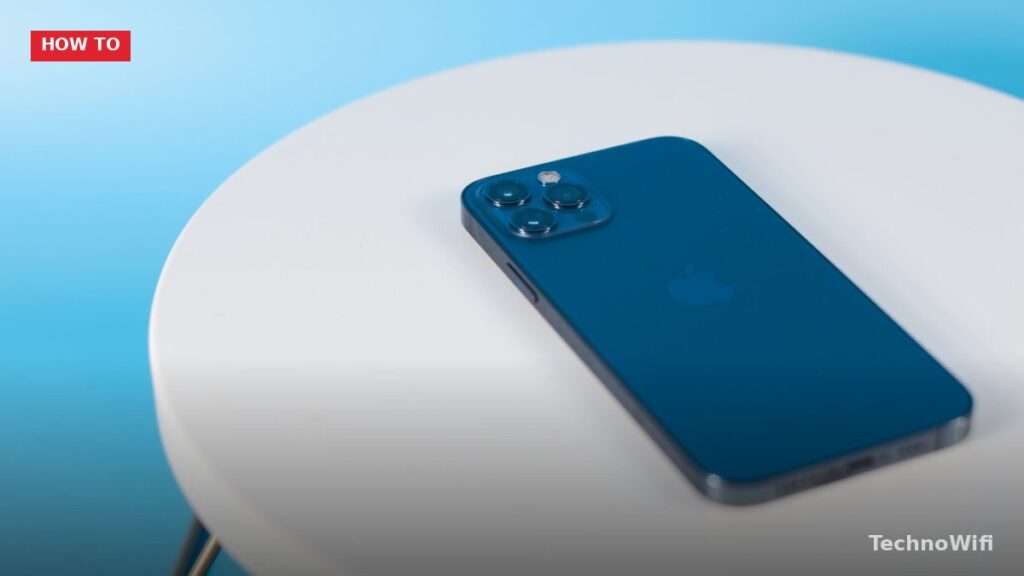
Your iPhone has a document scanner built right into the Notes app. No download required. It uses the camera to detect document edges, corrects the perspective automatically, and saves a clean, flat scan as a PDF. The quality is good enough for contracts, receipts, tax forms, and anything you’d normally use a flatbed scanner for.
- Open the Notes app and create a new note (or open an existing one).
- Tap the camera icon above the keyboard.
- Select “Scan Documents.”
- Point your camera at the document. The scanner detects the edges and highlights them with a yellow overlay.
- Hold steady. In auto mode, the iPhone captures the scan automatically when it detects a stable document. In manual mode, tap the shutter button yourself.
- Drag the corners to adjust the crop if needed, then tap “Keep Scan.”
- Scan additional pages if you have a multi-page document. Each page gets added to the same scan.
- Tap “Save” when you’re done. The scanned document appears in your note.
The saved scan is searchable – iOS uses OCR (optical character recognition) to read the text in your scans, so you can find documents later by searching for words that appear in them. This works surprisingly well even with handwritten text if the handwriting is reasonably neat.
Scan Documents With the Files App
The Files app uses the same scanner technology as Notes, but saves scans directly as PDF files to your iCloud Drive, Google Drive, Dropbox, or local storage. This is the better option when you need a standalone PDF file rather than a scan embedded in a note.
- Open the Files app.
- Navigate to the folder where you want to save the scan.
- Tap the three-dot menu (top right) and select “Scan Documents.”
- Point the camera at your document and let it capture automatically, or tap the shutter button.
- Adjust the crop if needed and tap “Keep Scan.”
- Add more pages if your document has multiple pages.
- Tap “Save.” The scan saves as a PDF in the folder you selected.
The PDF file can be shared via email, AirDrop, Messages, or any file-sharing app. The file size is typically 200 KB to 1 MB per page depending on the content and color depth.
How to Get the Best Scan Quality
Lighting makes the biggest difference. Scan in a well-lit area with even light across the entire document. Avoid shadows from your hand or phone falling across the page. Natural daylight near a window works best. Overhead room lighting works fine as long as no harsh shadows cross the document.
Place the document on a contrasting surface. A white page on a white desk confuses the edge detection. Put white paper on a dark desk or dark surface so the scanner can clearly see where the document ends. Flatten the document as much as possible – curled pages, folded corners, and wrinkled paper produce distorted scans.
Hold your phone directly above the document, parallel to the surface, at about 8 to 12 inches. Angled shots trigger the perspective correction, which works well but produces slightly lower quality than a straight-on capture. For the sharpest results, use manual mode and tap to focus on the text before capturing.
Scan and Sign Documents on iPhone
After scanning a document, you can sign it directly on your iPhone without printing anything. This is useful for contracts, permission forms, and anything that needs a signature.
- Scan the document using Notes or Files (steps above).
- Open the scanned PDF.
- Tap the Markup icon (pencil in a circle).
- Tap the “+” button and select “Signature.”
- Draw your signature with your finger on the screen. Tap “Done.”
- Drag and resize the signature to position it on the signature line.
- Tap “Done” to save.
iOS saves your signature so you can reuse it on future documents without drawing it again. You can store multiple signatures (useful if you have a formal signature and an initials version).
Best Third-Party Scanner Apps
| App | Best For | Free Version | Price |
|---|---|---|---|
| Adobe Scan | Best OCR accuracy | Yes (limited) | Free with Adobe Acrobat sub |
| Microsoft Lens | Best for Office users | Yes (full) | Free |
| Genius Scan | Best standalone scanner | Yes (limited) | $30 one-time |
| SwiftScan | Best for batch scanning | Yes (limited) | $3/month |
Adobe Scan has the best text recognition. It reads printed text in 25+ languages and exports to editable Word documents. Microsoft Lens integrates with OneDrive and can scan directly into Word, PowerPoint, or OneNote. Genius Scan works offline and stores everything locally if privacy matters. SwiftScan handles high-volume batch scanning with automatic upload to cloud services.
For most people, the built-in Notes or Files scanner does everything you need. Third-party apps are worth it when you scan documents frequently (multiple times per week) and need features like automatic cloud backup, advanced OCR export, or integration with document management systems.
Once your document is scanned, sharing it takes a few taps. From Notes, tap the scanned document, then tap the share button (square with an arrow). From Files, long-press the PDF and tap “Share.” You can send it via email, Messages, AirDrop, WhatsApp, Slack, or any app that accepts file attachments.
For emailing scanned documents, the PDF format is universal – every computer, phone, and tablet can open it. If someone specifically needs a JPEG image instead of a PDF, take a screenshot of the scan or use a third-party app that exports to image formats.
What iPhone models support document scanning?
Every iPhone running iOS 13 or later has the built-in document scanner in Notes and Files. That includes iPhone 6s and every model released after it. If your iPhone receives current iOS updates (iOS 17 or iOS 18), the scanner is available. Older models that are stuck on iOS 12 or earlier don’t have the feature – use a third-party app like Adobe Scan or Microsoft Lens instead.
Can I scan multiple pages into one PDF?
Yes. After scanning the first page, the scanner stays active and prompts you to scan additional pages. Each page gets added to the same document. When you’re done, tap “Save” and all pages are combined into a single multi-page PDF. You can also rearrange, delete, or re-scan individual pages before saving by tapping on the page thumbnails at the bottom of the screen.
Is the iPhone scanner good enough for official documents?
For most purposes, yes. Banks, government agencies, insurance companies, and employers routinely accept iPhone-scanned documents. The resolution is typically 200 to 300 DPI, which meets the standard for document submission. Some institutions still require notarized originals or certified copies for specific legal documents, but for general document submission, iPhone scans are widely accepted.
Sources
Apple – Scan Documents on iPhone | Adobe – Adobe Scan