Mounting a GoPro to your helmet turns an ordinary ride into something you can share. Whether you’re motovlogging, mountain biking, skiing, or skydiving, helmet footage captures the experience from your own perspective. But slapping a camera on your head isn’t as simple as it sounds. Where you mount it, what attachment you pick, and how you set it up all affect your footage quality, wind noise, camera stability, and your safety.
Every GoPro ships with the basic hardware for a helmet mount (flat and curved adhesive mounts, a mounting buckle, and a thumbscrew). There are also aftermarket options like chin mounts and vented strap mounts that work better for specific activities. This guide breaks down all four common mounting methods, walks through installation, and covers the camera settings that produce the best helmet-mounted footage.
Mount Types: Which One to Use
Four common attachment methods exist for GoPro helmet mounting, and each one produces a different footage angle. The right choice depends on your helmet style and the kind of shots you’re after.
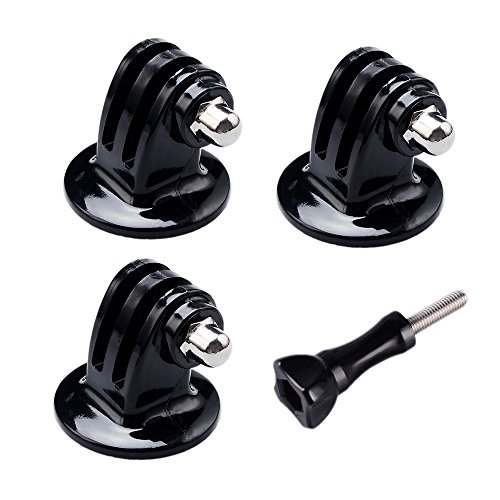
Adhesive mount (flat or curved) comes included in the GoPro box. A 3M VHB adhesive pad bonds the mount base directly to the helmet surface. The flat version works on smooth, level areas like the top of a helmet. The curved version fits rounded surfaces like the sides. This is the strongest attachment method available. Once that adhesive cures, the mount is basically permanent (removing it takes heat and a pry tool). The trade-off is that you’re committing that mount to one specific helmet.
Vented strap mount threads a nylon strap through the ventilation holes on bike helmets, ski helmets, or any helmet with elongated vents. No adhesive needed, so you can swap the mount between helmets in seconds. On the downside, it’s a bit bulkier and only works on helmets with compatible vent patterns.
Chin mount (J-hook style) clips onto the chin bar of full-face motorcycle helmets, placing the GoPro at chin level. This produces the most natural-looking POV footage because the camera sits close to eye level. It captures the road, your handlebars, and your instrument cluster, which is much closer to what you actually see compared to a top-of-helmet angle. That’s why it’s become the go-to mount for motovloggers.
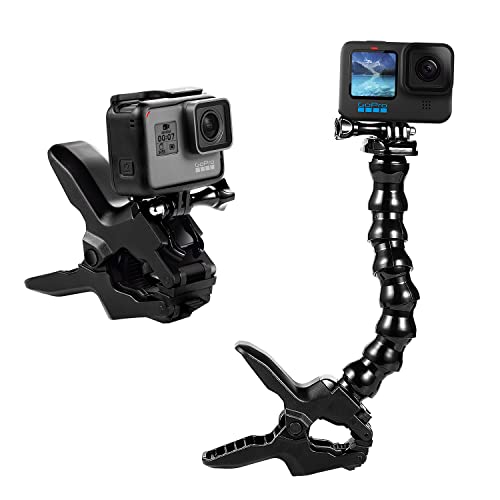
Side mount (arm extension) uses an adhesive base plus an articulated arm to position the camera on the side of the helmet. You get a unique angle that shows your profile alongside the road. It’s popular for cinematic motovlog intros and B-roll, but the extended arm creates extra wind resistance and raises the risk of the mount catching on something.
How to Apply an Adhesive Mount (Step-by-Step)
The adhesive mount is the most widely used method and comes with every GoPro. Getting the application right matters because 3M VHB adhesive is designed to be permanent. A poorly placed mount means either dealing with a bad angle or replacing the adhesive pad entirely.
- Clean the helmet surface thoroughly. Grab rubbing alcohol (isopropyl, 90% or higher) and a lint-free cloth. Wipe down the spot where you’ll place the mount to remove fingerprint oils, manufacturing residue, and any dirt that would weaken the bond. Let it dry completely before moving on.
- Choose flat or curved mount. Hold each mount type against your planned spot. Whichever one sits flush with no gaps or rocking is the right pick. Using a flat mount on a curved surface (or the reverse) creates stress points that weaken the bond over time.
- Peel the adhesive backing and press firmly. Before peeling, hold the mount in position and double-check the angle. Once it’s stuck, adjusting is tough. When you’re happy with the placement, peel the 3M backing, press the mount onto the helmet, and apply firm, even pressure for at least 30 seconds. Press along the edges, not just the center.
- Wait 24 hours before use. This is the step everyone skips, and it’s the step that causes mounts to fail mid-ride. 3M VHB adhesive reaches full bond strength after 24 hours of curing at room temperature. Riding immediately risks the mount popping off under vibration and wind stress. Let it cure overnight, and apply the adhesive at room temperature (not in a cold garage) for the best results.
Mounting Positions: Where to Put It
Where you place the camera on your helmet changes your footage dramatically. Each position has clear strengths and weaknesses.
Top of helmet is the classic GoPro position. The camera sits on the crown looking forward, giving you a high-angle view of the road ahead. You get the widest field of view and typically the most stable footage (less vibration than chin-level). The downsides: it adds noticeable height, increases wind drag (and noise at highway speeds), and the high perspective doesn’t look like what your eyes see. It looks more like a surveillance camera angle. It’s also the most visible position, which some riders don’t love aesthetically.
Chin mount has become the default for motovloggers because it produces footage closest to your natural eye level. You see the road, your handlebars, your instrument cluster, and your mirrors. It also sits below the windscreen line on many bikes, cutting down on wind noise. The catch is that it only works with full-face helmets, and vibration at chin level can be a bit higher than a top mount (though HyperSmooth stabilization handles it well).
Side mount produces the most cinematic angle. You get a view showing your helmet, face shield, and the road beside you. It’s dramatic for short clips but not ideal as your primary angle since you can’t see straight ahead. Side mounts also get the most wind buffeting and have a higher snag risk. A lot of motovloggers run a side mount as a secondary camera alongside a chin-mount primary.
Assembling the GoPro Mount Hardware
Before sticking anything to your helmet, put the mounting hardware together so you understand how the pieces connect.
- Mounting frame or housing: If your GoPro uses a frame (older models like Hero 3/4), open the latch, slide the camera in until it sits flush, then close and latch it. Newer GoPros (Hero 5 and later) have built-in mounting fingers on the bottom, so you don’t need a frame. The fingers attach directly to the buckle.
- Mounting buckle: Slide the camera’s mounting fingers (or the frame’s fingers) into the buckle slots. Push the thumbscrew through both sets of fingers and tighten it. Make it snug but not overtightened, since you’ll want to adjust the angle later.
- Buckle to adhesive mount: Click the mounting buckle onto the adhesive base. It slides in from the back and clicks into place. This connection is tool-free and acts as the quick-release point. You can remove the camera and buckle from the adhesive base without disturbing the adhesive bond.
Safety Considerations
Mounting a camera to your helmet introduces risks that are easy to overlook. Here are a few non-negotiable rules.
Never drill into the helmet. Drilling compromises the structural integrity of the shell. Adhesive and strap mounts are the only safe attachment methods.
Check local regulations. Some jurisdictions have laws about attaching objects to helmets. In certain regions, anything protruding from the helmet shell violates safety standards and can result in fines or void insurance claims. Look up your local laws before mounting.
Use a camera tether, not a rope or lanyard. GoPro sells thin tethers designed specifically for this. They keep the camera attached to you if the mount fails, but they’re thin and short enough that they won’t catch on anything or create a strangulation hazard. Never use a long rope, cord, or lanyard. In a crash, a dangling camera on a long cord becomes a dangerous flail.
Don’t block your peripheral vision. Side mounts and extended arm mounts can creep into your peripheral field of view, especially on open-face helmets. If you can see the camera or mount arm while looking straight ahead, it’s positioned wrong.
Inspect the mount before every ride. Give the mount a firm tug and twist before each ride. Check for cracks in the adhesive bond, looseness in the buckle connection, and any signs the mount is lifting at the edges.
Recommended GoPro Settings for Helmet Footage
Your camera settings make a big difference in helmet-mounted footage quality.
Resolution: 4K gives you the highest quality and the most flexibility to crop in editing. If storage or battery life is a concern, 2.7K is a solid middle ground. 1080p is fine for social media but limits what you can do in post-production.
Frame rate: 60fps minimum for riding. Motion at speed looks choppy at 30fps. If you want slow-motion clips of highlights, shoot at 120fps (available at 2.7K or lower on most GoPro models).
Stabilization: Crank HyperSmooth to its highest setting. Helmet footage without stabilization is borderline unwatchable. Even smooth roads create constant micro-vibrations that make footage nauseating. HyperSmooth turns shaky helmet cam into smooth, professional-looking video.
Field of view: Wide or SuperView for the most immersive look. Linear removes the fisheye distortion but narrows the frame. For motovlogging, Wide is the standard. For action sports like mountain biking, SuperView captures more of the trail.
Wind noise reduction: Turn it on. Above 30mph, wind noise dominates the audio. The built-in wind noise reduction helps, but for serious audio quality, use an external microphone with a foam windscreen. The GoPro Media Mod or a lavalier mic routed under your jacket both work well.
This guide applies to all GoPro models from Hero 3 through Hero 13. The adhesive mounts and mounting buckle system are backward compatible across all Hero models. HyperSmooth stabilization is available on Hero 7 and newer (HyperSmooth 2.0 on Hero 8, 3.0 on Hero 9, 4.0 on Hero 10, and 6.0 on Hero 13). Older models benefit from software stabilization in post using GoPro’s free Quik app.