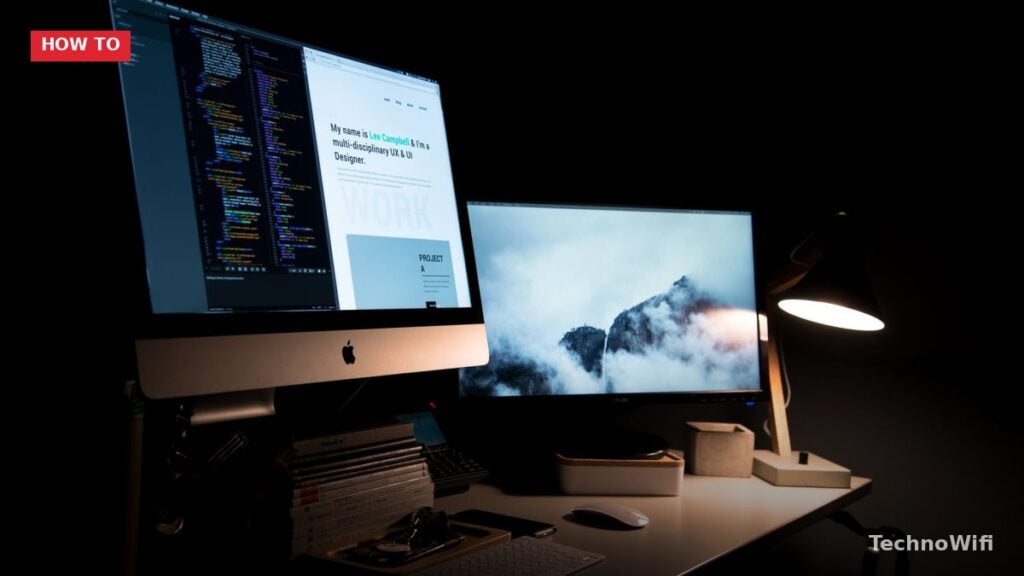
The Mac Mini is one of the best desktop Macs for multi-monitor setups, but the number of displays you can connect depends entirely on which model you own. Some Mac Mini models drive two or even three external monitors natively. Others need a workaround to get past Apple’s single-display limitation.
The M4 Mac Mini (2024) and M2 Pro Mac Mini support up to three external displays out of the box. The standard M2 Mac Mini handles two displays natively. The M1 Mac Mini officially supports only one external monitor, though a third-party DisplayLink adapter gets you to two. And Intel Mac Mini models support two displays through a combination of Thunderbolt 3 and HDMI.
This guide covers the setup process for every Mac Mini generation still in active use in 2026, including the exact adapters you need, step-by-step connection instructions, display arrangement in macOS, and fixes for the most common dual-monitor problems.
How Many Monitors Can Each Mac Mini Model Support
Apple’s display support varies significantly across Mac Mini generations. The chip inside your Mac Mini determines how many monitors it can drive and what resolutions it supports. Here is the full breakdown.
| Mac Mini Model | Chip | Max External Displays | Video Ports | Max Resolution Per Display | Notes |
|---|---|---|---|---|---|
| Mac Mini M4 (2024) | M4 | 3 | 3x Thunderbolt 4 (USB-C), 1x HDMI | 6K at 60Hz (Thunderbolt), 4K at 60Hz (HDMI) | Up to 2 displays via Thunderbolt + 1 via HDMI |
| Mac Mini M2 Pro (2023) | M2 Pro | 3 | 2x Thunderbolt 4 (USB-C), 1x HDMI | 6K at 60Hz (Thunderbolt), 4K at 60Hz (HDMI) | Up to 2 displays via Thunderbolt + 1 via HDMI |
| Mac Mini M2 (2023) | M2 | 2 | 2x Thunderbolt 4 (USB-C), 1x HDMI | 6K at 60Hz (Thunderbolt), 4K at 60Hz (HDMI) | 1 via Thunderbolt + 1 via HDMI |
| Mac Mini M1 (2020) | M1 | 1 (2 with workaround) | 2x Thunderbolt / USB 4, 1x HDMI | 6K at 60Hz (Thunderbolt), 4K at 60Hz (HDMI) | Officially 1 display; second requires DisplayLink |
| Mac Mini Intel (2018) | Intel | 2 | 2x Thunderbolt 3 (USB-C), 1x HDMI | 5K at 60Hz (Thunderbolt), 4K at 60Hz (HDMI) | 1 via Thunderbolt + 1 via HDMI |
The M1 Mac Mini is the trickiest model in this list. Apple’s M1 chip has a hardware limitation baked into the display controller that restricts it to one external monitor through the native video pipeline. No macOS update has changed this, and no hidden setting unlocks a second display. The only path to two monitors on the M1 is a DisplayLink adapter, which routes video data over USB instead of the native GPU output.
What Cables and Adapters Do I Need for Mac Mini Dual Monitors
The Mac Mini has built-in HDMI and Thunderbolt/USB-C ports, so connecting two monitors usually requires at least one adapter unless both your monitors happen to use different connector types that match the Mac Mini’s ports directly.
If one monitor has HDMI input and the other has USB-C or Thunderbolt input, you may not need any adapters at all. Plug the HDMI monitor into the Mac Mini’s HDMI port and the USB-C monitor into one of the Thunderbolt ports. Done.
For most setups, though, you will need one or more of these adapter types.
| Connection Method | Use When | Supports |
|---|---|---|
| HDMI cable (direct) | Monitor has HDMI input | Up to 4K at 60Hz |
| Thunderbolt/USB-C cable (direct) | Monitor has USB-C or Thunderbolt input | Up to 6K at 60Hz |
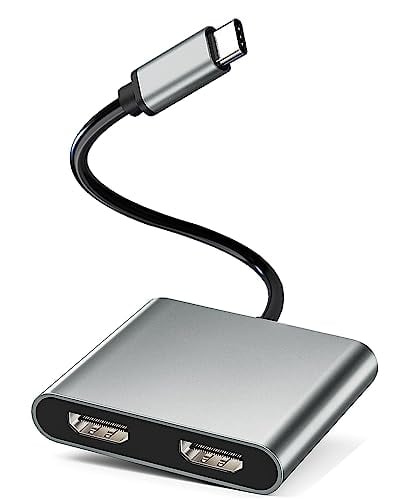
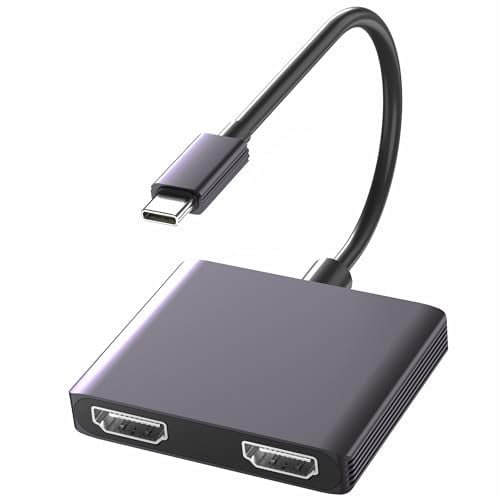
| USB-C to HDMI adapter | Second monitor has HDMI input, no free HDMI port | Up to 4K at 60Hz (check adapter specs) |
| USB-C to DisplayPort adapter | Monitor has DisplayPort input | Up to 4K at 60Hz or higher |
| DisplayLink USB-C dock | M1 Mac Mini second display workaround | Up to 4K at 60Hz (depends on dock model) |
Cheap adapters are a common source of problems. Budget USB-C to HDMI adapters sometimes cap out at 4K 30Hz or even 1080p, even when they claim 4K support on the packaging. For reliable 4K at 60Hz output, look for adapters that explicitly state HDMI 2.0 or later support. Brands like Anker, Cable Matters, and uni make affordable adapters that actually deliver the specs they advertise.
How to Connect Two Monitors to Mac Mini M2, M2 Pro, or M4
The M2, M2 Pro, and M4 Mac Mini models support multiple external displays natively. No special software, no workarounds, no third-party drivers. You plug in the monitors, macOS detects them, and you are up and running. The standard M2 supports two displays, while the M2 Pro and M4 handle up to three.
If you want to go deeper, we have a separate guide on 4K monitors for Mac Mini.
- Shut down or leave your Mac Mini running – either works. Hot-plugging monitors is fine on all modern Mac Mini models. macOS will detect new displays as soon as they are connected.
- Connect the first monitor to the Mac Mini’s HDMI port using a standard HDMI cable. If your monitor uses DisplayPort or USB-C instead of HDMI, connect it to one of the Thunderbolt ports using the appropriate cable or adapter.
- Connect the second monitor to one of the Thunderbolt/USB-C ports. If your monitor has HDMI input, use a USB-C to HDMI adapter. If it has DisplayPort input, use a USB-C to DisplayPort adapter. If it has USB-C input, a direct USB-C cable works.
- Turn on both monitors. macOS should detect them within a few seconds. You will see your desktop extend across both screens.
- Open System Settings and click Displays. Both monitors will appear as blue rectangles. Drag them to match their physical position on your desk so your cursor moves between screens naturally.
- Click on each display to adjust resolution and refresh rate. Select “Default for display” to let macOS choose the best resolution, or click “Scaled” to manually pick a resolution. Set the refresh rate to the highest option your monitor supports.
If you own the M2 Pro or M4 Mac Mini and want a third display, connect it to the remaining Thunderbolt port using another adapter or cable. The M4 Mac Mini has three Thunderbolt 4 ports, giving you plenty of flexibility for multi-monitor configurations.
How to Connect Two Monitors to M1 Mac Mini With DisplayLink
The M1 Mac Mini officially supports just one external display. Apple confirmed this in their spec sheets, and no software update has changed the limitation. The display controller in the M1 chip physically supports only one external video output through the native pipeline.
However, a technology called DisplayLink provides a reliable workaround. DisplayLink works by compressing and sending video data over USB using a software driver, bypassing the M1’s native display limitation entirely. Your first monitor connects normally through HDMI or Thunderbolt. Your second monitor connects through a DisplayLink-compatible dock or adapter.
- Connect your first monitor to the Mac Mini’s HDMI port using a standard HDMI cable. This monitor uses the M1’s native display output and gets full GPU acceleration with zero CPU overhead. Always use the native connection for your primary monitor.
- Purchase a DisplayLink-compatible USB-C dock or adapter. Not every USB-C dock includes a DisplayLink chip – you need one specifically built for DisplayLink. The Plugable UD-6950PDZ and StarTech DK30C2DPEPD are both proven options. Check the product description for “DisplayLink” before buying.
- Download and install DisplayLink Manager from displaylink.com/downloads. This is the macOS software driver that makes the second display possible. Open the downloaded DMG file, drag the app to your Applications folder, and launch it.
- Grant the Screen Recording permission when macOS prompts you. Go to System Settings, then Privacy and Security, then Screen Recording, and toggle DisplayLink Manager on. This permission is required because DisplayLink captures and compresses screen content for the second display. Without it, the second monitor will remain blank.
- Connect the DisplayLink dock to one of the Mac Mini’s Thunderbolt/USB-C ports. Then connect your second monitor to the dock’s HDMI or DisplayPort output. DisplayLink Manager should detect the monitor automatically and extend your desktop to the second screen.
- Open System Settings, click Displays, and arrange the two monitors to match their physical positions on your desk. Drag the white menu bar to whichever monitor you want as your primary display.
DisplayLink adds modest CPU overhead – typically around 3 to 5 percent on Apple Silicon Macs. For office work, web browsing, email, coding, and video calls, the performance impact is negligible. Full-screen video playback and professional photo editing on the DisplayLink monitor may show slight compression artifacts, so use your native-connected monitor for color-sensitive work.
How to Connect Two Monitors to Intel Mac Mini
The 2018 Intel Mac Mini supports two external displays natively without any workarounds. One display connects through the HDMI 2.0 port, and the second connects through one of the two Thunderbolt 3 ports. This is a straightforward setup.
- Connect the first monitor to the HDMI port on the back of the Mac Mini. A standard HDMI cable handles up to 4K at 60Hz.
- Connect the second monitor to either Thunderbolt 3 (USB-C) port. If your monitor has a USB-C input, use a direct USB-C cable. If it uses HDMI, use a USB-C to HDMI adapter. For DisplayPort monitors, use a USB-C to DisplayPort adapter.
- Turn on both monitors. macOS will detect them and extend your desktop automatically.
- Go to System Settings (or System Preferences on older macOS versions), click Displays, and arrange the display icons to match your physical monitor layout.
The Intel Mac Mini’s Thunderbolt 3 ports support displays up to 5K at 60Hz or 4K at 60Hz depending on your adapter and monitor. If you are using a 4K monitor, make sure your USB-C to HDMI adapter supports HDMI 2.0 or later for 60Hz output. Older adapters may limit you to 30Hz, which makes cursor movement and scrolling noticeably choppy.
How to Arrange and Configure Dual Displays on Mac Mini
Once both monitors are connected and detected, you need to tell macOS how they sit on your desk. Without this step, your cursor will jump to the wrong screen when you move it to an edge, and dragging windows between displays will feel disorienting.
- Open System Settings and click Displays. On macOS Ventura, Sonoma, and Sequoia, you will see both monitors as blue rectangles in the display arrangement area. On macOS Monterey and earlier, go to System Preferences, click Displays, then select the Arrangement tab.
- Drag the display rectangles to match the physical position of your monitors. If your second monitor sits to the left, drag its rectangle to the left. If it sits above your primary monitor, drag it above. This alignment ensures smooth cursor movement between screens.
- Set your primary display by dragging the white menu bar from one display rectangle to the other. The primary display shows the Dock and menu bar by default, and new app windows will open there unless an app remembers its last window position.
- Click on each display individually to adjust resolution. Select “Default for display” for macOS’s recommended setting, or choose “Scaled” to manually pick a resolution. The “More Space” option on 4K monitors gives you the most usable screen area.
- Set the refresh rate for each monitor. Most displays run at 60Hz. If your monitor supports a higher refresh rate, select it from the dropdown menu.
For workspace management, make sure “Displays have separate Spaces” is enabled. Go to System Settings, then Desktop and Dock, and scroll to the Mission Control section. With this setting on, each monitor maintains its own set of virtual desktops. Full-screen apps on one monitor will not blank out the other screen.
Mac Mini Second Monitor Not Detected – How to Fix
A second monitor not showing up is the most common dual-display problem on Mac Mini. The cause is usually something simple, but it takes a systematic approach to find it.
For related tips, check out our full guide on docking stations for MacBook Pro.
Start with the physical connection. Unplug the cable from both the Mac Mini and the monitor, then plug it back in firmly. Try a different Thunderbolt/USB-C port on the Mac Mini. If you are using an adapter, try a different adapter if you have one. Bad cables and failing adapters account for the majority of detection issues.
If the cable and adapter seem fine, restart your Mac Mini. Go to the Apple menu and click Restart. A restart resets the display controller and forces macOS to scan for connected monitors fresh. Many intermittent detection problems clear up after a reboot.
If both monitors show the same image instead of an extended desktop, mirroring is turned on. Open System Settings, click Displays, and make sure “Mirror Displays” is unchecked. On some macOS versions, hold the Option key while in the Displays preference pane to reveal the arrangement and mirroring controls.
Mac Mini Display Flickering and Wrong Resolution Fixes
Flickering on a second monitor usually points to a cable problem. Not all HDMI cables support 4K at 60Hz – you need at least an HDMI 2.0 cable (labeled “High Speed” or “Premium High Speed”). An HDMI 1.4 cable trying to push 4K at 60Hz will produce flickering, intermittent signal drops, or a blank screen. Replace the cable and the problem almost always goes away.
Wrong resolution typically happens when macOS fails to read the monitor’s EDID data correctly. Open System Settings, click Displays, select the affected monitor, and switch from “Default for display” to “Scaled.” Manually choose the resolution that matches your monitor’s native spec. A 4K monitor should show a scaled setting based on 3840 x 2160.
If your Mac Mini runs hot with two monitors connected, that is normal behavior within limits. Driving two displays increases GPU workload, which raises internal temperatures slightly. Make sure the Mac Mini has adequate ventilation – do not place it on a soft surface or stack things on top of it. The M1 and M2 Mac Mini models use fanless or low-fan designs and may feel warmer than Intel models during extended dual-monitor use. As long as the system does not throttle performance or shut down unexpectedly, the operating temperatures are within Apple’s designed range.
Frequently Asked Questions
Can an M1 Mac Mini run two monitors?
Yes, but not through native connections alone. The M1 Mac Mini officially supports only one external display. To get a second monitor working, you need a DisplayLink-compatible USB-C dock or adapter and the DisplayLink Manager software installed on your Mac. The first monitor connects normally via HDMI or Thunderbolt, and the second connects through the DisplayLink dock. This workaround works reliably for productivity tasks, web browsing, and video calls.
What adapters do I need for dual monitors on Mac Mini?
It depends on your monitors’ input types. If one monitor has HDMI and the other has USB-C or Thunderbolt, you may not need any adapters. If both monitors use HDMI, you will need a USB-C to HDMI adapter for the second one since the Mac Mini only has one HDMI port. For monitors with DisplayPort, use a USB-C to DisplayPort adapter. M1 owners specifically need a DisplayLink-compatible dock for the second monitor.
Does using two monitors affect Mac Mini performance?
Slightly, but most users will not notice. Running two displays increases GPU load, which may cause slightly higher temperatures and marginally more fan activity on models with active cooling. For everyday tasks like browsing, email, document editing, and video calls, performance stays the same. You would only notice a difference during GPU-heavy workloads like 3D rendering or professional video editing, where the second display consumes some of the available GPU bandwidth.
Can I use a TV as a second monitor with Mac Mini?
Yes. Any TV with an HDMI input works as an external display for the Mac Mini. Connect it the same way you would connect a regular monitor – plug an HDMI cable from the Mac Mini to the TV. In your TV’s settings, enable “Game Mode” or “PC Mode” to reduce input lag. macOS will detect the TV as a standard external display, and you can adjust its resolution and scaling in System Settings under Displays.
Why does my Mac Mini only mirror the second monitor instead of extending?
Mirroring is enabled in your display settings. Open System Settings, click Displays, and uncheck “Mirror Displays.” If you do not see that option, hold the Option key while in the Displays settings to reveal the arrangement view. On M1 Mac Mini models, if you are using a standard USB-C hub without DisplayLink, the second monitor can only mirror because the M1 hardware does not support a second independent display output natively.
Sources
Apple – Mac Mini Technical Specifications | Apple – Connect External Displays to Your Mac