Connecting a Lenovo laptop to an external monitor takes about two minutes once you know which cable to grab. Most Lenovo laptops made in the last few years have at least one video output port, and Windows 11 detects external displays automatically. The trickiest part is matching the right cable to the right port.
This guide covers every Lenovo laptop series sold in 2026, including ThinkPad, IdeaPad, Yoga, and Legion models. Whether you want to mirror your screen for a presentation or extend your desktop for extra workspace, the process follows the same basic steps.
What Video Ports Does a Lenovo Laptop Have
Lenovo laptops use four main types of video output ports. The exact ports on your laptop depend on the model and year, but nearly every current Lenovo has at least one of these.
HDMI is the most common video port on Lenovo laptops. It looks like a wider, trapezoid-shaped slot. Full-size HDMI appears on most ThinkPad, IdeaPad, and Legion models. HDMI 2.0 supports up to 4K at 60Hz on a single monitor. HDMI 2.1, found on newer Legion gaming laptops, handles 4K at 120Hz.
USB-C with DisplayPort Alt Mode uses the small, oval USB-C connector to carry video. Not every USB-C port on a Lenovo laptop supports video output. Look for a small DisplayPort icon (a “D” with a line through one corner) printed next to the port. ThinkPad X1 Carbon, Yoga 9i, and IdeaPad Pro models typically have at least one USB-C port with video support.
Thunderbolt 4 uses the same physical USB-C connector but adds more bandwidth. It supports dual 4K displays from a single port. A small lightning bolt icon next to the port indicates Thunderbolt. ThinkPad X1 Carbon Gen 12 and newer, ThinkPad T14s Gen 5, and Yoga 9i Pro all include Thunderbolt 4 ports.
Mini DisplayPort appears on some older ThinkPad workstation models like the ThinkPad P series. It is a smaller version of the standard DisplayPort connector. Newer Lenovo laptops have largely replaced Mini DisplayPort with USB-C.
Which Cable or Adapter Do You Need for a Lenovo Laptop
The cable you need depends on which port your Lenovo laptop has and which port your monitor has. Most monitors in 2026 have HDMI, DisplayPort, or both. The table below shows the most common combinations.
| Laptop Port | Monitor Port | Cable/Adapter Needed |
|---|---|---|
| HDMI | HDMI | HDMI to HDMI cable (no adapter needed) |
| HDMI | DisplayPort | HDMI to DisplayPort active adapter |
| USB-C (DP Alt Mode) | HDMI | USB-C to HDMI cable or adapter |
| USB-C (DP Alt Mode) | DisplayPort | USB-C to DisplayPort cable or adapter |
| Thunderbolt 4 | HDMI | USB-C to HDMI cable or adapter |
| Thunderbolt 4 | DisplayPort | USB-C to DisplayPort cable or adapter |
| Mini DisplayPort | HDMI | Mini DisplayPort to HDMI adapter |
| Mini DisplayPort | DisplayPort | Mini DisplayPort to DisplayPort cable |
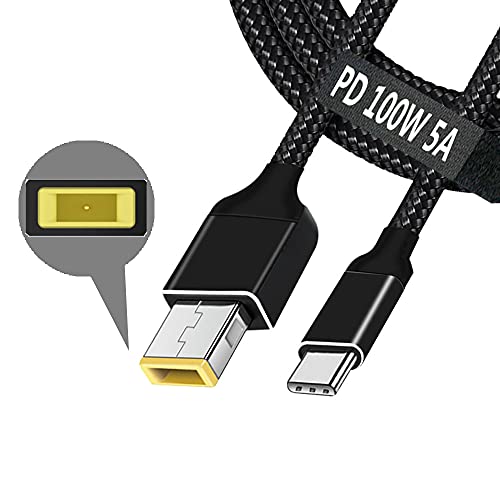
A few things to keep in mind when buying cables. If you want 4K at 60Hz over HDMI, make sure the cable is rated for HDMI 2.0 or higher. Budget cables sometimes max out at 1080p. For USB-C connections, confirm the cable supports DisplayPort Alt Mode. Charging-only USB-C cables look identical but cannot carry video.
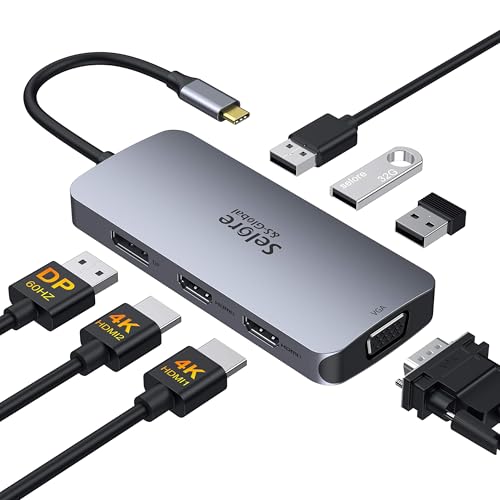
If your Lenovo laptop has only USB-C ports and no HDMI, a USB-C multiport adapter is a practical choice. These adapters typically provide HDMI output, a USB-A port, and sometimes Ethernet in a single compact dongle.
How to Connect a Lenovo Laptop to an External Monitor
Follow these steps to connect your Lenovo laptop to a monitor using any cable type. The process is the same for HDMI, USB-C, Thunderbolt, and DisplayPort connections.
- Turn on your external monitor and set it to the correct input source (HDMI 1, DisplayPort, USB-C, etc.).
- Connect one end of the cable to the video port on your Lenovo laptop.
- Connect the other end of the cable to the matching port on your monitor. If using an adapter, plug the adapter into the laptop first, then connect the cable from the adapter to the monitor.
- Wait a few seconds. Windows 11 should detect the monitor automatically and either mirror or extend your display.
- If nothing appears on the monitor, press Windows + P on your keyboard. A sidebar menu opens with four display options.
- Select Extend to use the monitor as a second screen, or Duplicate to mirror your laptop display.
That’s all it takes for a basic connection. Windows handles the rest, including installing any display drivers the monitor needs. If the monitor stays dark, skip ahead to the troubleshooting section below.
How to Change Display Settings on Windows 11
After connecting the monitor, you can control how Windows uses it. Press Windows + P for quick access, or open Settings for more detailed control.
The Windows + P shortcut gives you four options. PC screen only turns off the external monitor and uses only your laptop screen. Duplicate shows the same image on both screens. Extend gives you a wider desktop that spans both displays. Second screen only turns off the laptop screen and uses only the external monitor.
| Display Mode | What It Does | Best For |
|---|---|---|
| PC screen only | External monitor off, laptop screen on | Disconnecting without unplugging |
| Duplicate | Same image on both screens | Presentations, screen sharing |
| Extend | Desktop spreads across both displays | Multitasking, extra workspace |
| Second screen only | Laptop screen off, monitor on | Using laptop as a desktop with lid closed |
Most people choose Extend mode for daily use because it gives you a second workspace for extra apps, browser tabs, or reference material. Duplicate mode is better for presentations where your audience needs to see exactly what you see on the laptop screen.
How to Rearrange Monitors in Windows 11
When you extend your display, Windows needs to know where the monitor sits relative to your laptop. If the monitor is to the right of your laptop but Windows thinks it is on the left, your cursor will move in the wrong direction when crossing between screens.
- Right-click your desktop and select Display settings.
- At the top of the page, you will see rectangles labeled 1 and 2 representing your screens.
- Click Identify to see which number corresponds to which physical screen.
- Drag the rectangles to match the physical position of your screens. If the monitor is above your laptop, drag rectangle 2 above rectangle 1.
- Click Apply to save the arrangement.
Getting this right makes a big difference in day-to-day use. When the arrangement matches reality, dragging windows between screens feels natural.
How to Set Resolution and Refresh Rate on a Lenovo Laptop
Windows usually picks the correct resolution and refresh rate for your monitor automatically. If the display looks blurry or the text appears too large or too small, you may need to adjust these settings manually.
- Right-click the desktop and select Display settings.
- Click the monitor you want to adjust (identified by its number).
- Scroll down to Display resolution and select your monitor’s native resolution. This is usually the highest option in the list and is labeled “Recommended.”
- For refresh rate, scroll further down and click Advanced display.
- Under Choose a refresh rate, select the highest rate your monitor supports. Most office monitors run at 60Hz. Gaming monitors may support 120Hz, 144Hz, or higher.
Always use your monitor’s native resolution. Running a 4K monitor at 1080p makes everything look soft and blurry. If text appears too small at the native resolution, increase the Scale setting (100%, 125%, 150%, etc.) instead of lowering the resolution.
Why Is My Lenovo Laptop Not Detecting the External Monitor
A “no signal” message on the monitor is the most common problem. Several things can cause it, and the fix is usually simple.
Check the cable connection. USB-C and HDMI cables can feel plugged in when they are slightly loose. Pull the cable out and push it back in firmly on both ends. Try a different cable if you have one available. Damaged or low-quality cables are a frequent culprit.
Verify the monitor’s input source. Press the input or source button on the monitor and make sure it is set to the port where your cable is plugged in. If the cable is in HDMI 2 but the monitor is looking at HDMI 1, the screen will stay blank.
Press Windows + P and select Extend or Duplicate. Sometimes Windows defaults to “PC screen only” and does not send a signal to the monitor even though everything is connected properly.
Update your display driver. Open Device Manager, expand Display adapters, right-click your graphics card (Intel, AMD, or NVIDIA), and select Update driver. Alternatively, go to the Lenovo Vantage app (pre-installed on most Lenovo laptops) and check for system updates. Outdated drivers cause detection failures more often than most people realize.
How to Fix Flickering or Wrong Resolution on an External Monitor
Flickering usually points to a cable issue or an incompatible refresh rate. Start by trying a different cable. If the flickering continues, go to Settings, Display, Advanced display, and lower the refresh rate by one step (for example, from 144Hz to 120Hz or from 60Hz to 50Hz). Some cable and adapter combinations cannot maintain a stable signal at higher refresh rates.
Wrong resolution happens when Windows picks a resolution that does not match the monitor’s native specs. Go to Settings, Display, and select the monitor, then manually set the resolution to the one labeled “Recommended.” If the recommended resolution is not listed, updating the display driver usually fixes it.
If the monitor shows a stretched or squished image, the aspect ratio is wrong. This happens when a widescreen monitor gets a 4:3 resolution signal. Selecting the correct native resolution (usually 1920×1080 for Full HD or 2560×1440 for QHD) solves the problem immediately.
Can You Use a Docking Station With a Lenovo Laptop
Yes, and a docking station is the best option if you connect multiple peripherals every day. Instead of plugging in separate cables for the monitor, keyboard, mouse, Ethernet, and external drives, you plug in one cable and everything connects at once.
Lenovo sells docking stations designed specifically for their laptops. The Lenovo USB-C Dock and Lenovo Thunderbolt 4 Dock are the two current models. Both provide multiple video outputs (HDMI and DisplayPort), several USB-A and USB-C ports, Gigabit Ethernet, and power delivery to charge the laptop through the dock cable.
| Dock Model | Connection | Power Delivery | Max External Displays | Best For |
|---|---|---|---|---|
| Lenovo USB-C Dock | USB-C | Up to 100W | 2 (1080p) or 1 (4K) | General office use |
| Lenovo Thunderbolt 4 Dock | Thunderbolt 4 | Up to 100W | 2 (4K @ 60Hz) | Dual 4K monitors, creative work |
| Lenovo USB-C Travel Hub | USB-C | Pass-through | 1 | Travel and portability |
Third-party docking stations from CalDigit, Anker, and Plugable also work with Lenovo laptops. USB-C and Thunderbolt are universal standards, so you do not need a Lenovo-branded dock. Just make sure your laptop’s USB-C port supports DisplayPort Alt Mode or Thunderbolt before buying any dock.
How to Use a Lenovo Laptop With the Lid Closed
Many people want to close their Lenovo laptop and use only the external monitor. Windows 11 supports this, but you need to change one power setting first.
- Open the Control Panel (search for it in the Start menu).
- Go to Hardware and Sound, then Power Options.
- Click Choose what closing the lid does in the left sidebar.
- Under When I close the lid, change both the “On battery” and “Plugged in” options to Do nothing.
- Click Save changes.
Now you can close the lid and the laptop will keep running, sending video to the external monitor. You will need an external keyboard and mouse since the laptop’s built-in keyboard and trackpad are covered. Make sure the laptop sits on a hard, flat surface for proper airflow when the lid is closed.
Lenovo Laptop External Monitor FAQs
How many monitors can a Lenovo laptop support?
It depends on the model and GPU. Most Lenovo laptops with integrated Intel graphics support up to three simultaneous displays (the built-in screen plus two external monitors). ThinkPad models with Thunderbolt 4 can drive two 4K external displays. Legion laptops with dedicated NVIDIA GPUs support up to four displays in some configurations. Check your laptop’s spec sheet or Lenovo Vantage for the exact number.
Does HDMI or USB-C give better picture quality?
At the same resolution and refresh rate, the picture quality is identical. The difference is in maximum capability. HDMI 2.0 tops out at 4K 60Hz. USB-C with DisplayPort 1.4 and Thunderbolt 4 can push higher resolutions and refresh rates. For a standard 1080p or 4K 60Hz office monitor, either connection looks the same.
Why does my USB-C cable not send video to the monitor?
Two possible reasons. First, the USB-C cable may be a charging-only cable that does not support video. Try a cable specifically rated for DisplayPort Alt Mode or Thunderbolt. Second, the USB-C port on your Lenovo laptop may not support video output. Some laptops have multiple USB-C ports where only one carries video. Look for a DisplayPort or Thunderbolt icon next to the port.
Can I connect a 4K monitor to an older Lenovo laptop?
Yes, as long as the laptop has HDMI 2.0, USB-C with DisplayPort Alt Mode, or Thunderbolt 3/4. An HDMI 1.4 port (found on laptops from 2015 and earlier) can display 4K but only at 30Hz, which makes cursor movement and scrolling look choppy. For smooth 4K at 60Hz, you need HDMI 2.0 or a USB-C/Thunderbolt connection.
Do I need to install drivers to use an external monitor?
In most cases, no. Windows 11 includes generic display drivers that work with virtually all monitors. Plug in the cable and Windows handles everything. The only time you may need to install drivers is if you are using a DisplayLink-based USB docking station, which requires the DisplayLink software to output video over USB.
Sources
Lenovo Support – How to Connect an External Monitor – support.lenovo.com, Microsoft Support – Connect to an External Display – support.microsoft.com, Intel – Thunderbolt 4 Technology Overview – intel.com, HDMI Licensing – HDMI Specification Overview – hdmi.org, VESA – DisplayPort Alt Mode for USB Type-C – displayport.org