Most projectors still rely on HDMI or VGA, but USB connections are catching up fast. If your laptop has a USB-C port with video output, you can send a signal to the projector using the right cable or adapter. Even older laptops with only USB-A ports can make it work with a DisplayLink adapter.
The catch is that not every USB port can carry video. A standard USB-A port was designed for data and power, not display output. USB-C changed that, but only when the port supports DisplayPort Alt Mode or Thunderbolt. Knowing which USB connection your laptop and projector support saves you from buying the wrong adapter.
This guide covers every USB-based method for connecting a laptop to a projector, including the cables, adapters, and settings you need on both Windows and Mac.
What Types of USB Connections Work With Projectors
There are four ways to connect a laptop to a projector through USB. Each one works differently, and the one you should use depends on your laptop’s ports and your projector’s inputs.
| Connection Type | How It Works | Video Quality | Driver Required | Best For |
|---|---|---|---|---|
| USB-C (DisplayPort Alt Mode) | Sends native video signal over USB-C | Up to 4K @ 60Hz | No | Modern laptops with USB-C video output |
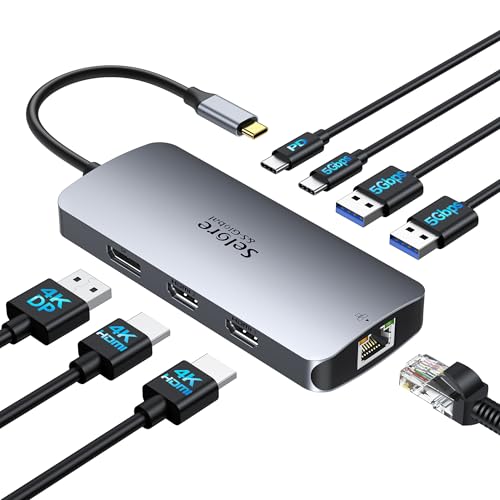
| USB-C to HDMI adapter/cable | Converts USB-C video to HDMI | Up to 4K @ 60Hz | No | USB-C laptops connecting to HDMI projectors |
| USB-A to HDMI adapter (DisplayLink) | Uses software driver to convert USB data to video | Up to 1080p @ 60Hz (typical) | Yes | Older laptops without USB-C or HDMI |
| USB-B projector input | Projector receives display data over USB-B | Up to 1024 x 768 (varies by model) | Yes (projector driver) | Epson and BenQ projectors with USB-B ports |
USB-C with DisplayPort Alt Mode gives you the best quality and simplest setup. Everything else involves either an adapter, a driver, or both.
How to Connect Laptop to Projector With USB-C
If your laptop was made after 2018 and has a USB-C port, there is a good chance it supports video output. This is the easiest way to connect to a projector because the signal travels natively through the cable with no drivers or software needed.
There are two approaches depending on what your projector accepts.
USB-C to HDMI (most common)
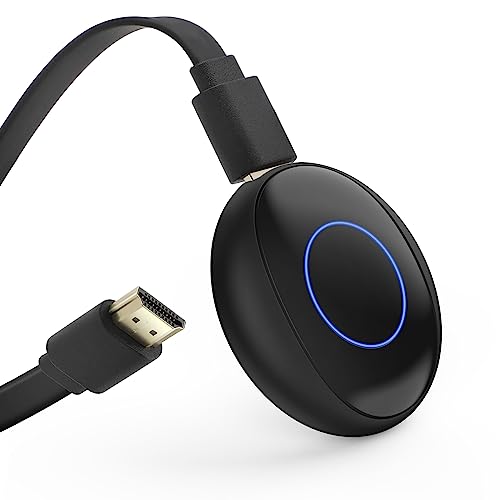
Most projectors have HDMI inputs. You need either a USB-C to HDMI cable or a USB-C to HDMI adapter paired with a standard HDMI cable.
- Check that your laptop’s USB-C port supports video output. Look for a small DisplayPort icon (a rectangle with a line in the corner) or a Thunderbolt icon (a lightning bolt) next to the port. If neither icon is present, check your laptop’s spec sheet online for “DisplayPort Alt Mode” or “Thunderbolt.”
- Connect the USB-C end of the cable or adapter to your laptop.
- Connect the HDMI end to the projector’s HDMI input.
- Turn on the projector and set it to the correct HDMI input source.
- Your laptop should detect the projector automatically within a few seconds. If the screen appears mirrored, you can change the display mode in your settings (covered in the Windows and Mac sections below).
USB-C direct to projector
Some newer projectors from Epson, BenQ, and ViewSonic include a USB-C input that accepts a video signal directly. This is the cleanest setup because you only need a single USB-C to USB-C cable.
- Confirm both your laptop and the projector have USB-C ports that support video.
- Connect a USB-C cable between the laptop and the projector’s USB-C input.
- Turn on the projector and select the USB-C input source.
- The display should appear within seconds. Some projectors also deliver power back to the laptop through this same cable.
How to Connect Laptop to Projector With USB-A Adapter
Standard USB-A ports do not carry video signals on their own. The port was designed for data transfer and charging peripherals. To send video through USB-A, you need an adapter that uses DisplayLink technology.
Our how to connect HP laptop to projector walkthrough covers this from a different angle.
DisplayLink adapters contain a chip that compresses video data and sends it over the USB data connection. A software driver on your laptop handles the encoding. This means you get a usable video output from a port that was never designed for it, but the quality and performance depend on the driver and your CPU.
- Purchase a USB-A to HDMI adapter that uses DisplayLink (brands like Plugable, StarTech, and Cable Matters make reliable options).
- Before connecting the adapter, download and install the DisplayLink driver from displaylink.com or from the adapter manufacturer’s website. The adapter will not work without this driver.
- Restart your laptop after installing the driver.
- Plug the USB-A to HDMI adapter into an available USB 3.0 port on your laptop. USB 3.0 ports are typically marked with a blue plastic insert or the “SS” (SuperSpeed) logo. USB 2.0 works but produces lower frame rates and more latency.
- Connect an HDMI cable from the adapter to the projector’s HDMI input.
- Turn on the projector and set it to the HDMI input source.
- Your laptop should detect the projector as an additional display. Open your display settings to choose between mirroring and extending.
Keep in mind that DisplayLink adds some CPU load and introduces a small amount of input lag. For slideshows, documents, and spreadsheets, you will not notice any difference. For video playback at high frame rates, there may be occasional stuttering.
How to Connect Laptop to Projector With USB-B Cable
Some business and education projectors – particularly from Epson and BenQ – have a USB Type-B port labeled “USB Display” or “USB-B.” This square-shaped port accepts a standard USB-A to USB-B cable (the same type used for older printers).
The projector acts as a USB display device. Your laptop sends video data through the USB cable, and the projector’s built-in hardware decodes it.
- Connect a USB-A to USB-B cable between your laptop and the projector’s USB-B input port. The flat rectangular end (USB-A) goes into the laptop. The square end (USB-B) goes into the projector.
- Turn on the projector and switch the input source to “USB Display” or “USB-B” (the label varies by manufacturer).
- Your laptop may prompt you to install a driver. On Epson projectors, the driver installs automatically through a virtual CD drive that appears when you connect the cable. On BenQ models, you may need to download the driver from the manufacturer’s support page.
- Once the driver installs, the projector should display your laptop’s screen. On some Epson models, a software application called “Epson USB Display” launches automatically to manage the connection.
USB-B projector connections typically max out at 1024 x 768 or 1280 x 800 resolution. That is fine for presentations and spreadsheets but not ideal for HD video or photo-heavy content. If you need higher resolution, switch to HDMI or a USB-C adapter instead.
Windows Display Settings for USB Projector
After connecting the projector through any USB method, Windows usually detects it and mirrors your screen automatically. If you want to extend the display instead, or if nothing shows up, here is how to adjust the settings.
- Press Windows + P on your keyboard. A sidebar appears on the right side of the screen with four options: PC screen only, Duplicate, Extend, and Second screen only.
- Select Duplicate to show the same image on both screens. This is what most people want for presentations.
- Select Extend if you want to use the projector as a second desktop. You can drag windows onto the projector screen while keeping your laptop screen independent.
- Select Second screen only to turn off the laptop display and use only the projector.
If the projector still does not show up, right-click on the desktop, select Display Settings, and click the Detect button. Windows will scan for any connected displays it missed. For DisplayLink adapters, make sure the DisplayLink software is running in the system tray.
Mac Display Settings for USB Projector
macOS handles external displays through System Settings. The process is slightly different depending on your macOS version.
- Open System Settings (or System Preferences on older macOS versions) and click Displays.
- The projector should appear as a second display. If it does not, check the cable connection and make sure the projector is set to the correct input source.
- To mirror your Mac screen on the projector, check the Mirror Displays option. On macOS Sonoma and later, click the projector display and toggle mirroring from the arrangement options.
- To use the projector as an extended desktop, leave the mirror option off and drag the display arrangement to match your physical setup.
- Adjust the resolution for the projector display individually. For best results, match the projector’s native resolution.
For DisplayLink adapters on Mac, you need to install the DisplayLink Manager app from displaylink.com. You also need to grant screen recording permission in System Settings > Privacy & Security > Screen Recording. Without this permission, DisplayLink cannot capture and send screen data to the projector.
Looking for more? We have a dedicated guide on how to connect Bluetooth headphones to Xbox one.
USB-C Port Not Sending Video to Projector
This is the most common issue people run into. You plug a USB-C cable or adapter into your laptop, and the projector stays dark. The problem is almost always one of two things: the USB-C port does not support video, or the adapter is not compatible.
Not every USB-C port can output video. Many budget laptops include USB-C ports that only handle data transfer and charging. These ports look identical to ones that support DisplayPort Alt Mode, but they lack the internal wiring for video signals. The only way to tell is by checking your laptop’s spec sheet or looking for the DisplayPort or Thunderbolt icon next to the port.
If your port does support video and it still doesn’t work, try these steps in order:
- Test with a different USB-C cable. Some cables are charge-only and do not carry video or data. Look for cables labeled “USB-C 3.2” or “Thunderbolt” – these support video.
- Try a different USB-C port if your laptop has more than one. On some laptops, only one of the USB-C ports supports video output.
- Update your laptop’s graphics drivers. On Windows, open Device Manager, expand Display Adapters, right-click your GPU, and select Update Driver.
- If using an adapter, make sure it supports the resolution your projector expects. A cheap USB-C to HDMI adapter may not pass through 4K if the projector supports it.
Projector Shows Blank Screen After USB Connection
A blank screen with the projector powered on usually means the projector is not set to the right input, or the laptop has not detected the connection.
- Press the Source or Input button on the projector or its remote. Cycle through the available inputs (HDMI 1, HDMI 2, USB-B, USB-C) until you find the one your cable is connected to.
- On Windows, press Windows + P and select Duplicate or Extend. Sometimes Windows defaults to “PC screen only” and needs a manual push to send video to the projector.
- Disconnect the USB cable, wait 5 seconds, and reconnect it. This forces both devices to renegotiate the connection.
- For DisplayLink adapters, check the system tray for the DisplayLink icon. If it shows a red “X,” the driver has lost connection. Right-click the icon and select “Check for updates” or reinstall the driver.
- Try connecting the cable to a different USB port on the laptop. A loose connection or a port with insufficient power can cause a blank output.
DisplayLink Driver Issues and Fixes
DisplayLink adapters (USB-A to HDMI) depend entirely on their software driver. If the driver is outdated, corrupted, or missing, the adapter will not send any video signal. Here is how to fix the most common driver problems.
- Download the latest DisplayLink driver from synaptics.com/products/displaylink-graphics (Synaptics acquired DisplayLink in 2021). Avoid third-party download sites.
- Uninstall the old driver first. On Windows, go to Settings > Apps > Apps & Features, find “DisplayLink Graphics Driver,” and uninstall it. On Mac, open the DisplayLink Manager app and use its built-in uninstall option.
- Restart your laptop after uninstalling.
- Install the new driver and restart again.
- Reconnect the adapter. The projector should be detected within 10 seconds.
On macOS Ventura and later, DisplayLink requires explicit screen recording permission. Go to System Settings > Privacy & Security > Screen & System Audio Recording, and make sure DisplayLink Manager is toggled on. If this permission is off, the adapter will connect but display a black screen.
Frequently Asked Questions
Can any USB port connect to a projector?
No. A standard USB-A port cannot send video to a projector on its own because it was not designed for display output. You need a DisplayLink adapter (which uses a software driver to convert USB data into video) to make it work. USB-C ports can carry video natively, but only if they support DisplayPort Alt Mode or Thunderbolt. Check your laptop’s spec sheet or look for a DisplayPort or Thunderbolt icon next to the port before assuming it supports video.
Do I need drivers for USB-to-HDMI adapters?
It depends on the type. USB-C to HDMI adapters that use DisplayPort Alt Mode do not require any driver installation – they work like a passive cable converter. USB-A to HDMI adapters always require a DisplayLink driver because the USB-A port cannot send video natively. The adapter’s chip encodes the video through software, and the driver makes that possible. Without the driver installed, the adapter will not produce any output.
Is USB-C the same as Thunderbolt for projectors?
They use the same physical connector, but Thunderbolt offers more bandwidth. For connecting to a single projector, the difference is minimal – both USB-C (with DisplayPort Alt Mode) and Thunderbolt can output 4K at 60Hz to a projector. Thunderbolt 3 and 4 ports always support video output, while USB-C ports may or may not depending on the laptop. If your port has a lightning bolt icon next to it, it supports Thunderbolt and will always work for projector output. A plain USB-C port without that icon may only support data and charging.
Why does my USB-C to HDMI adapter not work with my projector?
Three common reasons. First, your laptop’s USB-C port might not support video output – many USB-C ports only handle data and power. Second, the adapter or cable might be charge-only (these cheaper cables lack the pins needed for video). Third, the adapter might not support the resolution or refresh rate the projector expects. Try a different adapter from a reputable brand, verify your port supports DisplayPort Alt Mode, and test with a cable you know carries video.
What is the best USB connection for a projector?
USB-C with DisplayPort Alt Mode gives you the best combination of quality, simplicity, and reliability. No drivers needed, supports up to 4K resolution, and works with a single cable or a simple adapter. If your laptop does not have USB-C video output, a USB-A DisplayLink adapter is the next best option, though it requires a driver and tops out around 1080p for smooth performance.
Sources
Microsoft – Connect to a Projector or PC | Synaptics – DisplayLink Graphics Downloads