Spotting a hidden camera doesn’t require spy-level training. A spy camera detector can do most of the heavy lifting for you. That said, picking one up and pressing the power button isn’t always enough. You’ll get much better results once you understand what’s actually going on under the hood.
Think of these detectors as purpose-built scanning tools. Like any tool, a little knowledge about how they work goes a long way.
How a Spy Camera Detector Actually Works
Before you start sweeping a room, it helps to know what type of detector you’re working with. There are two main categories.
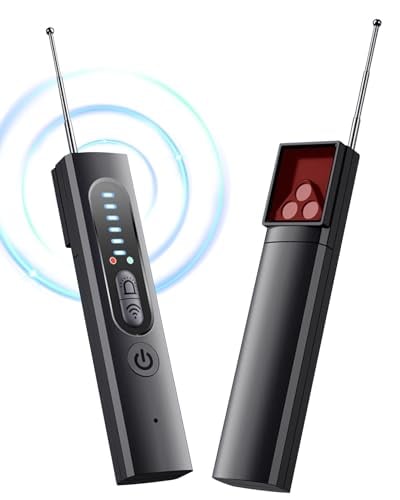
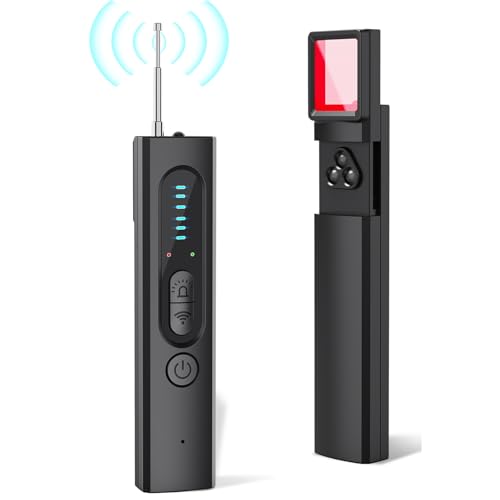
Standard spy camera detectors are the most common option and the easiest to use. They look a bit like mini laser guns and are built for everyday consumers who want to check their home, office, or hotel room for hidden cameras.
You charge the device, power it on, and it starts flashing LEDs. Then you look through the viewfinder while slowly scanning the room. If there’s a hidden camera lens nearby, you’ll see a bright reflected glint through the viewfinder. Simple as that.
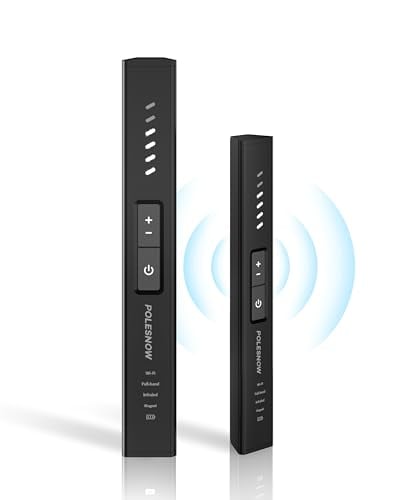
High-end spy camera detectors pack extra features like radio frequency (RF) detection and magnetic field scanning. These cost more, but they can pick up on wireless cameras and other transmitting devices that a basic lens detector might miss.
Many of these models connect to your phone over Wi-Fi, letting you adjust settings, monitor scan results, and track detection history through an app. The added functionality is genuinely useful.
The trade-off? More sensitivity means more false alarms. Lots of household electronics, from routers to baby monitors, emit similar signals. You’ll want to spend a few minutes tweaking the sensitivity settings before you start a real sweep, or you’ll be chasing phantom alerts all day.
No matter which type of detector you grab, the core concept is the same. The device scans for radio frequencies and magnetic fields created by camera electronics, then alerts you through LED indicators or an app notification.
The Science Behind Spy Camera Detection
The lens detection method is surprisingly clever. Your detector shines a small but bright flashlight into the room. When that light hits a camera lens, it bounces back in a very specific way, usually producing a green flash visible through the detector’s viewfinder.
Here’s why it works. Camera lenses act as retro-reflectors. Any light ray that enters the lens and hits the image sensor (whether it’s a traditional film or a semiconductor chip) gets bounced straight back toward the light source. So when your detector’s flashlight hits a hidden camera, the light returns right to your eye through the viewfinder.
Move the detector even slightly off-axis and the flash disappears. That’s actually a useful trick for confirming you’ve found a real camera and not just a shiny surface.
You can test this yourself with a smartphone. Point your detector at your phone’s camera and watch for the flash. If your phone has multiple cameras, each one will reflect slightly differently.
The key thing to remember is that you need to be within the camera’s field of view for the reflection to work. If the camera is pointed away from you, this method won’t catch it. That’s where RF detection on higher-end models comes in handy.
Practical Tips for Using a Spy Camera Detector
- Read the user manual before your first sweep. Every model handles sensitivity and scanning modes a little differently.
- Adjust the sensitivity settings to filter out common household electronics. Otherwise you’ll get constant false positives from things like Wi-Fi routers and smart speakers.
- Watch for cameras hidden inside or behind everyday objects. Alarm clocks, smoke detectors, and picture frames are popular hiding spots.
- Always fully charge the battery before scanning. A low battery can reduce detection range and accuracy.
- Stick with well-known brands. Budget no-name detectors often have poor sensitivity and unreliable build quality.
Which Spy Camera Detector Should You Get?
It really comes down to what you need it for. If you just want peace of mind in hotel rooms or Airbnbs, a standard lens-based detector will do the job. They’re affordable and dead simple to use.
If you’re worried about wireless surveillance or need to scan larger spaces regularly, a high-end model with RF and magnetic field detection is worth the extra cost. The added features catch things that a basic lens detector simply can’t.