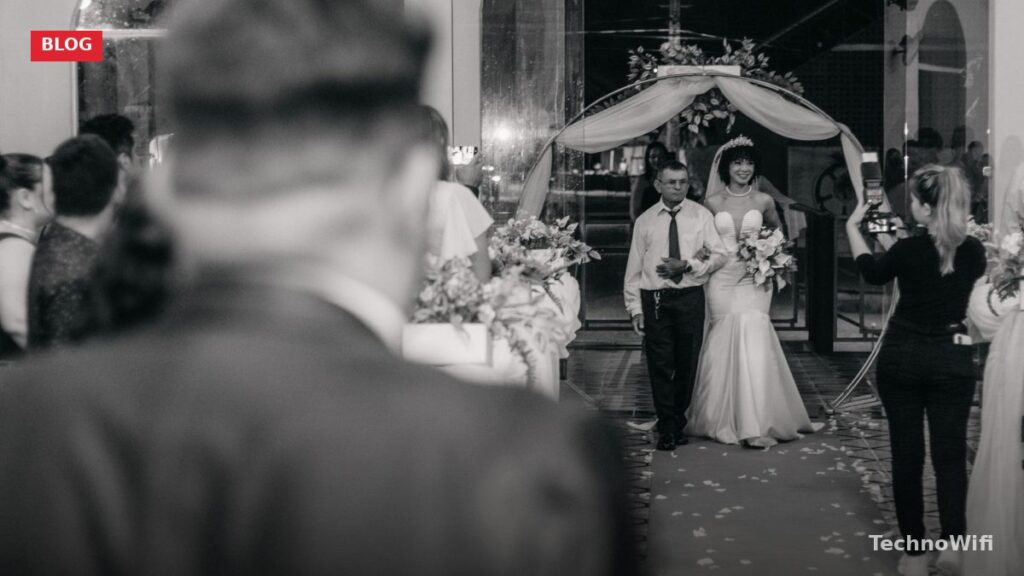
Wedding photography is one of the most demanding genres in the industry. You get one chance at every moment, the lighting changes constantly, and there’s no asking the couple to redo the first kiss. A camera that stumbles in low light, hunts for focus during the ceremony, or writes too slowly to a single card slot can cost you shots that are gone forever.


The stakes are higher than in almost any other type of photography. A landscape photographer can return to the same location next week. A portrait photographer can schedule another session. Wedding photographers don’t get second takes. That reality shapes every buying decision, from sensor performance to card slot configuration.
This guide covers the best cameras for wedding photography in 2026. Every recommendation is based on features that matter on a real wedding day: autofocus reliability, low-light image quality, dual card slots for backup, silent shooting, and battery endurance through a 10-hour reception.
What is the best camera for wedding photography?
The Nikon Z8 is the best overall camera for wedding photography in 2026. It delivers near-flagship performance from Nikon’s Z9 in a smaller, lighter body that costs around $3,500. The 45.7MP sensor produces files with outstanding detail and dynamic range. Fast eye-tracking autofocus locks onto subjects in dimly lit churches and candlelit receptions without hesitation.
A blackout-free electronic viewfinder keeps you connected to the action during fast-paced moments like the bouquet toss or the first dance. Dual card slots (CFexpress Type B and SD UHS-II) provide the redundant backup that professional wedding work requires. At 20 frames per second, you’ll never miss a fleeting expression or a split-second reaction.
For photographers who want the absolute best autofocus technology available, the Canon EOS R5 Mark II is the top alternative. Its stacked sensor enables 30fps burst shooting and Canon’s Eye Control AF lets you select focus points by looking at them through the viewfinder. However, the higher price tag of around $4,300 puts it out of reach for many working professionals.
Budget-conscious wedding photographers should look at the Sony A7 IV. At roughly $2,000 to $2,500, it offers 33MP resolution, 10fps continuous shooting, dual card slots, and reliable eye autofocus. The value proposition is hard to beat for photographers building their business.
Here’s a comparison of the top wedding photography cameras available in 2026.
| Camera | Best For | Resolution | Burst Speed | Card Slots | Video | Price (Body) |
|---|---|---|---|---|---|---|
| Nikon Z8 | Best overall | 45.7 MP | 20 fps | CFexpress + SD | 8K30p | ~$3,500 |
| Canon EOS R5 Mark II | Best autofocus | 45 MP | 30 fps | CFexpress + SD | 8K30p | ~$4,300 |
| Sony A7 IV | Best value | 33 MP | 10 fps | CFexpress + SD | 4K60p | ~$2,000-2,500 |
| Nikon Z6 III | Best versatility | 24.5 MP | 14 fps | CFexpress + SD | 6K | ~$2,500 |
| Canon EOS R6 Mark III | Best speed | 24.2 MP | 40 fps | CFexpress + SD | 6K | ~$2,500 |
| Canon EOS R5 (original) | Best affordable high-res | 45 MP | 20 fps | CFexpress + SD | 8K30p | ~$2,500-3,000 |
Best cameras for wedding photography reviewed
Nikon Z8, Best Overall
The Nikon Z8 borrows heavily from the $5,500 Z9 flagship but packages that technology into a body that costs $2,000 less. Its 45.7MP stacked CMOS sensor delivers exceptional resolution for large prints and albums while maintaining fast readout speeds. Rolling shutter is virtually eliminated, which matters when you’re panning quickly across a ceremony or reception hall.
Autofocus performance is where the Z8 truly earns its place at the top of this list. The 3D tracking system uses dedicated processing hardware to follow subjects as they move through complex scenes. Eye and face detection works reliably in dim lighting conditions, including candlelit ceremonies and sunset portraits. Once the camera locks onto a subject’s eye, it holds focus through movement, obstructions, and changing light.
The blackout-free EVF is a significant advantage during fast-moving reception moments. Traditional mirrorless cameras briefly black out the viewfinder between frames, which can cause you to lose track of your subject during burst shooting. With the Z8, the view remains continuous at 20fps, so you can time your shots precisely during the cake cutting, speeches, or dance floor action.
Dual card slots accept CFexpress Type B and SD UHS-II cards simultaneously. Most wedding photographers configure both slots for redundant backup, writing identical files to each card. If one card fails, every image exists on the other. This is a non-negotiable feature for professional wedding work. The Z8 also offers excellent weather sealing, strong battery life rated at approximately 340 shots per charge (significantly more in real-world use), and 8K video recording for hybrid shooters.
Canon EOS R5 Mark II, Best Autofocus
Canon’s EOS R5 Mark II features a new 45MP stacked CMOS sensor that pushes burst shooting to 30 frames per second with full autofocus tracking. That speed gives you a tremendous advantage during unpredictable moments. The ring exchange, the flower girl walking down the aisle, the surprise guest reaction: all of these happen fast, and 30fps means you capture every micro-expression.
Eye Control AF is the standout feature that separates this camera from everything else on the market. A sensor inside the viewfinder tracks your eye movement, allowing you to select focus points simply by looking at them. In practice, this means you can shift focus between the bride and groom without moving a joystick or pressing a button. The system requires a brief calibration process, and it works best in good light, but experienced users report that it becomes second nature after a few sessions.
In-body image stabilization provides up to 8.5 stops of correction. Combined with a stabilized lens, this allows handheld shooting at remarkably slow shutter speeds in dark reception halls. The dual card slot configuration (CFexpress Type B and SD UHS-II) offers the backup redundancy professionals need. At around $4,300, the R5 Mark II is the most expensive camera on this list. However, photographers who shoot high-volume weddings will find that the autofocus speed and burst rate pay for themselves in keeper rates.
Sony A7 IV, Best Value
The Sony A7 IV hits a price-to-performance sweet spot that makes it the most popular wedding camera among new professionals. At roughly $2,000 to $2,500, it costs significantly less than the Nikon Z8 or Canon R5 Mark II while still delivering the core features wedding photographers need.
A 33MP full-frame sensor strikes a practical balance between resolution and file size. Images are detailed enough for large album prints and wall canvases without generating the massive file sizes that 45MP sensors produce. Smaller files also mean faster card writes and less storage overhead across a full wedding season.
Real-time eye autofocus works reliably during ceremonies and portrait sessions. While it’s not as fast or persistent as the tracking systems on the Nikon Z8 or Canon R5 Mark II, it handles typical wedding scenarios well. The 10fps burst rate is sufficient for capturing key moments, though it falls behind the competition for unpredictable action shots.
Dual card slots and 4K 60fps video round out the package. Sony’s lens ecosystem is mature and competitive, with options ranging from affordable third-party lenses by Sigma and Tamron to Sony’s premium G Master line. For photographers who want professional-grade wedding capability without spending $3,500 or more on a body, the A7 IV remains the go-to recommendation.
Nikon Z6 III, Best Versatility
The Nikon Z6 III sits in a unique position as a do-everything camera that handles wedding photography with confidence. Its 24.5MP sensor uses a partially stacked design that improves readout speed compared to traditional sensors. The lower megapixel count means each pixel is physically larger, which translates to excellent low-light performance and clean high-ISO files.
At 14fps with full autofocus and autoexposure, the Z6 III handles fast moments capably. The autofocus system shares technology with the Z8, including reliable eye detection and subject tracking. While it doesn’t match the Z8’s 3D tracking precision, it performs well in the lighting conditions found at most weddings.
Low-light shooting is where the Z6 III stands out from higher-resolution competitors. The larger pixel pitch keeps noise under control at ISO 6400 and beyond, which matters a lot for dimly lit church ceremonies and evening receptions. Many wedding photographers pair the Z6 III with a Z8, using the lower-resolution body for available-light ceremony coverage and the higher-resolution body for posed portraits and detail shots.
At around $2,500, the Z6 III offers strong value within the Nikon Z system. Dual card slots, good weather sealing, and solid battery life check the professional requirements. Photographers already invested in Nikon Z-mount lenses will find the Z6 III to be a capable and affordable wedding tool.
Canon EOS R6 Mark III, Best Speed
The Canon EOS R6 Mark III takes burst shooting to an extreme with 40 frames per second using the electronic shutter. That figure surpasses every other camera on this list. For reception moments like the bouquet toss, sparkler exits, or confetti throws, 40fps virtually guarantees that you capture the perfect frame.
Canon’s Dual Pixel CMOS AF II system delivers fast, accurate subject tracking across the entire frame. Eye detection is reliable in mixed lighting, and the system transitions smoothly between subjects when the scene changes. The 24.2MP sensor keeps file sizes manageable while producing images with plenty of detail for standard wedding album sizes and online galleries.
IBIS provides up to 8 stops of stabilization, enabling handheld shooting in challenging light without pushing ISO values unnecessarily high. The 6K video capability serves hybrid photographers who deliver both photos and highlight films. Dual card slots provide the essential backup redundancy.
Priced at approximately $2,500, the R6 Mark III competes directly with the Nikon Z6 III and Sony A7 IV. It trades resolution for speed. Wedding photographers who prioritize capturing fast-moving moments over maximum print size will appreciate the trade-off. The Canon RF lens ecosystem also includes some of the best portrait lenses available, including the RF 85mm f/1.2L and the RF 50mm f/1.2L.
Canon EOS R5 (Original), Best Affordable High-Resolution Option
The original Canon EOS R5 has dropped significantly in price since the R5 Mark II launch. Used and refurbished units now sell between $2,500 and $3,000, putting 45MP resolution and 8K video within reach of budget-minded professionals. The sensor produces beautifully detailed images that hold up to aggressive cropping and large-format printing.
In-body image stabilization delivers up to 8 stops of correction. Dual card slots (CFexpress Type B and SD UHS-II) handle backup writing. The autofocus system, while not as advanced as the R5 Mark II’s stacked sensor design, still offers reliable eye detection and face tracking that covers the needs of most wedding situations.
At 20fps with the electronic shutter, burst speed is competitive with the Nikon Z8. The camera handles ISO performance well through ISO 6400, which covers most indoor wedding lighting. Beyond that, noise becomes more visible than on lower-resolution bodies, but post-processing tools handle it effectively.
The R5 is worth considering if you want Canon’s high-resolution image quality without paying flagship prices. Access to Canon’s extensive RF lens lineup is an additional draw. For photographers transitioning from Canon DSLRs, the R5 offers a familiar ecosystem with a significant upgrade in autofocus, burst speed, and electronic shutter performance.
What features matter most in a wedding photography camera?
Dual card slots are the single most important feature for professional wedding work. Every experienced wedding photographer has either personally experienced a card failure or knows someone who has. Writing identical copies of every image to two separate cards eliminates the risk of catastrophic data loss. A camera with a single card slot is a liability at a wedding, regardless of how good its sensor or autofocus might be.
Autofocus speed and accuracy rank second. Weddings unfold in rapidly changing light, from bright outdoor ceremonies to dim indoor receptions. The camera needs to find and hold focus on faces and eyes quickly, even through veils, backlighting, and cluttered backgrounds. Modern eye-detection autofocus systems from Canon, Nikon, and Sony have made this dramatically easier than it was five years ago.
Low-light performance determines how well your images look when the lights go down. Many ceremony venues prohibit flash photography, and reception halls are often lit by string lights and candles. You need a camera that produces clean, detailed images at ISO 3200 to 6400 without excessive noise. Full-frame sensors with larger pixels handle this better than crop sensors or high-megapixel bodies.
Silent shutter and battery life
Silent shutter capability is essential during ceremonies. The clicking of a mechanical shutter during wedding vows is distracting and unprofessional. All cameras on this list offer electronic shutter modes that are completely silent. Some venues and officiants require silent shooting, making this a non-negotiable feature.
Battery life needs to last through long wedding days. A typical wedding shoot runs 8 to 12 hours. While carrying spare batteries is standard practice, a camera that drains a battery every 200 shots creates logistical headaches. Look for bodies rated at 300 or more shots per charge, and carry at least three fully charged batteries for each body.
Weather sealing protects your gear during outdoor ceremonies. Rain, humidity, and temperature extremes are all part of wedding photography. A weather-sealed body paired with a weather-sealed lens gives you the confidence to keep shooting when conditions turn unfavorable. All six cameras on this list offer some degree of weather sealing, though the Nikon Z8 and Canon R5 Mark II provide the most thorough protection.
How many megapixels do you need for wedding photography?
For most wedding work, 24 to 33 megapixels is the practical sweet spot. This range produces files large enough for album spreads, wall prints up to 30×40 inches, and aggressive cropping when needed. File sizes stay manageable across a full day of shooting, which matters when you capture 2,000 to 4,000 images per wedding.
Higher-resolution sensors in the 45MP range offer advantages for photographers who frequently deliver large prints or heavily crop their images. A 45MP file gives you roughly 35% more linear resolution than a 33MP file, which provides meaningful extra detail for tight crops. The trade-off is larger file sizes, higher storage costs, and slightly more visible noise at high ISO values.
Resolution below 20MP is generally insufficient for professional wedding photography in 2026. Clients expect the ability to print large, and online viewing on high-resolution displays reveals the limitations of low-megapixel files. Every camera on this list meets or exceeds the 24MP threshold, so resolution shouldn’t be a concern with any of these recommendations.
Should you use two camera bodies for weddings?
Yes. Working with two bodies is standard practice among professional wedding photographers, and for good reason. Having two cameras eliminates the time spent changing lenses during fast-moving moments. One body can carry a 70-200mm telephoto for ceremony coverage while the other holds a 35mm or 50mm prime for closer work. Switching between focal lengths takes a fraction of a second instead of 15 to 30 seconds.
A second body also serves as insurance against equipment failure. Cameras are complex electronic devices that can malfunction at any time. A shutter motor can fail, a sensor can develop issues, or the camera can take a hard impact during the reception. If your only camera goes down during the ceremony, the day is lost. With two bodies, you continue shooting without missing a beat.
Many photographers use matched bodies from the same brand for consistency in color science and file handling. Others pair a high-resolution body with a lower-resolution, high-speed body. A common combination is the Nikon Z8 on a telephoto for detail and the Nikon Z6 III on a wide prime for environmental shots. Canon shooters often pair the R5 Mark II with the R6 Mark III for a similar mix of resolution and speed.
Frequently Asked Questions
Can I shoot a wedding with a crop sensor camera?
You can, but full-frame cameras are strongly preferred for professional wedding photography. Crop sensor bodies produce more noise at high ISO values, which limits your performance in dark venues. The shallower depth of field from a full-frame sensor also creates the creamy background blur that clients associate with professional wedding images. If budget is the primary concern, a used full-frame body like the Sony A7 III offers better wedding performance than a new crop sensor camera at a similar price.
Is mirrorless better than DSLR for weddings?
Mirrorless cameras have overtaken DSLRs for wedding photography in 2026. Silent shooting, real-time exposure preview in the viewfinder, and advanced eye-tracking autofocus are features that DSLRs can’t match. Battery life was previously a mirrorless weakness, but current models have closed the gap significantly. Canon, Nikon, and Sony have all shifted their development resources to mirrorless, which means the newest lenses, firmware updates, and features are exclusive to mirrorless bodies. DSLRs still work perfectly well, but they’re no longer the optimal choice for new purchases.
What lenses do wedding photographers use most?
Three lenses cover the vast majority of wedding situations. A 24-70mm f/2.8 zoom handles group shots, environmental portraits, and detail work. A 70-200mm f/2.8 telephoto captures candid moments during the ceremony from a respectful distance while providing flattering compression for portraits. A fast prime like a 35mm f/1.4 or 85mm f/1.4 excels in low light and produces the smooth background blur clients love. Many photographers add a wide-angle lens in the 14-24mm range for venue shots and dance floor coverage.
How important is video capability for wedding cameras?
Video capability has become increasingly important as more couples request highlight films alongside their photos. A camera that shoots clean 4K video at 60fps gives you the flexibility to offer basic video services without carrying a separate cinema camera. The Nikon Z8 and Canon EOS R5 Mark II both record 8K, which provides enormous latitude for cropping and stabilizing in post. However, dedicated wedding videographers typically use purpose-built video cameras for primary coverage, so photo-first bodies work best as supplementary video tools.
What memory cards should I use for wedding photography?
Use the fastest cards your camera supports and always shoot with both card slots active. For CFexpress Type B slots, cards with minimum write speeds of 1,400 MB/s prevent buffer delays during burst shooting. For SD UHS-II slots, look for cards rated at V90 or higher. Buy cards from established brands like SanDisk, Sony, ProGrade, or Lexar. Carry more storage than you think you need. A 128GB CFexpress card paired with a 128GB SD card per body is a reasonable minimum for a full wedding day.
Do I need flash for wedding photography?
Flash is essential for reception coverage and useful throughout the day. While modern cameras perform impressively in low light, flash provides consistent, flattering light that natural ambient sources can’t always deliver. An on-camera speedlight with a bounce diffuser handles most reception situations. Off-camera flash setups create more polished results for formal portraits and dance floor shots. Many venues allow flash during the reception but restrict it during the ceremony, so knowing how to work in natural light is equally important.
Sources:
Nikon USA – Z8 Specifications. nikonusa.com
Canon USA – EOS R5 Mark II Specifications. usa.canon.com
Sony – Alpha 7 IV Specifications. sony.com
Nikon USA – Z6III Specifications. nikonusa.com
Canon USA – EOS R6 Mark III Specifications. usa.canon.com
Canon USA – EOS R5 Specifications. usa.canon.com
TechnoWifi is reader-supported. When you buy through links on our site, we may earn an affiliate commission. Product specifications and prices are accurate as of the date of publication and may change. Always verify current details with the manufacturer or retailer before purchasing.