Why Connect a GoPro to Your TV?
Watching GoPro footage on the camera’s tiny screen is fine for a quick review, but it doesn’t do your shots justice. Connecting to a TV lets you see every detail at full size, share clips with a room full of people, and even use your GoPro as a live camera feed for events or streaming setups.
There are several ways to get your GoPro’s output onto a TV, and the best one depends on your GoPro model and what ports your TV has. Let’s go through each method.
Method 1: Micro-HDMI to HDMI Cable (Best Quality)
This is the most direct connection and gives you the best picture quality with zero lag. If your GoPro has a Micro-HDMI port (also labeled as HDMI Type D), you can run a cable straight from the camera to your TV.
Which GoPro Models Have HDMI Out?
The following models have a Micro-HDMI port: Hero 4 Black, Hero 4 Silver, Hero 5 Black, Hero 6 Black, and Hero 7 Black. Starting with the Hero 8 Black, GoPro dropped the HDMI port from the camera body. For the Hero 8 and later, you need the GoPro Media Mod accessory to get HDMI output.
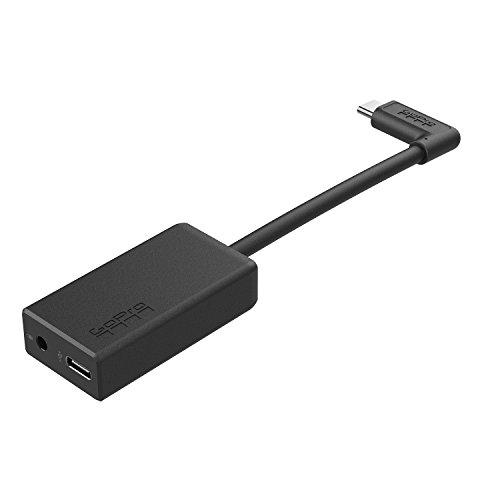
If you have a Hero 9, Hero 10, Hero 11, Hero 12, or Hero 13, the Media Mod (sold separately) adds a Micro-HDMI port, a 3.5mm mic jack, and a USB-C port to the camera.
How to Connect
1. Get a Micro-HDMI to standard HDMI cable. These are cheap and widely available.
2. Plug the small Micro-HDMI end into the camera (or Media Mod) and the full-size HDMI end into an open HDMI port on your TV.
3. Turn on the TV and switch to the correct HDMI input.
4. Turn on the GoPro. The camera’s output mirrors on the TV screen.
You’ll see a live preview of whatever the camera is pointed at, plus playback controls for reviewing saved clips. You can play back video and photos directly from the camera’s memory card on the big screen.
Live Preview vs. Playback
In live preview mode, the TV shows the camera’s real-time view. This is useful for framing shots, monitoring a scene, or using the GoPro as a live camera during presentations. In playback mode, you navigate the camera’s gallery using the touchscreen or buttons and the selected clip plays on the TV at full resolution.
One thing to know: when you record video while connected via HDMI, the TV feed may show a slightly lower resolution than what’s being recorded to the card. The recording itself still captures at your selected resolution.
Method 2: USB Connection (Limited Use)
You can connect a GoPro to a TV’s USB port using a USB-C cable, but this method has some real limitations. Most TVs treat USB ports as file-browsing inputs, not video sources. So instead of seeing a live feed, you’ll see a file browser showing the folders and files on your GoPro’s SD card.
This can work for viewing photos and playing back compatible video files, but many TVs can only play MP4 files encoded with specific codecs. GoPro’s H.265 (HEVC) footage may not play on older TVs, while H.264 files usually work. It varies by TV brand and model.
If your TV supports USB media playback and your footage is in a compatible format, this is a cable-only solution that works in a pinch. But for a reliable and smooth experience, HDMI is the better choice.
Method 3: Casting via GoPro Quik App
If you don’t have an HDMI cable or your GoPro doesn’t have an HDMI port, you can use the GoPro Quik app on your phone to cast footage to a smart TV.
Using Chromecast
1. Connect your GoPro to the Quik app on your phone (the camera’s Wi-Fi connects to your phone).
2. Transfer the clips you want to watch to your phone through the app.
3. Open the clip in the Quik app or your phone’s gallery.
4. Tap the Cast icon and select your Chromecast device or Chromecast-enabled TV.
5. The video plays on your TV, streamed from your phone.
Using AirPlay (Apple TV or AirPlay-Compatible TVs)
If you have an iPhone and an Apple TV (or a TV with built-in AirPlay support), the process is similar:
1. Transfer footage from the GoPro to your iPhone using the Quik app.
2. Open the video on your phone.
3. Tap the AirPlay icon (or use Screen Mirroring from Control Center) and select your Apple TV.
4. The clip plays on your TV wirelessly.
Casting is convenient, but there’s a trade-off: you have to transfer files to your phone first, which takes time for large 4K clips. Video quality over Wi-Fi casting can also dip if your home network is congested. For the sharpest picture, HDMI is still king.
Method 4: SD Card via Media Player
If you want to skip the camera entirely, you can pop the microSD card out of the GoPro, put it in an adapter, and plug it into your TV or a media player.
Direct TV Playback
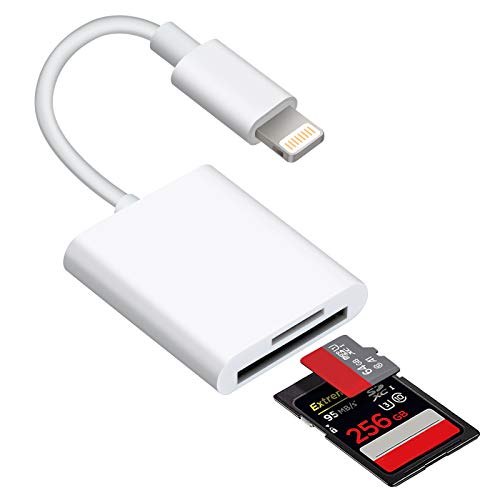
Many smart TVs have a USB port or an SD card slot. Use a microSD-to-SD adapter or a USB card reader to connect the card. Navigate to the card using your TV’s file browser and select the video you want to play.
The same codec compatibility issue applies here. If your TV can’t play HEVC/H.265 files natively, you’ll either see an error or hear audio with no video. In that case, try a dedicated media player.
Dedicated Media Players
Devices like the Amazon Fire TV Stick, Roku, Nvidia Shield, or Apple TV can play files from a USB drive or networked storage. The Nvidia Shield and Apple TV handle HEVC playback well. You can copy your GoPro files to a USB drive, plug it into the media player, and browse your footage on the TV.
Apps like VLC (available on most streaming devices) and Plex can play nearly any video format GoPro produces, including 4K HEVC at high bitrates.
Tips for the Best TV Playback Experience
Use HDMI when possible. It’s the most reliable, lowest-latency connection. No transcoding, no codec compatibility worries.
Keep your GoPro charged. HDMI playback drains the battery faster than normal use. Plug in a USB-C power cable while connected to keep the camera running.
Check your TV’s supported formats. If you shoot in HEVC (H.265), make sure your TV or media player can decode it. Otherwise, set the GoPro to record in H.264 for wider compatibility.
For 4K playback, use HDMI 2.0 or later. Older HDMI ports (version 1.4) can handle 4K at 30 fps, but HDMI 2.0 supports 4K at 60 fps for smoother playback.
Organize your files before playback. GoPro names files with generic numbers (GX010042.MP4, etc.). Rename your favorites on a computer before loading them onto a USB drive so you can find what you want quickly on the TV.