When you purchase through links on our site, we may earn an affiliate commission. Here’s how it works.
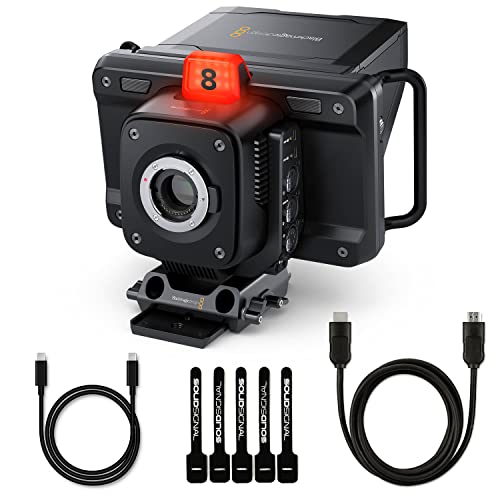
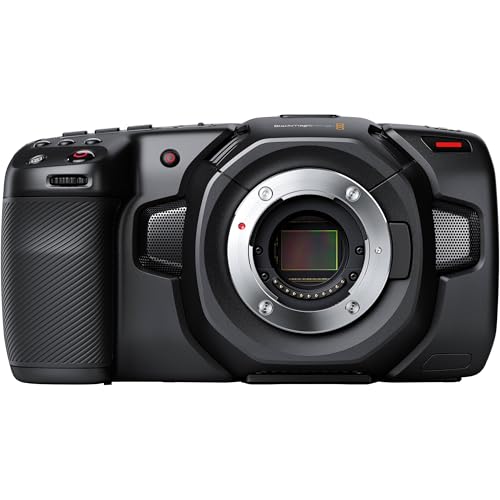
Blackmagic Cinema Camera live streaming has become a popular option for content creators who want cinema-quality video in their live broadcasts. The Pocket Cinema Camera 4K and 6K were originally designed for filmmaking, but firmware updates from Blackmagic Design have turned them into capable live streaming cameras when paired with the right hardware. If you already own one of these cameras and want to use it for streaming, the process is straightforward once you understand the connection setup and software configuration.
Why Use a Blackmagic Cinema Camera for Live Streaming
Standard broadcast cameras come equipped with SDI ports, which offer more secure connections than HDMI and support longer cable runs. SDI connections also carry additional data like tally signals (showing whether the camera is live or on standby) and remote commands to change camera settings on the fly.
The Blackmagic Pocket Cinema Camera 6K and 4K do not have SDI ports. They use HDMI instead, which normally only carries audio and video signals. However, Blackmagic Design found a way to send additional control information through the HDMI connection by updating the firmware on both cameras. This update effectively transforms the Pocket Cinema 4K and 6K into broadcast-ready cameras.
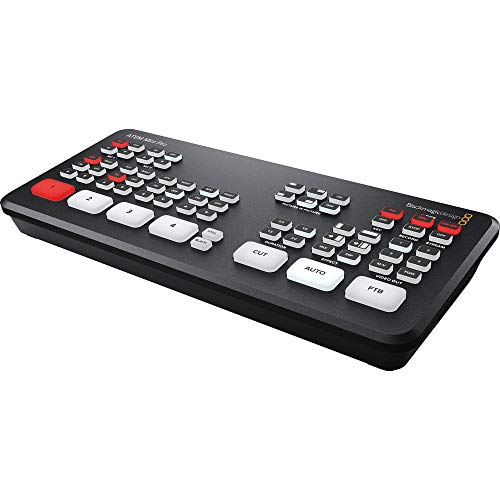
There is one catch: you cannot plug these cameras directly into your computer and start streaming. They do not have built-in IP encoders. You need a broadcast switcher sitting between the camera and your computer to decode the signal. Blackmagic makes several options for this, including the ATEM Mini and ATEM Mini Pro.
Using Broadcast Switchers with the Pocket Cinema 4K and 6K
The Pocket Cinema 6K and 4K are strong cameras for live streaming thanks to their impressive 13 stops of dynamic range. That means they preserve more detail in both the brightest highlights and darkest shadows than typical camcorders. In a practical streaming scenario, you can expose for an indoor scene and still retain detail in outdoor light coming through windows. That kind of latitude is hard to find at this price point.
Beyond the ATEM Mini and ATEM Mini Pro, Blackmagic Design also offers the Web Presenter and UltraStudio 4K Mini as broadcast switcher options. Any of these can be connected to the Pocket Cinema 4K or 6K and used to route the video signal to your streaming software.
The Setup Process for Blackmagic Cinema Camera Live Streaming
Connecting a Pocket Cinema 6K or 4K to a broadcast switcher like the ATEM Mini Pro is simple. Run an HDMI cable from the camera’s HDMI output to one of the HDMI inputs on the ATEM Mini Pro.
The ATEM Mini Pro has four HDMI ports, so you can connect up to four Pocket Cinema Cameras at once and switch between them during your stream. The front panel of the ATEM Mini Pro has labeled buttons that let you cut between camera feeds with a single press.
Setting Up Live Streaming Software
Once the hardware is connected, you need streaming software on your computer to send the video feed to your platform of choice. OBS (Open Broadcaster Software) is one of the most popular free options. It works well, runs on both Mac and Windows, and is reasonably simple to configure.
- Download OBS from the official OBS website and install it on your computer.
- Power on your Pocket Cinema Camera and launch the OBS application.
- The preview window will be blank at first. You need to add a video source. Click the plus (+) button in the Sources panel and select “Video Capture Device.”
- OBS will not detect the Pocket Cinema Camera by name. It sees the ATEM Mini Pro instead. That is normal. Once you add the source, you can rename it to something like “BMPCC 4K” or “BMPCC 6K” for clarity.
- You may notice that both the OBS preview and the source display show the camera’s on-screen interface overlays. Remember that you are not recording from the camera internally. You are passing the monitor output through to your computer.
- To get a clean image, go to the Menu on your Pocket Cinema Camera, navigate to HDMI settings, and turn on the “Clean Feed” option. Simply swiping up to hide the UI on the camera screen is not enough because some overlay data still passes through without this setting enabled.
- Once Clean Feed is on, the footage in OBS should be clean and broadcast-ready.
- Now choose your streaming platform. OBS supports Facebook Live, Twitch, YouTube Live, and many others. Sign into your platform through OBS settings, and when you are ready, click “Start Streaming.”
Wrapping Up
Thanks to firmware updates from Blackmagic Design, the Pocket Cinema 6K and 4K now work as live streaming cameras when connected to a broadcast switcher. This is a genuinely useful addition to cameras that were already popular for filmmaking. You can stream with a single camera or connect up to four units through an ATEM Mini Pro for a multi-camera production, all without glitches or complicated workarounds.