Best Nikon Cameras for Photography
If you’re trying to find the best Nikon cameras for photography, you’ve probably already run into the big question: should you go mirrorless or stick with a DSLR?
Both types have their strengths and weaknesses, and both can produce stunning images. The right choice depends on your priorities and shooting style. Let’s break down what each type offers and then look at four Nikon cameras that stand out in 2026.
What Is a Mirrorless Camera?
A mirrorless camera does exactly what the name suggests: it removes the mirror. In a DSLR, a mirror box sits between the lens and the sensor. This mirror reflects light up to an optical viewfinder so you can see the scene through the lens. When you press the shutter button, the mirror flips up, light hits the sensor, and the image is captured.
In a mirrorless camera, there’s no mirror box at all. Instead, light hits the sensor directly at all times. The camera displays a digital preview on the rear screen or in an electronic viewfinder. This fundamental difference is what drives most of the size, weight, and feature differences between the two camera types.
Why Go Mirrorless?
The biggest advantage of mirrorless cameras is size and weight. Without the bulky mirror box mechanism, the camera body is noticeably smaller and lighter. That makes mirrorless cameras much easier to carry around, especially on long shoots, hikes, or while traveling with multiple lenses.
And here’s the important part: you get the same image quality as a DSLR without the extra bulk. Mirrorless sensors are every bit as capable as DSLR sensors at the same price point. If portability matters to you, mirrorless is the way to go without giving up image quality.
Other mirrorless advantages include silent shooting modes (no mirror slap noise), faster burst rates in some models, and real-time exposure preview in the electronic viewfinder so you can see exactly how your photo will look before you take it.
Why Stick with a DSLR?
DSLRs still have some real advantages worth considering before you make your choice. They offer a wider range of compatible lenses (though the gap is shrinking every year as manufacturers build out mirrorless lens lineups). They tend to perform better in very low light because the mirror box design can gather light differently than a digital sensor alone.
Battery life is another big win for DSLRs. Most DSLRs can shoot 800 to 1,200 frames on a single charge, while mirrorless cameras typically max out at 300 to 400 shots. If you’re shooting all day at an event or on location, that difference matters.
And DSLRs are generally cheaper than comparable mirrorless cameras, which is a significant factor if you’re on a budget. The optical viewfinder is also preferred by many photographers who like seeing the scene with their own eyes rather than through a digital display that can sometimes lag or look different from reality.
Best Nikon Cameras for Photography
1. Nikon Z6
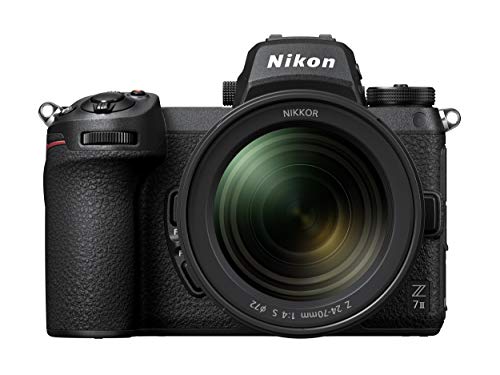
The Z6 is one of the best Nikon cameras in the mirrorless segment. It has a 24.5-megapixel full-frame CMOS sensor with 4K recording capabilities. The sensor uses backside illumination (BSI) technology for better light sensitivity.
The ISO range is wide, and the camera maintains quality across that entire range. Build quality is excellent with weather sealing throughout the body. Handling is comfortable even during long shoots, and portability is a strong point compared to full-frame DSLRs. The only real knock is the average buffer capacity, which can slow you down during extended burst shooting sessions.
The in-body image stabilization (IBIS) system provides up to 5 stops of shake reduction, which helps you shoot handheld in lower light. Overall, the Z6 is a well-rounded mirrorless camera that works well for both stills and video.
2. Nikon Z7
The Z7 takes things up a notch from the Z6. It also uses a full-frame CMOS sensor, but the resolution jumps to 45.7 megapixels with continuous shooting at 9fps. It shoots 4K video at 30fps with full pixel readout for maximum detail.
This camera is known for its excellent electronic viewfinder (3.69 million dots), great handling, and those 45.7 million pixels that capture incredible detail. The level of detail you can pull from Z7 files is remarkable, making it ideal for landscape, architecture, and studio photography.
The only real downside is the single XQD card slot, which can be limiting for professionals who need dual-slot redundancy for backup. The Z7 is a great fit for professionals and serious enthusiasts who need high resolution without sacrificing speed.
3. Nikon D5300
The D5300 is a versatile DSLR with a 16-megapixel sensor and a standout autofocus feature that keeps subjects sharp by preventing accidental zooms and focus drift during recording. It has built-in Wi-Fi and GPS, which was unusual for cameras at its price point when it launched.
You get smooth, high-quality footage and a pleasant shooting experience. The articulating screen is useful for shooting from unusual angles, and the menu system is straightforward to navigate. The build quality matches the price point, and this camera should last a long time with proper care. It’s a solid pick for photographers and videographers at any experience level.
4. Nikon D5600
The D5600 is a mid-range DSLR that balances price and performance well. It has a good touchscreen with tap-to-focus capability, a solid 24.2-megapixel sensor, and it’s easy to use day to day. SnapBridge connectivity lets you transfer photos to your phone automatically in the background.
The autofocus system isn’t its strongest feature at just 39 points, which could be frustrating for action or sports shooting. But for general photography, portraits, landscape, and everyday use, it gets the job done reliably. The price sits in the middle of the range, and the performance matches what you pay. The excellent battery life of around 970 shots per charge is a major plus over mirrorless alternatives.
Mirrorless vs DSLR: Quick Comparison
| Camera | Nikon Z7 | Nikon D3400 |
| Megapixels | 45.7 | 24.2 |
| ISO Range | 400 – 25,600 | 100 – 25,600 |
Both camera types have clear strengths. Mirrorless wins on resolution, portability, and silent shooting. DSLRs win on lens compatibility, battery life, versatility, and price. It comes down to what matters most to you and how you plan to use the camera.
Final Thoughts
When you’re spending good money on a camera, you want the best Nikon camera you can get. The real question is which type fits your shooting style and budget.
Beginners will probably be fine starting with a DSLR, given the lower price point and longer battery life. But if portability is a priority and you don’t mind charging batteries more often, a mirrorless camera is worth the extra investment.
Do your research, think about what you actually shoot, and you’ll make the right call. Every camera on this list is a strong choice that can produce professional-quality images in the right hands.
For D7500 focus settings, check our Nikon D7500 focusing guide.
Shooting weddings? See our best Nikon lenses for wedding photography.